
Advantages of clay building, healthy indoor climate, sustainability and building physics explained clearly

Clay is one of humanity's oldest building materials. For thousands of years houses were built of clay, walls were plastered with clay and interiors were given clay floors. In many regions of the world, buildings that are several hundred years old and based on clay construction methods are still standing today. In the 20th century, clay was increasingly displaced in industrial construction by cement, concrete and synthetic building materials. In recent years, however, this picture has been changing markedly: more and more architects, builders and renovators are rediscovering the advantages of clay. The reason lies in a combination of building physics properties, a healthy effect on living spaces and ecological advantages. Clay combines traditional construction methods with modern requirements for sustainable and healthy building.
Excellent moisture regulation for a stable indoor climate
One of the most important properties of clay is its exceptional ability to regulate moisture. Experts speak of sorption capacity here: clay can absorb water vapour from the indoor air and release it again later. This makes the material act like a natural moisture buffer.
In everyday life, humidity in the building fluctuates constantly. Cooking, showering, breathing or even sleeping raises the humidity. If this moisture is not balanced, an unpleasant indoor climate can develop.
Clay surfaces can absorb moisture quickly and store it in their pores. As soon as the indoor air becomes drier, the clay releases this moisture again. As a result, relative humidity often stabilises in the range between about 40 and 60 percent.
This range is considered particularly pleasant for people and at the same time reduces the risk of mould growth. This effect is clearly noticeable especially in bedrooms, living rooms or children's rooms.
Vapour-permeable walls support the moisture balance of the building
Clay is one of the vapour-permeable building materials. Water vapour can be transported through the surface without moisture building up in the wall. By contrast, dense coatings or wall paints containing plastics can trap moisture and thereby increase the risk of condensation or moisture damage.
Clay enables natural moisture transport within the wall construction. Moisture can be absorbed, distributed and released again. This property contributes significantly to the longevity of building constructions and supports a balanced indoor climate.
Vapour permeability is decisive especially when renovating old buildings and timber frame houses. Historic wall build-ups are designed for breathable materials. Sealing these walls with vapour-tight paints or plasters risks moisture damage inside the wall.
Pollutant-free surfaces for healthy interiors
Another major advantage of clay building materials lies in their natural composition. Clay consists mainly of clay minerals, sand and often plant fibres such as straw or hemp. Unlike many industrial building materials, clay contains no synthetic binders, no plasticisers and no solvents.
The material itself releases no pollutants into the indoor air. At the same time, clay can partly absorb and reduce certain odours or volatile organic compounds. For interiors this means particularly natural indoor air quality.
People with sensitive airways or allergies often find rooms with clay surfaces more pleasant. Especially in children's rooms and bedrooms, the choice of pollutant-free wall surfaces is an important aspect of healthy living.
Antistatic surfaces reduce dust exposure
Clay has an antistatic effect: the surface hardly becomes electrostatically charged. Many modern wall coatings contain plastics that easily become electrostatically charged and therefore attract dust particles from the air.
Clay behaves much more neutrally. Dust adheres less strongly to the wall surface, and the air in the room often stays cleaner. For allergy sufferers or people with sensitive airways, this effect can further improve the indoor climate.
Combined with the natural moisture regulation, this results in an indoor climate that overall feels considerably more pleasant than with conventional wall coatings.
High heat storage capacity ensures thermal comfort
Clay has a high bulk density and stores heat well. The material absorbs heat and releases it with a time delay. This noticeably reduces temperature fluctuations in the room.
In winter, clay can store heat from heating systems or solar radiation and release it evenly. In summer, the material can help to buffer heat in the room and keep the indoor temperature pleasant for longer.
This effect is clearly noticeable especially with thicker clay plasters or clay boards. In combination with good insulation and a well-planned building envelope, clay contributes to passive energy saving.
Anyone combining clay plaster with surface heating systems such as underfloor or wall heating benefits from particularly even heat distribution in the room.
Improved room acoustics thanks to mineral surfaces
Clay surfaces also have a positive effect on room acoustics. The slightly porous structure of the material can absorb part of the sound energy. This reduces reverberation in the room, conversations sound clearer and rooms feel acoustically more pleasant.
Especially in open living areas, large rooms or studies, this effect can be clearly noticeable. Hard, smooth surfaces such as concrete or tiles considerably increase reverberation. Clay plaster offers a natural alternative here without additional acoustic measures.
For rooms where concentration and well-being are the focus, such as bedrooms, home offices or children's rooms, good room acoustics are a relevant comfort factor that clay naturally provides through its material properties.
Natural design options with a warm effect on the room
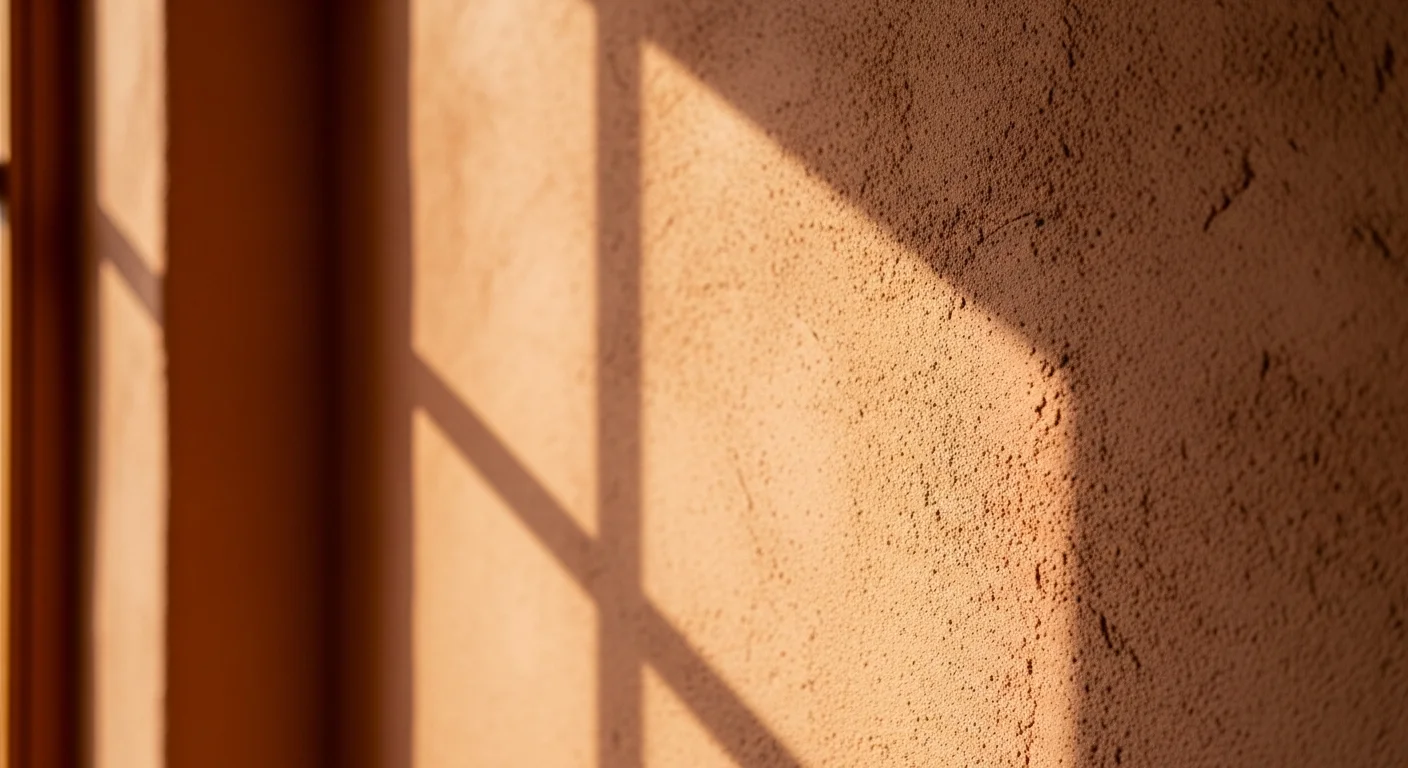
Besides its building physics properties, clay also offers aesthetic advantages. Clay surfaces look warm, calm and natural. Light is reflected softly by the mineral surface, creating a very pleasant atmosphere in the room.
Depending on how it is applied, clay plaster can create different textures. Many variants are possible, from smooth surfaces to slightly textured plastering techniques. Clay also offers great variety in colour: natural pigments create warm earth tones and harmonious wall surfaces.
Particularly high-quality surfaces are created with design plasters such as the YOSIMA clay design plaster from ClayTec. This plaster contains natural clay pigments and allows a wide range of mineral shades. The surface looks velvety matt and has a natural depth.
Clay surfaces can also be combined very well with other natural materials such as wood, natural stone or lime. These combinations create interiors that are convincing both aesthetically and in terms of healthy living.
Sustainability and low environmental impact
Clay is one of the most environmentally friendly building materials of all. The material is usually extracted locally or regionally and needs very little energy in processing. Unlike cement or fired bricks, clay does not have to be fired at high temperatures.
This results in significantly lower CO₂ emissions than with conventional building materials. Anyone wanting to plan their building or renovation projects ecologically will find in clay a building material with a very good life cycle assessment.
Another major advantage is complete reusability. Clay can be moistened again and reworked at any time. Even old clay plaster can be reprocessed after years. These properties make clay a true circular building material.
At a time when sustainable building and cradle-to-cradle principles are becoming increasingly important, clay is a building material that already meets these requirements by nature.
Versatile uses in interior finishing
Clay can be used in many areas of interior fit-out. Typical applications are clay plaster for walls and ceilings, clay boards in drywall, clay paints and paint plasters, and rammed earth walls or clay masonry as design elements.
The material can be integrated flexibly in new builds as well as renovations. In interior fit-out in particular, clay can be used easily and without elaborate prerequisites. Combinations with other building materials also work very well: clay is often used together with wood, lime or natural insulation materials.
If you have no experience with clay plaster so far, you can start with thin clay brush plasters or clay paints. These are easier to apply than classic clay plaster and still give a good first impression of the material's properties.
Conclusion: clay building combines tradition with modern requirements
Clay construction combines traditional building knowledge with modern requirements for sustainable and healthy living. The building material regulates moisture, is vapour-permeable, antistatic and free of pollutants. At the same time, clay creates a calm atmosphere, improves acoustics and can store heat.
Thanks to its environmental friendliness, reusability and versatile applications, clay construction is now one of the most interesting options in ecological building. Anyone who wants to combine a healthy indoor climate, natural materials and sustainable construction methods will find a convincing solution in clay.
Regional context and use in practice
In northern Germany, especially in Lower Saxony and the areas around Achim and Verden, clay construction is experiencing a clear renaissance. Many timber frame houses in the region were originally built with clay panels and clay plasters. Lehm-Revival at Danziger Str. 59, 28832 Achim supports builders and renovators in the region in planning clay construction projects and offers building materials and expert advice from a single source.
Frequently asked questions
Does clay store heat better than gypsum plaster?
Clay has a higher bulk density than gypsum plaster and can therefore store more heat and release it with a delay. This effect contributes to a more even indoor temperature profile. With thicker clay plaster layers or clay boards, the heat storage capacity is particularly pronounced.
Where do I start if I have never worked with clay before?
With thin clay brush plasters or clay paints. They are easier to apply than classic clay plaster and still give you a good first impression of the material's properties.
Does clay plaster suit underfloor or wall heating?
Yes. In combination with surface heating systems such as underfloor or wall heating, heat is distributed particularly evenly in the room, because clay absorbs heat and releases it with a time delay.
Sources and standards
Further links
Products in the shop
Knowledge articles
More items in Clay building
- Monument protection and clay building: age line, permit and typical mistakes
- Buy hemp insulation: hemp insulation batts for interior insulation, rafters and timber framing
- Hempcrete: mixture, application and insulation values for wall, floor and roof
- Interior insulation costs per m², wood fibre with clay vs. calcium silicate vs. drywall
- Lime plaster: properties, use and application inside and outside
- When clay does not work: limits, mistakes and decision rules
- Clay in interior finishing: a healthy indoor climate with natural building materials
- Clay, lime or cement: which binder is right for old buildings and timber framing?
- Clay building: building and renovating with clay
- Clay boards in interior finishing: drywall construction with clay according to DIN 18948
- Buy fine clay plaster and YOSIMA design plaster: application, choice of colour and prices
- Clay paint on plasterboard: pre-treatment, consumption and painting
- Clay paint in interior finishing: mineral wall paint for a healthy indoor climate
- Clay mortar in clay building: masonry mortar and plastering mortar
- Clay plaster on concrete: preparation, primer and plaster thickness
- Clay plaster on gypsum plaster and old plaster: check, prime, plaster thinly
- Clay plaster on sand-lime brick and brick: plastering masonry correctly
- Clay plaster on Rigips and plasterboard: preparing the substrate correctly
- Applying clay plaster: the complete step-by-step guide
- Clay plaster costs per m², prices, material requirements and packs compared
- Renovating clay plaster: recognising types of damage, understanding causes and repairing correctly for the long term
- Clay plaster on different substrates: concrete, brick, wood and drywall
- Building up clay plaster: base coat, finishing coat and fine plaster
- Wall heating with clay: planning and installation step by step
To take away: the free clay building diary with drying log.
Download free of charge