
Bestseller
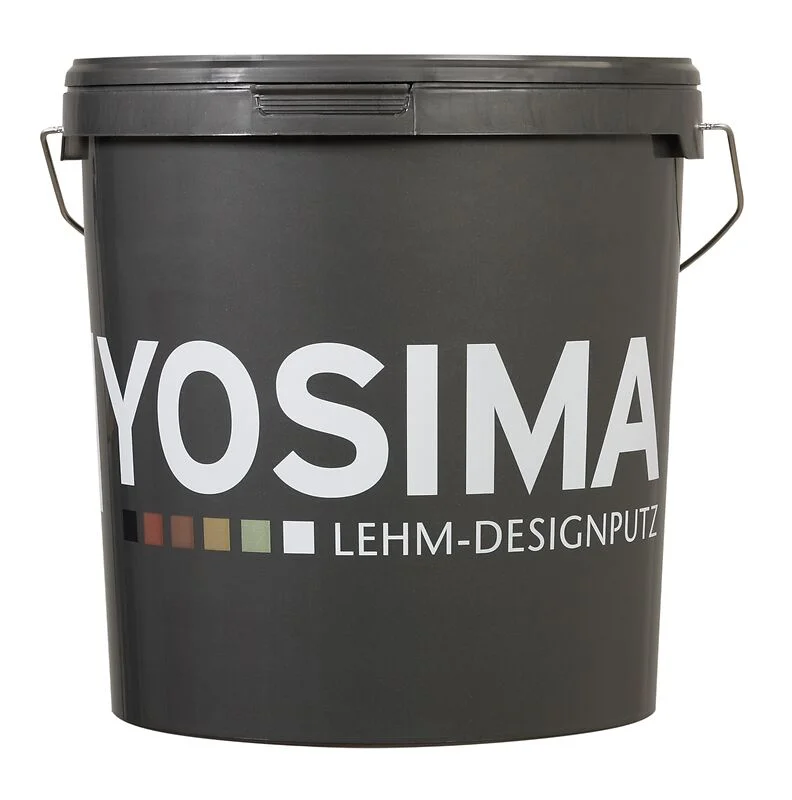
YOSIMA clay design plaster
YOSIMA clay design plaster is coloured wall design with natural clay and loam. The clay…
from59,49 €
YOSIMA clay design plaster from ClayTec is a coloured clay plaster for interior wall surfaces, in natural earth shades, smooth or with texture additive. No artificial dyes, no fading. For living rooms, offices and reception areas.
3 products in YOSIMA fine plasters
YOSIMA clay design plaster is coloured wall design with natural clay and loam. The clay…
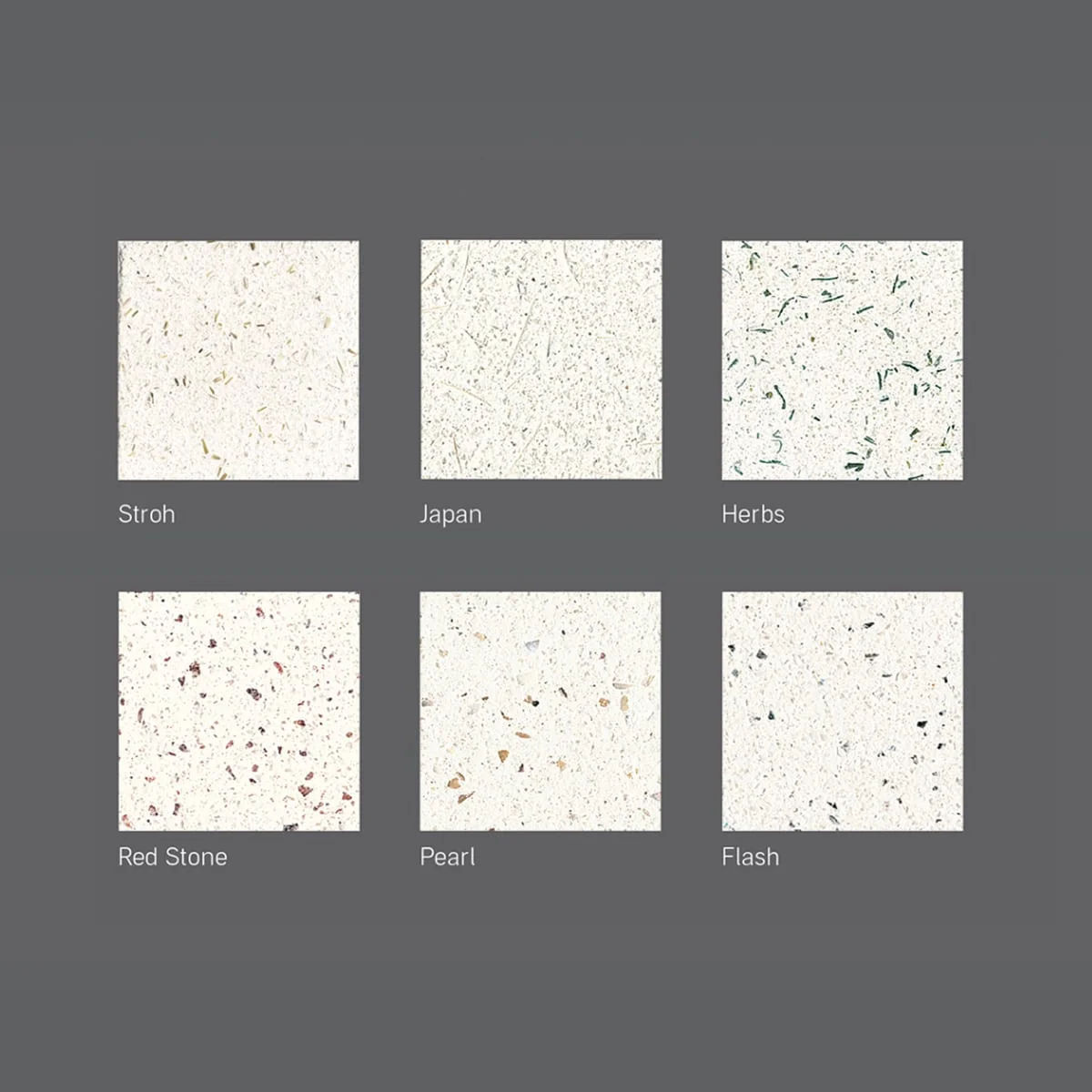
YOSIMA texture additive is available separately and is added to the mixed YOSIMA clay de…
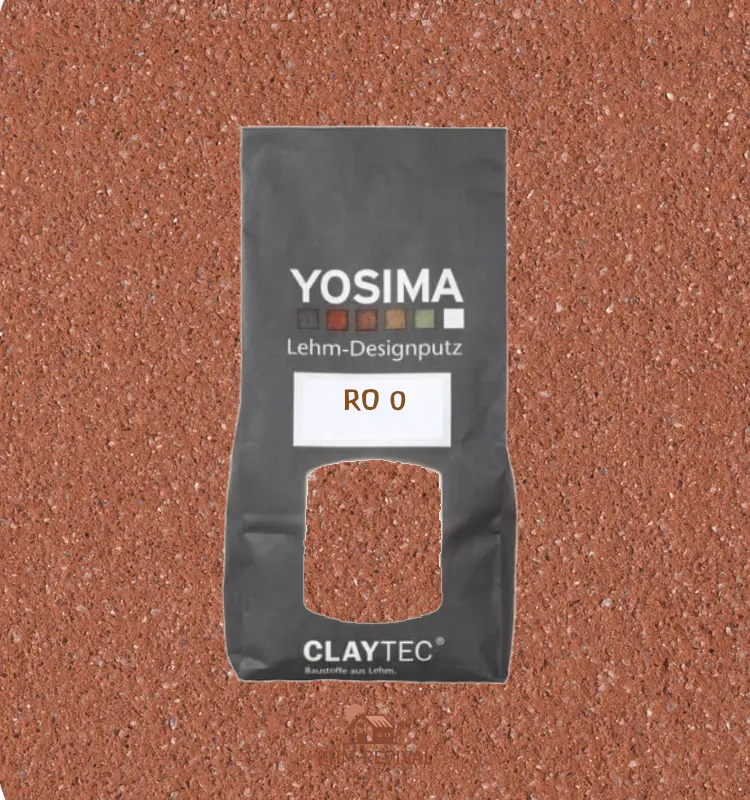
YOSIMA clay design plaster is a coloured clay plaster for interior design according to DVL TM 06,…
The texture additives are named after their material: straw, Japan (sisal), Herbs, Red-Stone (granite), Pearl (mother of pearl) and Flash (glitter). You mix the additive into the ready-mixed plaster before applying it.
For sampling I also stock YOSIMA as a small dry mortar sample. Clay and loam are natural raw materials, so variations in shade are possible; shimmering colour and clusters of aggregate are part of the plaster's character. For a continuous surface, mix mortar from several containers.
Tips
For YOSIMA, the plaster base must also be level, free of cracks and evenly absorbent and must not flex. Prime smooth as well as highly or unevenly absorbent surfaces with DIE GELBE, and clay base plaster and clay top plaster fine 06 with DIE WEISSE if necessary. Fluate strongly alkaline surfaces, especially before dark shades.
Rub coarse clay plasters level beforehand in a separate step or cover them thinly with clay top plaster fine 06 after drying. Prepare clay boards and wood fibre fit-out boards over the full surface with mesh in clay adhesive and reinforcing mortar; smoothed surfaces are not intended on board substrates.
Stir the dry mix gradually into clean water with a drill or mixer, let it rest for 30 minutes and work it through again. With a Japanese trowel or stainless steel smoother, first draw a thin layer down to the grain and, after drying, apply the final coat. A layer is at most 2 mm thick.
As soon as the surface changes from wet and shiny to damp and matt, rub it with the sponge float. Worked early, the surface becomes coarse; worked late, fine. Add only a little water while doing so. While you are rubbing, keep windows closed and heating off so that parts of the surface do not dry unevenly; afterwards you may ventilate and heat moderately.
Tips
After complete drying, no earlier than after 48 hours, moisten the surface evenly with a spray mist. When no shiny spots can be seen any more, sweep it with the wallpaper brush until nothing more trickles off. Work large areas in sections; with dark and strong shades use very little water, otherwise the colour effect becomes cloudy.
Dab a defect with a small damp brush, let the water act briefly and repair only the immediate area with a fine tool; build up spots deeper than 2 mm in several layers with drying in between. After longer use, refresh the colour by moistening the surface with a spray mist and felting it again with a little water. A coat of ClayFix evens out surfaces but reduces the brilliance and depth of the design plaster.
ClayTec classifies YOSIMA with water-soluble stabilisation in wet abrasion class 5 according to DIN EN 13300. If you need more abrasion resistance, especially with light shades, moisten the surface with a diluted solution of wall glaze binder before brushing.