Bestseller
fast delivery
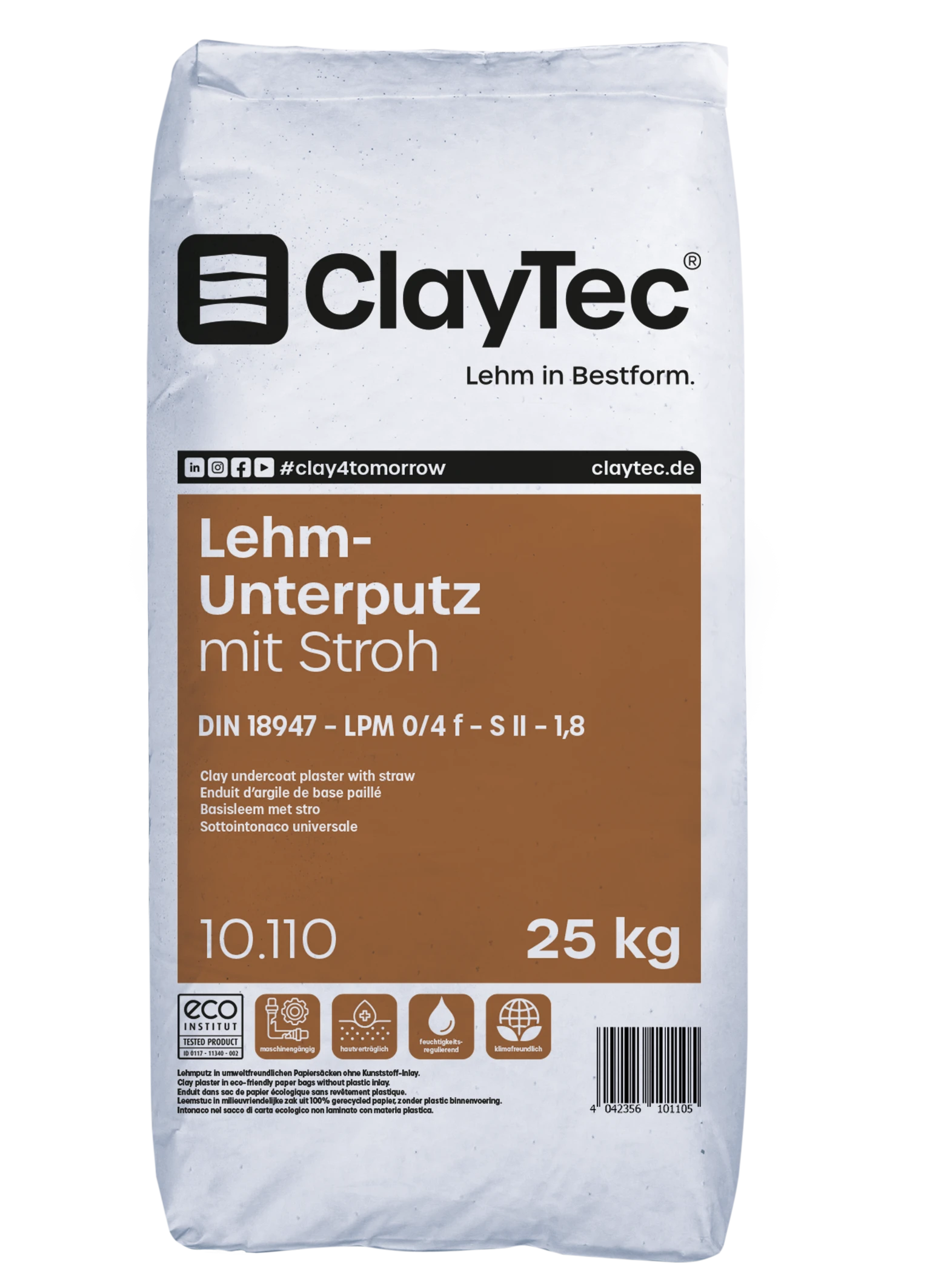
Coarse clay base coat plaster with straw
For 40 years the classic clay base plaster from ClayTec for thick layers, e.g. on unev…
from20,99 €
Clay plaster is the foundation for natural living: vapour-permeable and moisture-regulating. From base plaster with straw to top plaster to YOSIMA clay design plaster, the layers build on each other. Base plaster with straw and coarse top plaster are marked according to DIN 18947, YOSIMA according to DVL TM 06.
11 products in Clay plaster
The base plaster levels the substrate and carries the later surface. On brick, clay block and timber frame panels, you apply clay base plaster with straw eight to fifteen millimetres per layer, clay plaster Mineral 20 five to fifteen millimetres, in two layers for pronounced unevenness. The first layer must have dried through before the second follows.
For 40 years the classic clay base plaster from ClayTec for thick layers, e.g. on unev…
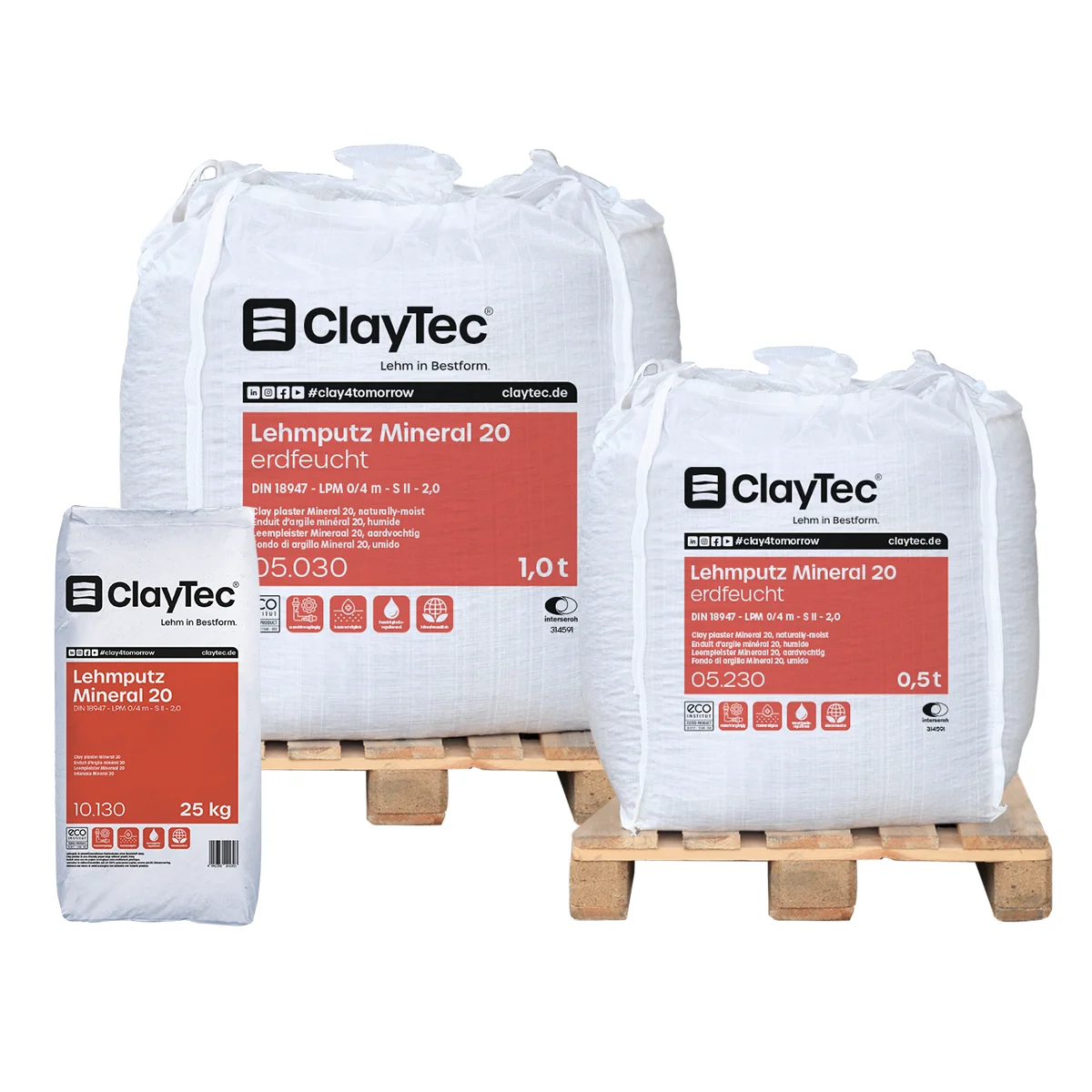
Mineral base and finishing plaster, dry, for maximum flexibility and unlimited stor…
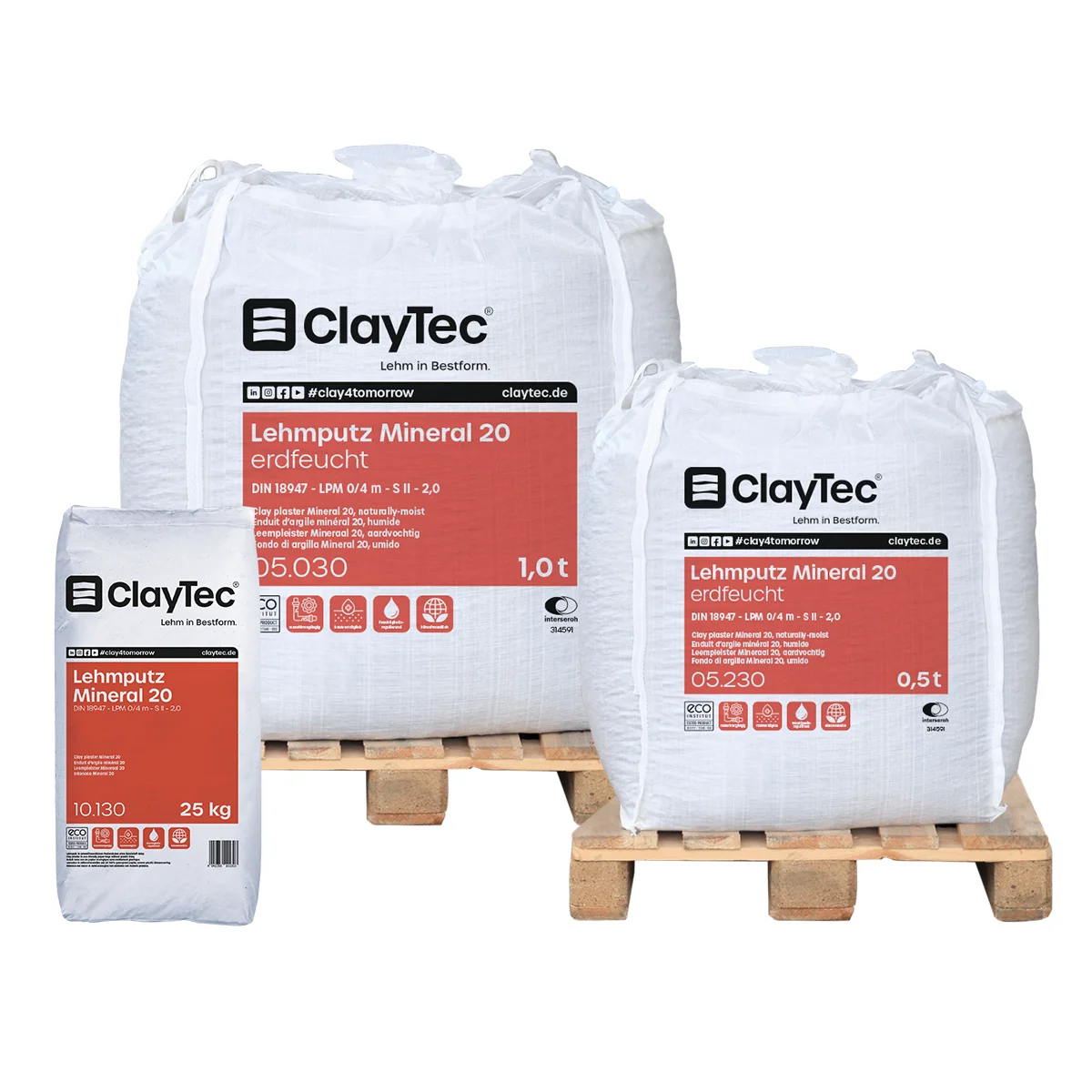
Mineral base and finishing plaster without organic content, for universal plastering work…
The top plaster goes onto the dried base plaster and determines the visible texture. You apply coarse clay top plaster six to ten millimetres thick, clay plaster SanReMo three to ten millimetres and the fine-grained clay top plaster fine 06 two to three millimetres. The finer the grain, the smoother the result and the more even the substrate must be.
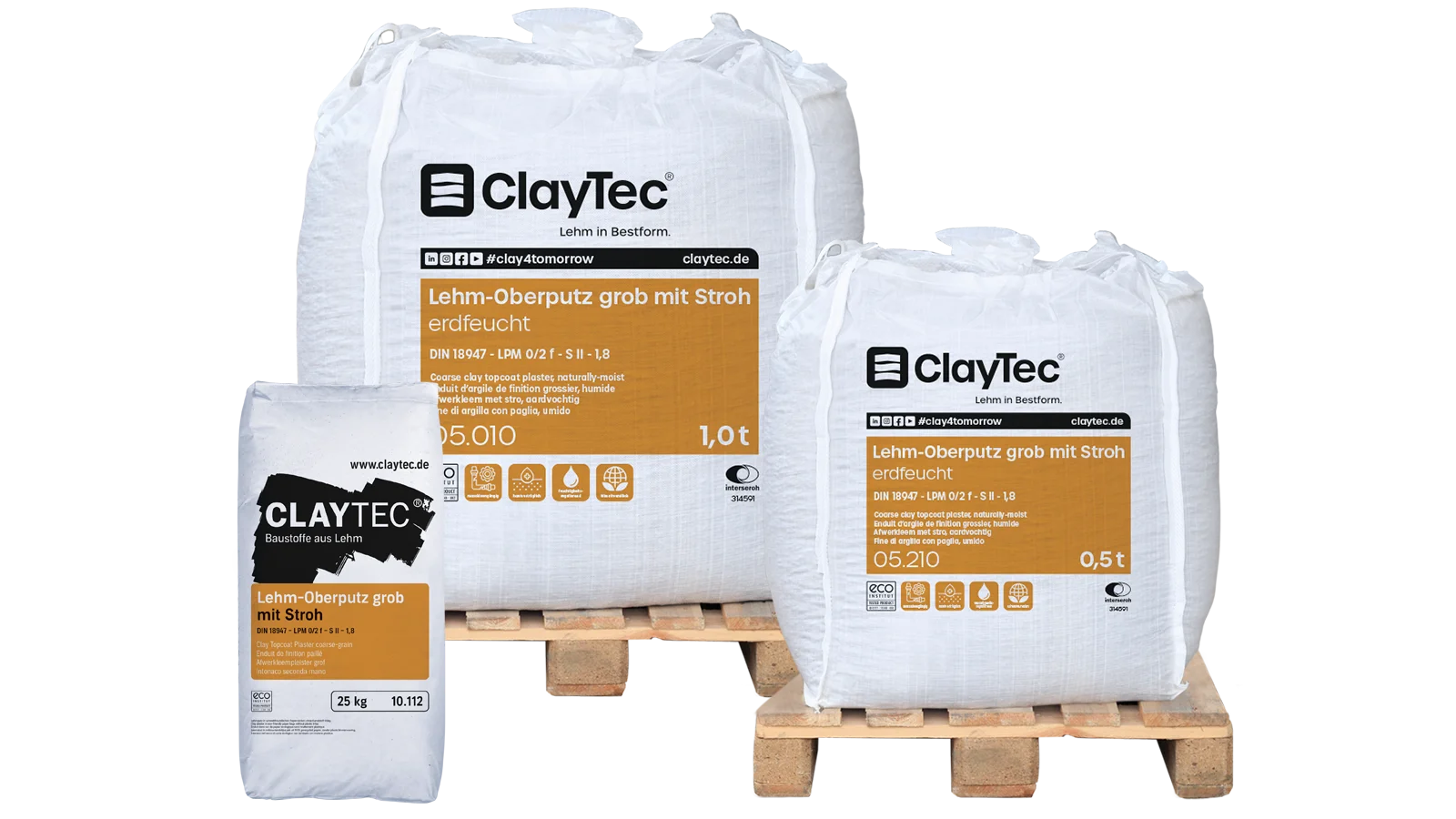
The classic clay finishing plaster from CLAYTEC, from rustic to finely smoothed, on clay base…
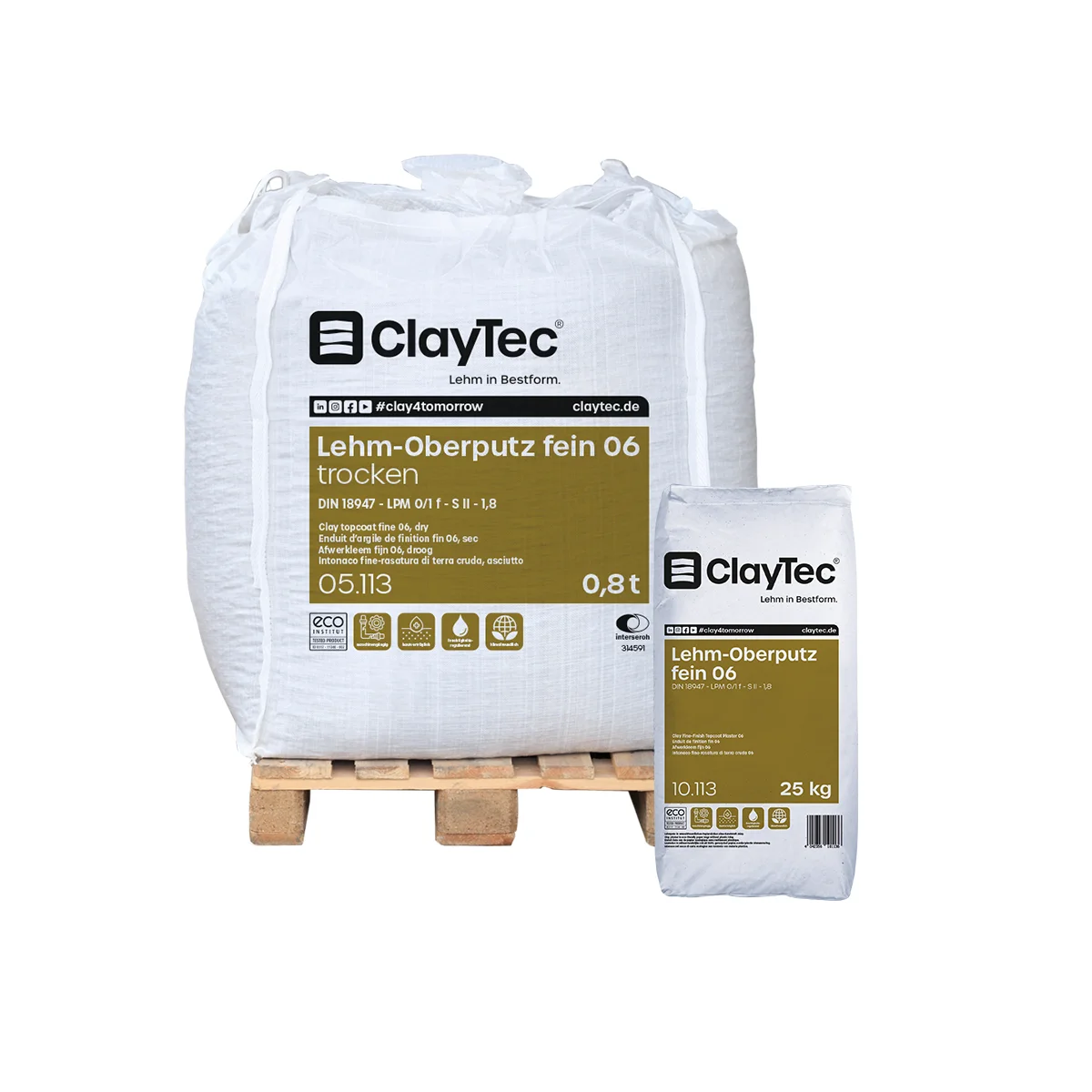
Fine thin-layer plaster for final coats 2–3 mm thick.
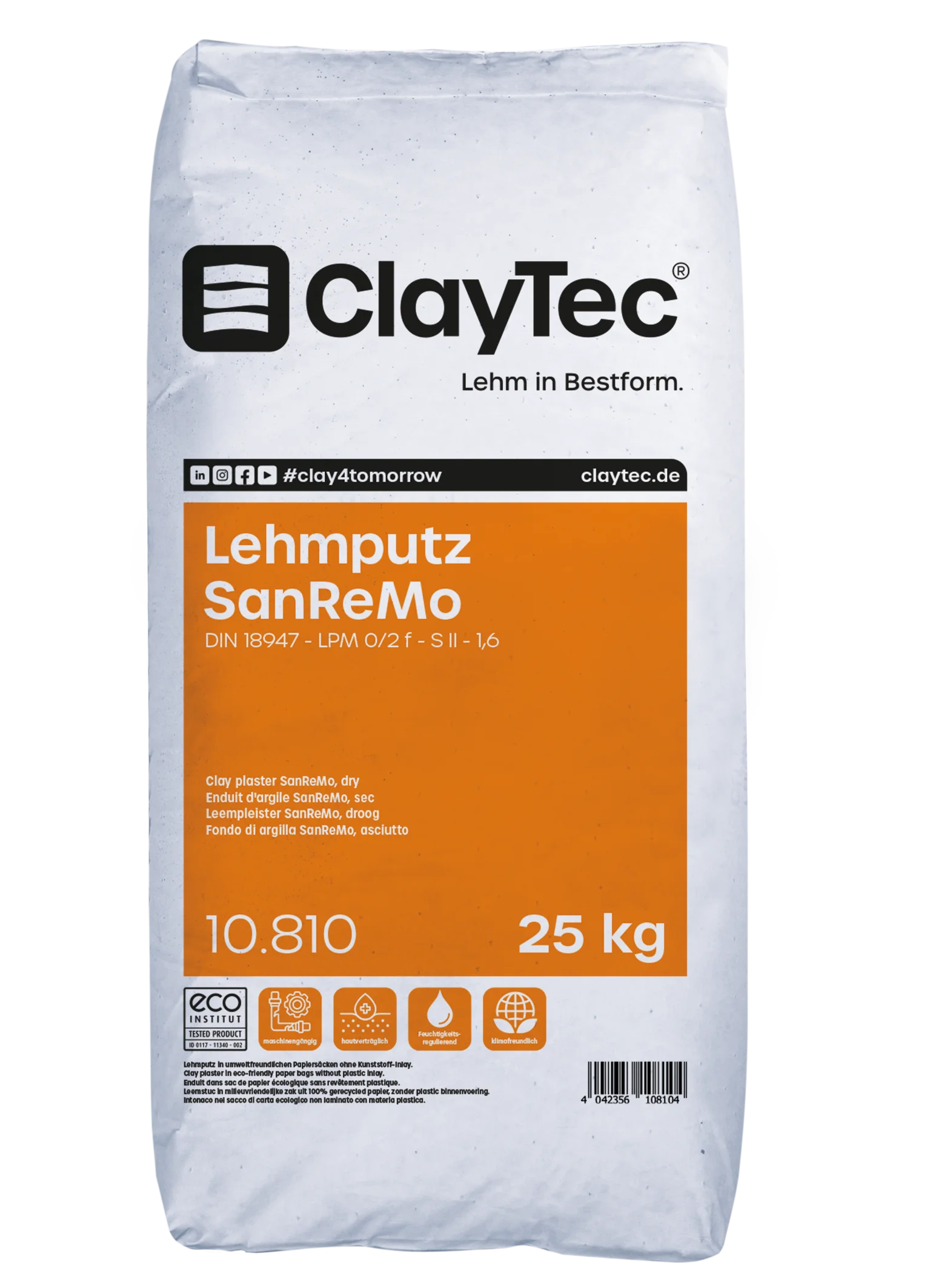
The universal plaster for renovation, refurbishment and modernisation, single-layer on all subs…
Fine plaster is the last layer and carries the colour. YOSIMA is applied at most two millimetres thin per layer and needs an even, uniformly absorbent substrate underneath. The shade comes from the material itself; no paint follows.
YOSIMA clay design plaster is coloured wall design with natural clay and loam. The clay…
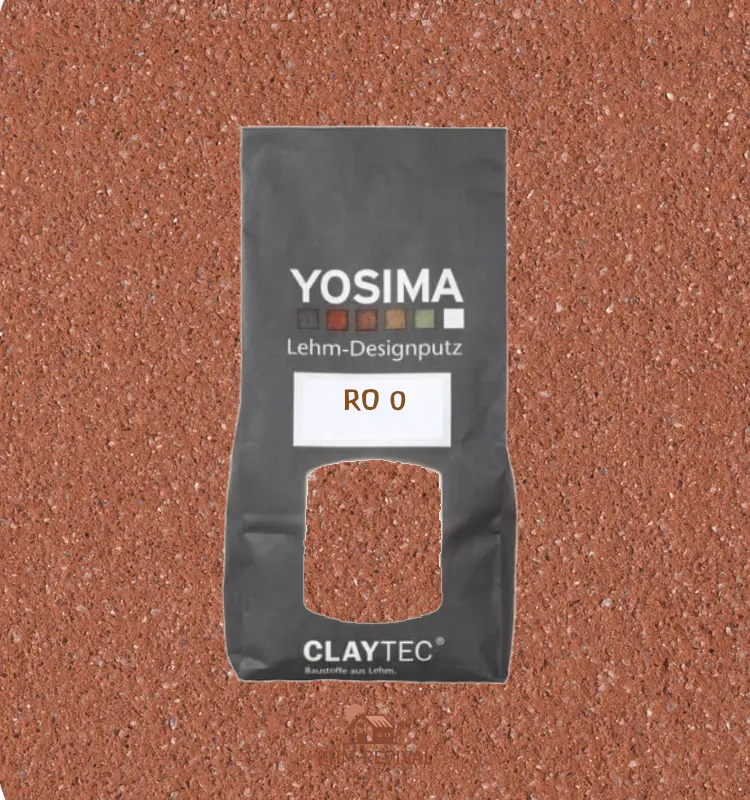
YOSIMA clay design plaster is a coloured clay plaster for interior design according to DVL TM 06,…
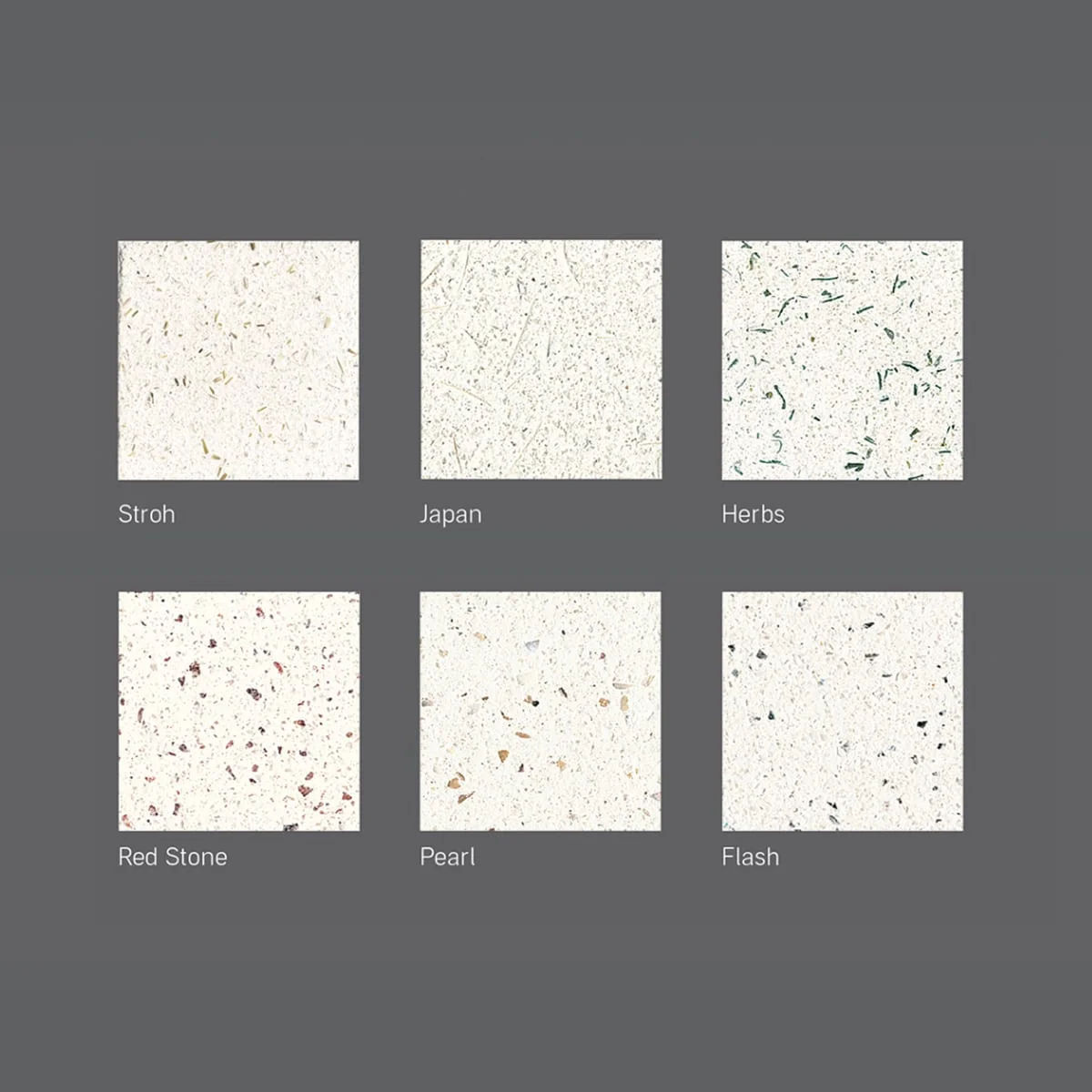
YOSIMA texture additive is available separately and is added to the mixed YOSIMA clay de…
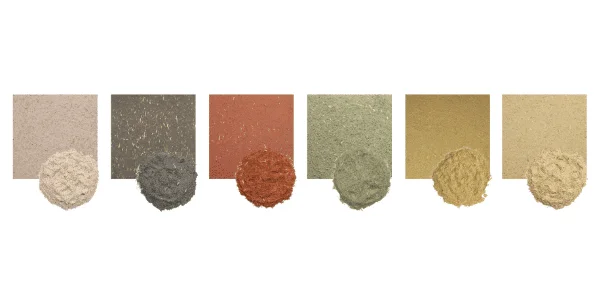
Coloured clay plaster as a ready-made fair-faced plaster, no painting needed. In 6 natural earth col…
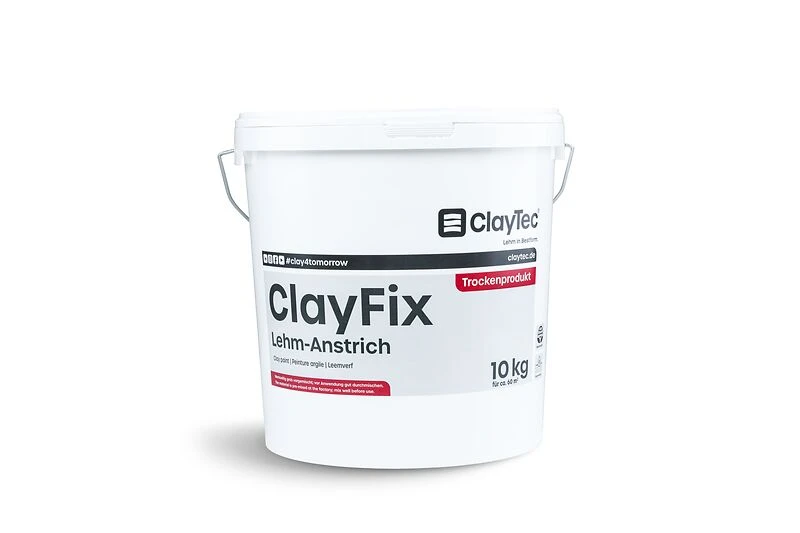
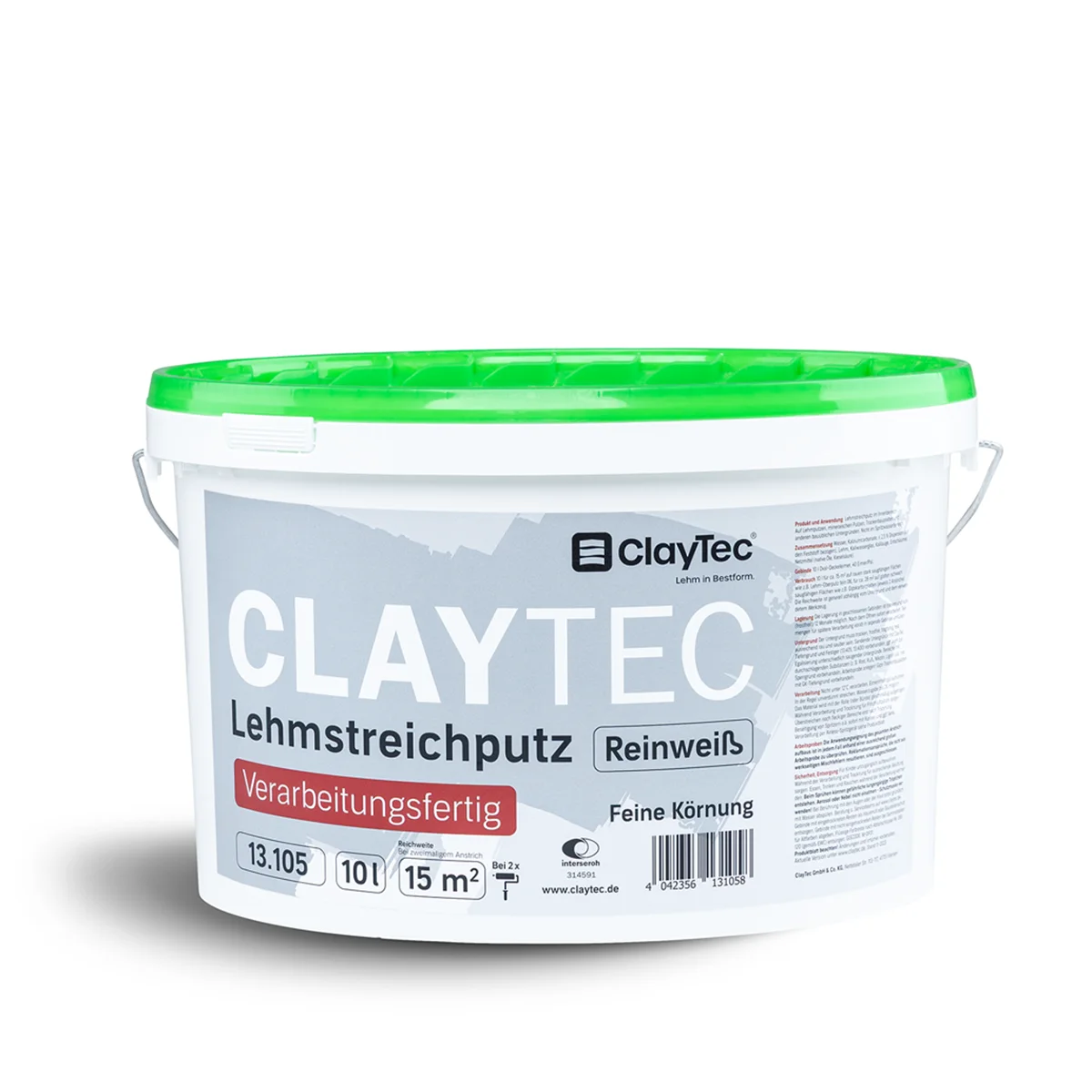
If the surface is to be coloured without applying a design plaster, a clay paint or paint plaster goes on top. Both remain vapour-permeable and can be reworked later. The substrate must be dry and dust-free.
Highly absorbent or very smooth substrates need a primer, otherwise the plaster sets too quickly or does not adhere. You embed glass mesh over changes of material and in corners. The filler closes defects before the next layer goes on.
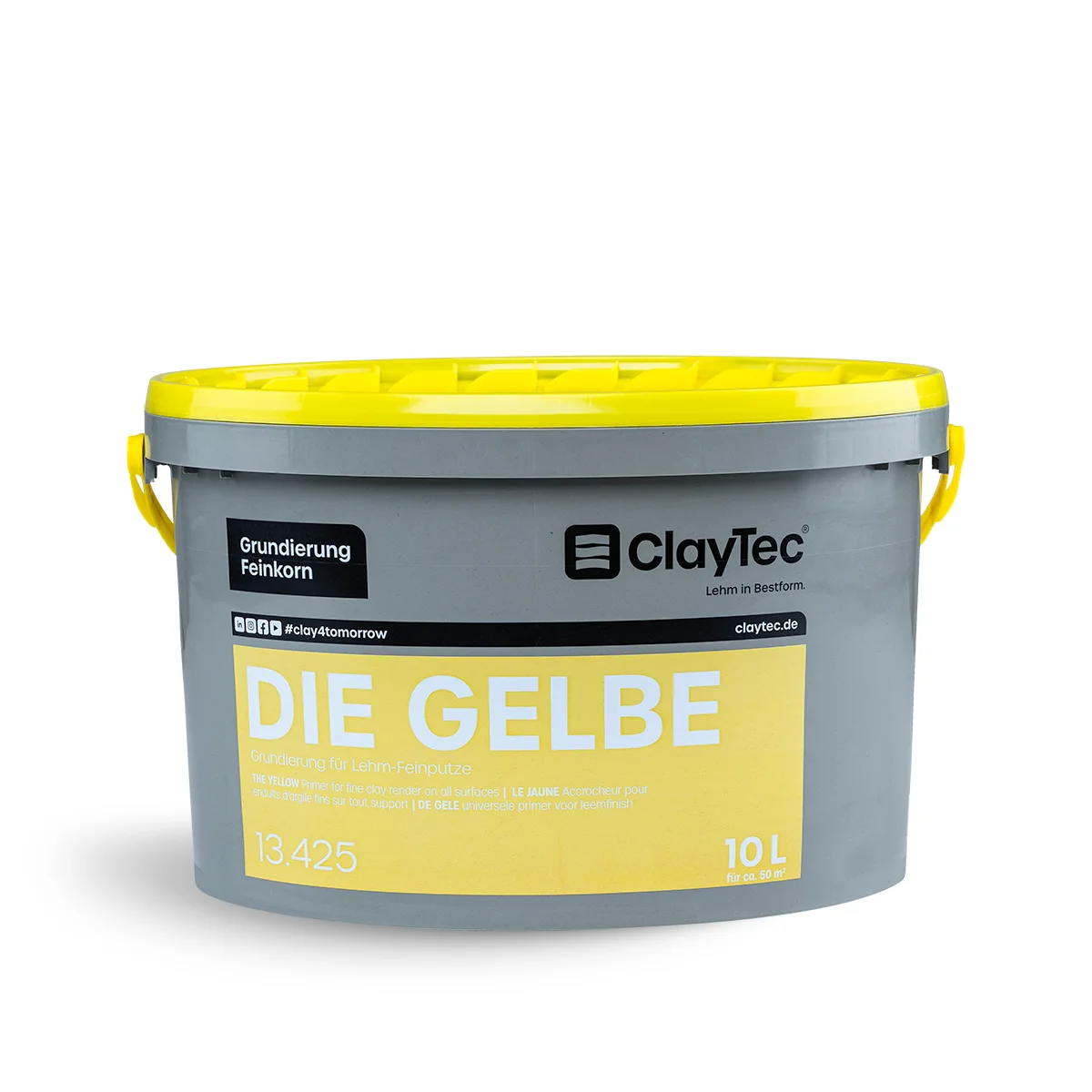
Fine-grained bonding primer before fine clay plasters and YOSIMA clay design plaster, the bind…
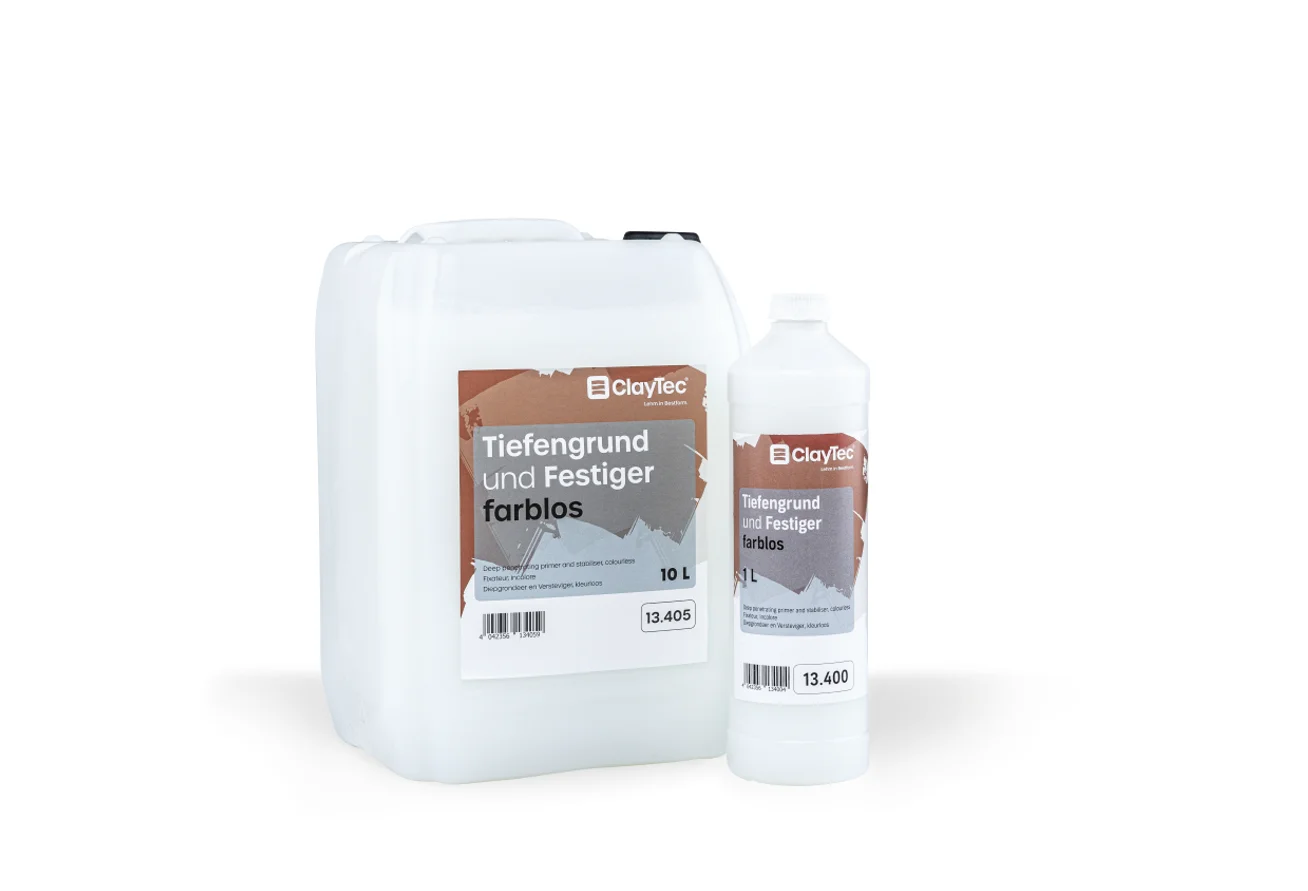
Special primer for sanding and chalking substrates, before clay plaster, dry plaster boa…
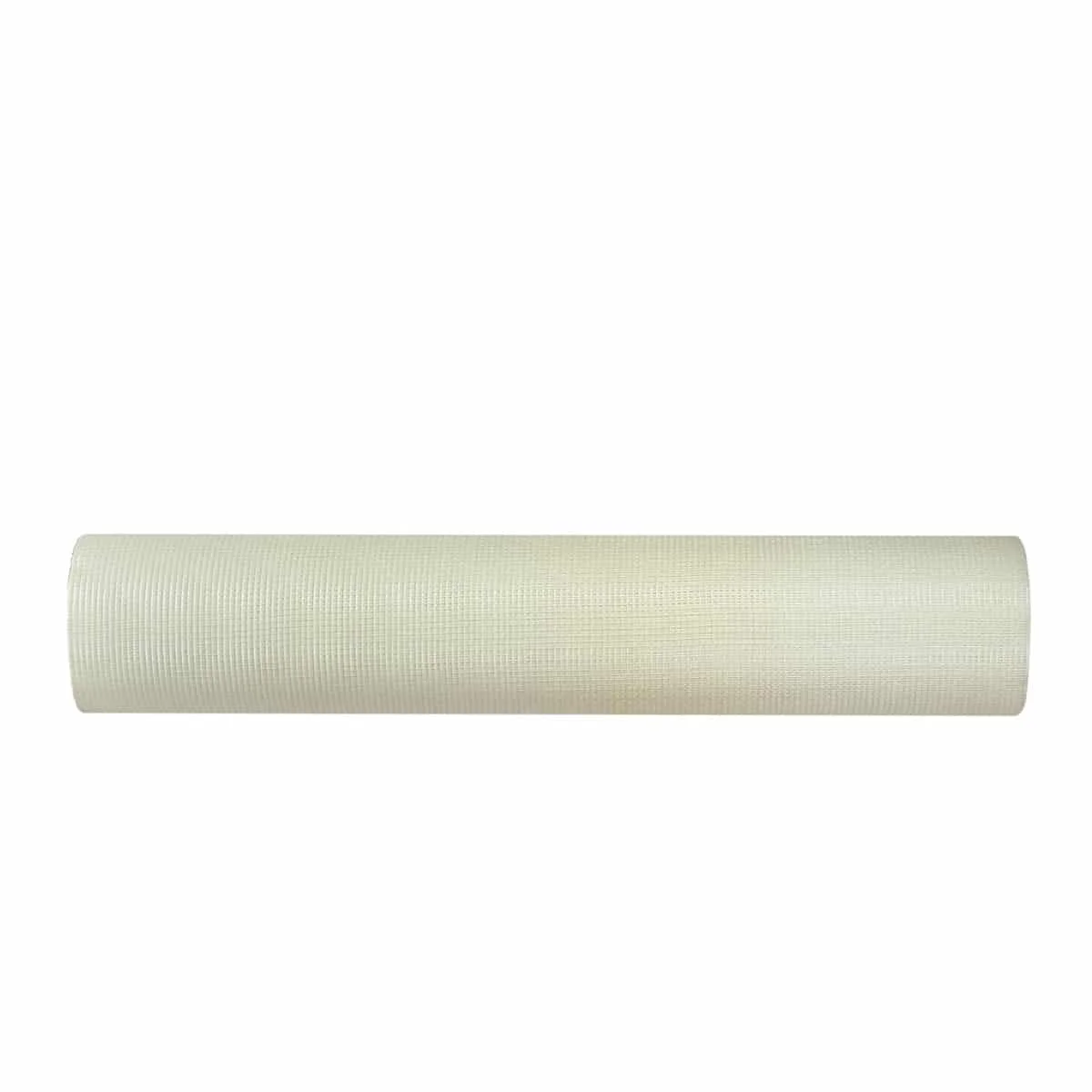
Glass fibre fabric 60 g/m² for the standard reinforcement of clay plasters and clay paints, prevents…
For 40 years the classic clay base plaster from ClayTec for thick layers, e.g. on unev…
YOSIMA clay design plaster is coloured wall design with natural clay and loam. The clay…
YOSIMA texture additive is available separately and is added to the mixed YOSIMA clay de…
Coloured clay plaster as a ready-made fair-faced plaster, no painting needed. In 6 natural earth col…
Smooth surfaces with filler, naturally!
Fine thin-layer plaster for final coats 2–3 mm thick.
Mineral base and finishing plaster, dry, for maximum flexibility and unlimited stor…
The classic clay finishing plaster from CLAYTEC, from rustic to finely smoothed, on clay base…
Mineral base and finishing plaster without organic content, for universal plastering work…
The universal plaster for renovation, refurbishment and modernisation, single-layer on all subs…
YOSIMA clay design plaster is a coloured clay plaster for interior design according to DVL TM 06,…
Clay base plaster with straw is made for thick layers, for example on uneven masonry, on wall surface heating and in monument renovation. The long barley straw reinforces the mortar. Clay plaster Mineral 20 contains no organic components, sets quickly after application and serves as base and finishing plaster in one product.
For changing substrates in renovation and modernisation, I stock clay plaster SanReMo. It tolerates weakly absorbent plaster bases such as concrete and highly insulating bricks, provided they are sufficiently rough, and is base and finishing plaster in one layer. ClayTec explicitly names it as a substrate for YOSIMA.
Tips
Clay plaster adheres only mechanically. The substrate must be load-bearing, frost-free, dry, clean, free of salts and sufficiently rough. Prepare smooth or weakly absorbent surfaces such as highly insulating bricks, sand-lime elements, concrete, lime and gypsum plasters, firm porous old emulsion coatings and old synthetic resin plasters for coarse clay plasters with primer DIE ROTE; the total plaster thickness on it remains at most 10 mm. Consolidate sanding lime and cement plasters beforehand with deep primer and consolidant, and remove film-forming old paints.
On concrete and overhead, smaller maximum thicknesses apply than on the wall: 10 mm for clay base coat plaster with straw, 6 mm for clay plaster Mineral 20 and 6 mm per layer for SanReMo. Do not plaster permanently damp components with clay.
On old clay substrates in timber framing, you usually plaster in two layers, because beams and chases almost always have to be covered, unevenness levelled or changes of material reinforced. Timber beams get a plaster base of reed mesh St70. With straw-reinforced clay base plaster it can be omitted if the beams are narrower than 8 cm and do not bound a plaster area. Before applying clay top plaster fine 06 directly on old clay plaster, first rub in a thin layer of coarse clay plaster mortar.
Pressure-test wall heating with the specified test pressure before plastering; during plastering it is under operating pressure. Apply the base plaster with the heating cold and draw it over the pipes; for drying you may warm the surface moderately via the heating pipes. The second layer of 5–10 mm again follows with the heating cold. Embed mesh in its wet surface, overlap the joints and take it at least 25 cm beyond the edges of the heated area.
Yes, in a thin layer. On gypsum drywall boards, as a rule at most 3 mm of clay top plaster fine 06 or YOSIMA is intended. Pre-treat the boards with the board manufacturer's deep primer, reinforce the joints as they specify and, after drying, apply DIE GELBE without gaps; it protects the boards from the moisture of the plaster application. Plaster plasterboard walls thickly only exceptionally and on small areas, after the stability of the whole construction has been checked.
Use earth-moist clay base plaster with straw within 3 months of production at the latest and store it in winter so that it does not freeze. Earth-moist clay plaster Mineral 20 keeps indefinitely when stored dry but can dry out and clump, which makes preparation more laborious. Dry goods can be stored indefinitely and suit you if you work in stages or plaster by machine.