
fast delivery
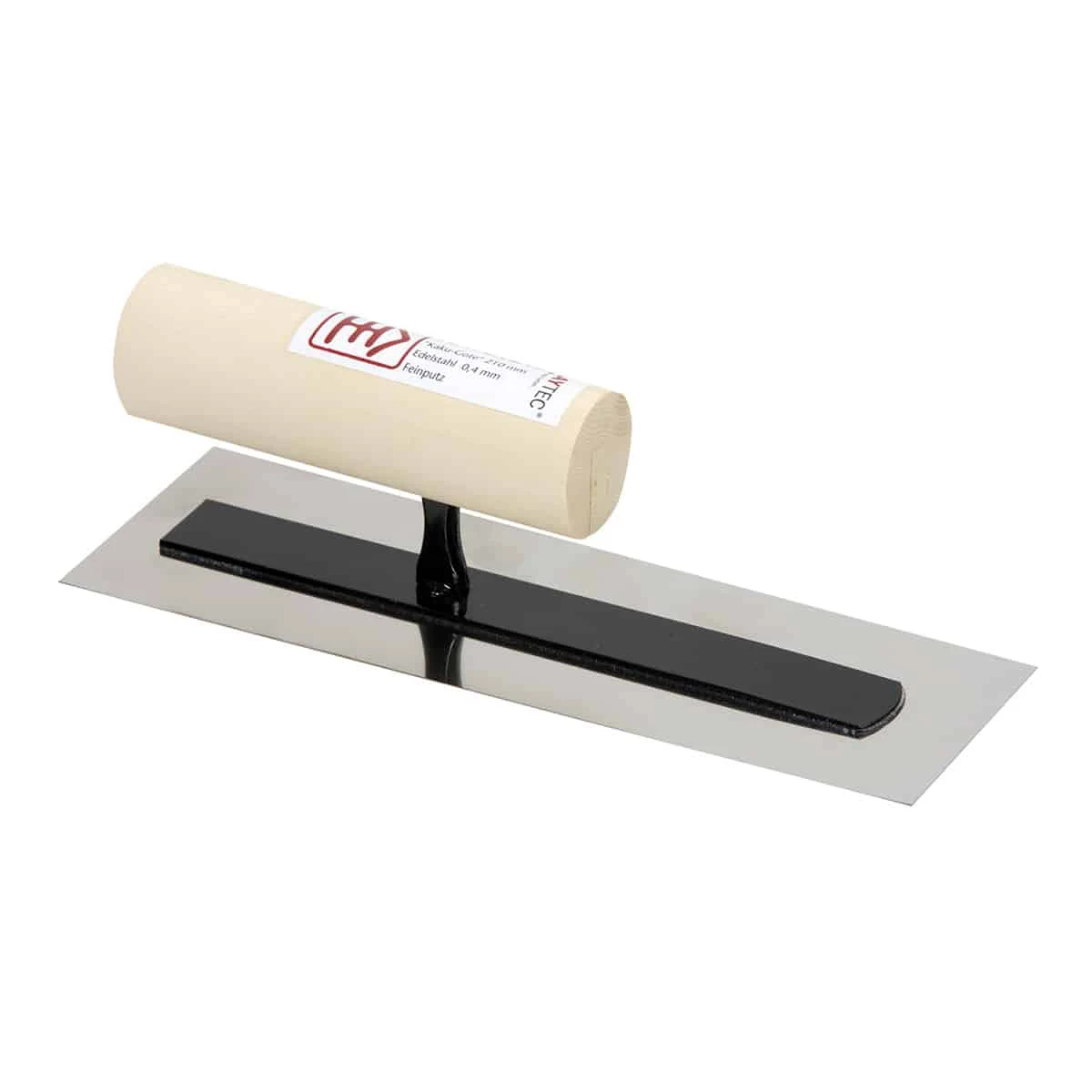
Fine plaster smoother flat web KAKU-GOTE
Stainless steel Japanese trowel with a wide flat-ridge blade, excellent for finishing…
from40,99 €
Japanese trowels from ClayTec for clay plaster, made of hon-yaki steel and stainless steel in the Japanese tradition. There is a dedicated trowel for every work step: base plaster, fine plaster, corners and joints.
9 products in Japanese trowels
Stainless steel Japanese trowel with a wide flat-ridge blade, excellent for finishing…
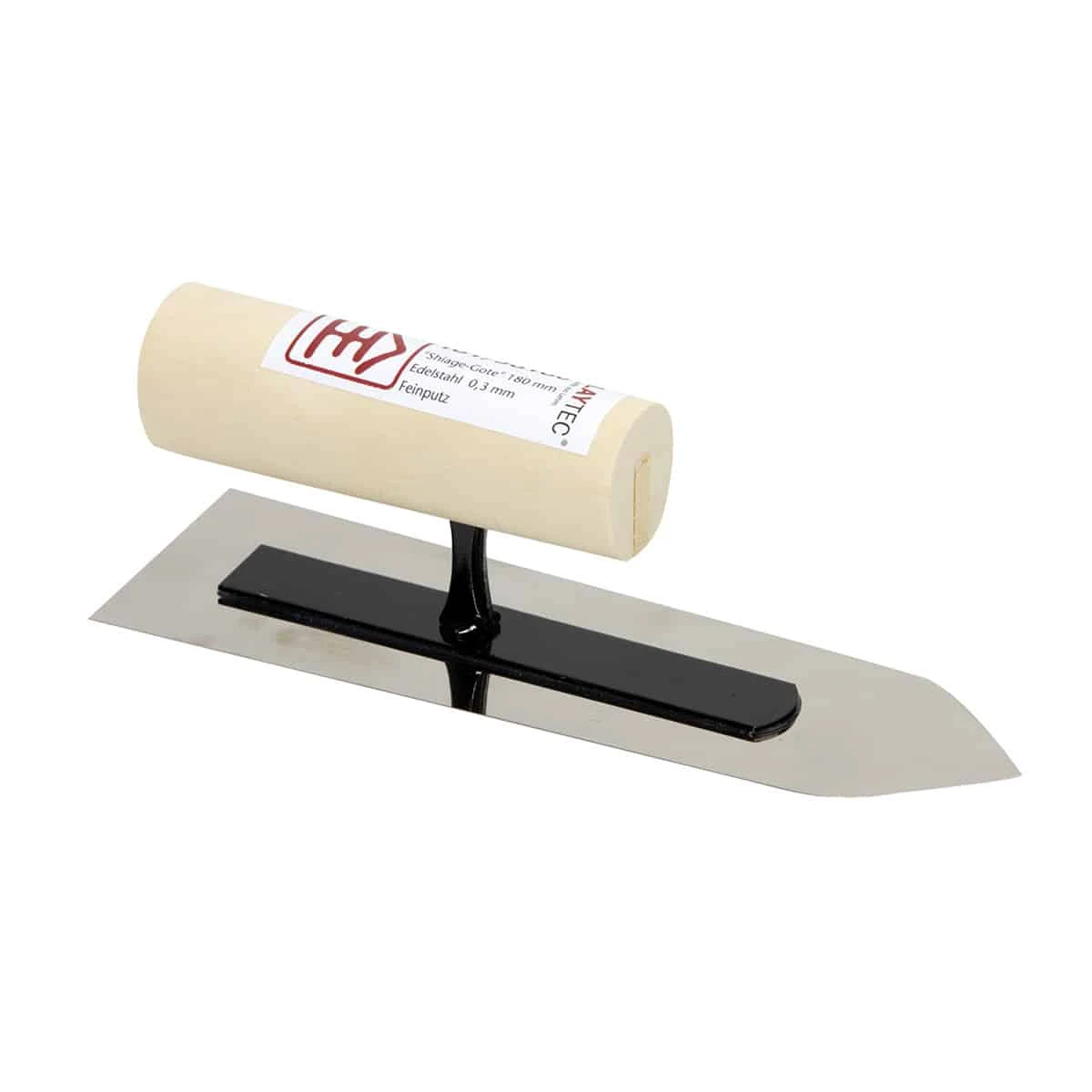
Stainless steel Japanese trowel with a very thin, flexible blade and flat ridge, for smooth…
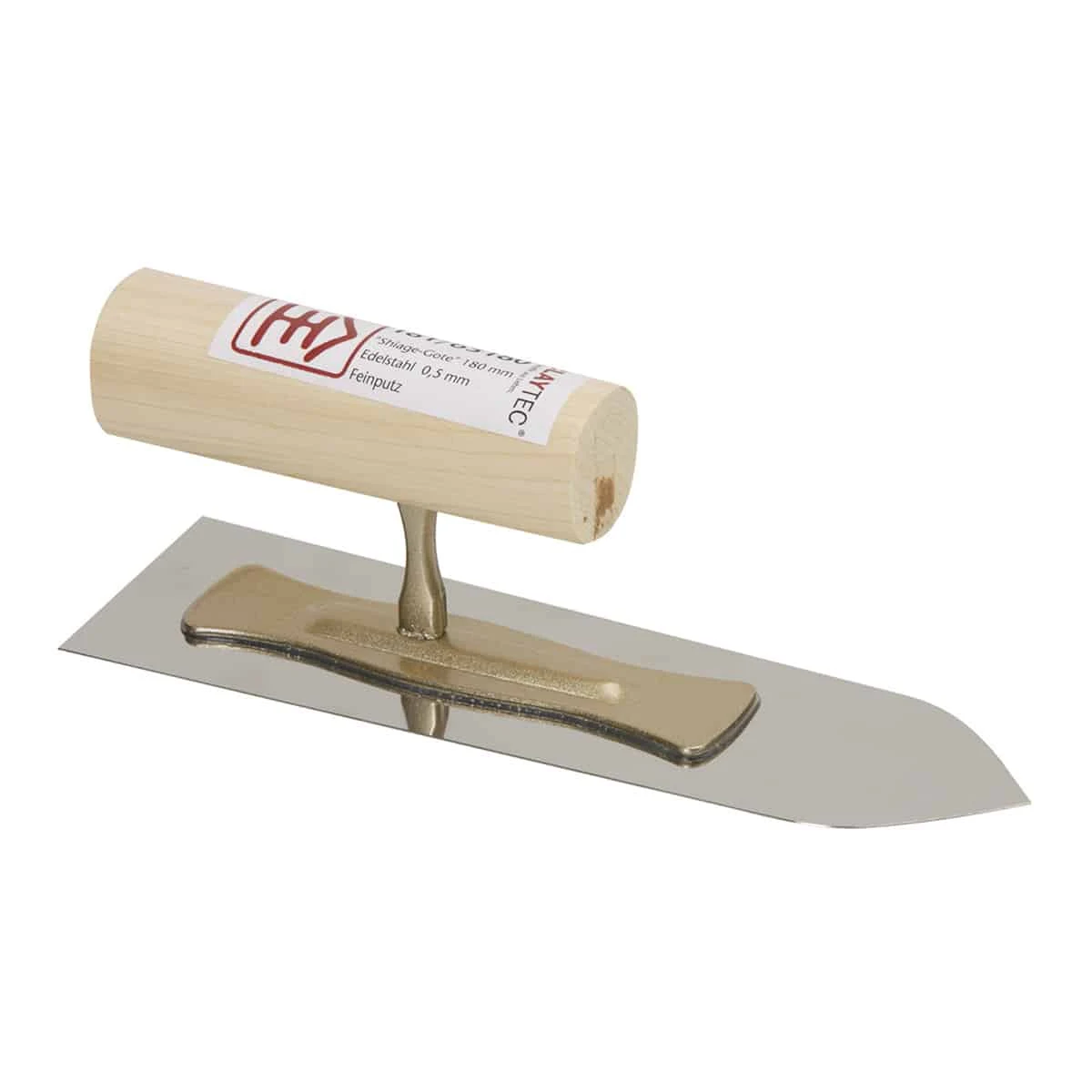
Stainless steel Japanese trowel with ridge mounting, for spreading and distributing…
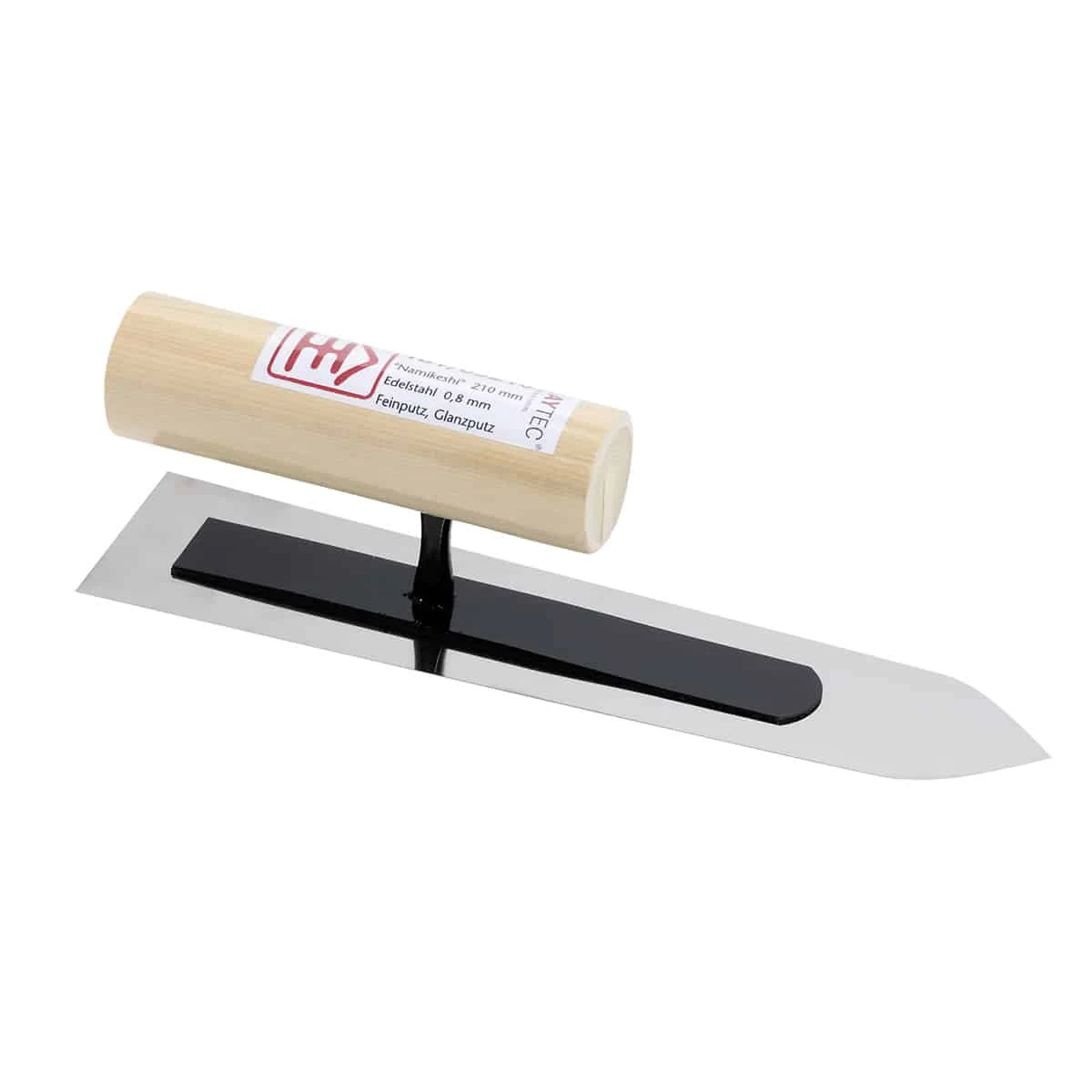
Stainless steel Japanese trowel for spreading, smoothing and finishing YOSIMA clay d…
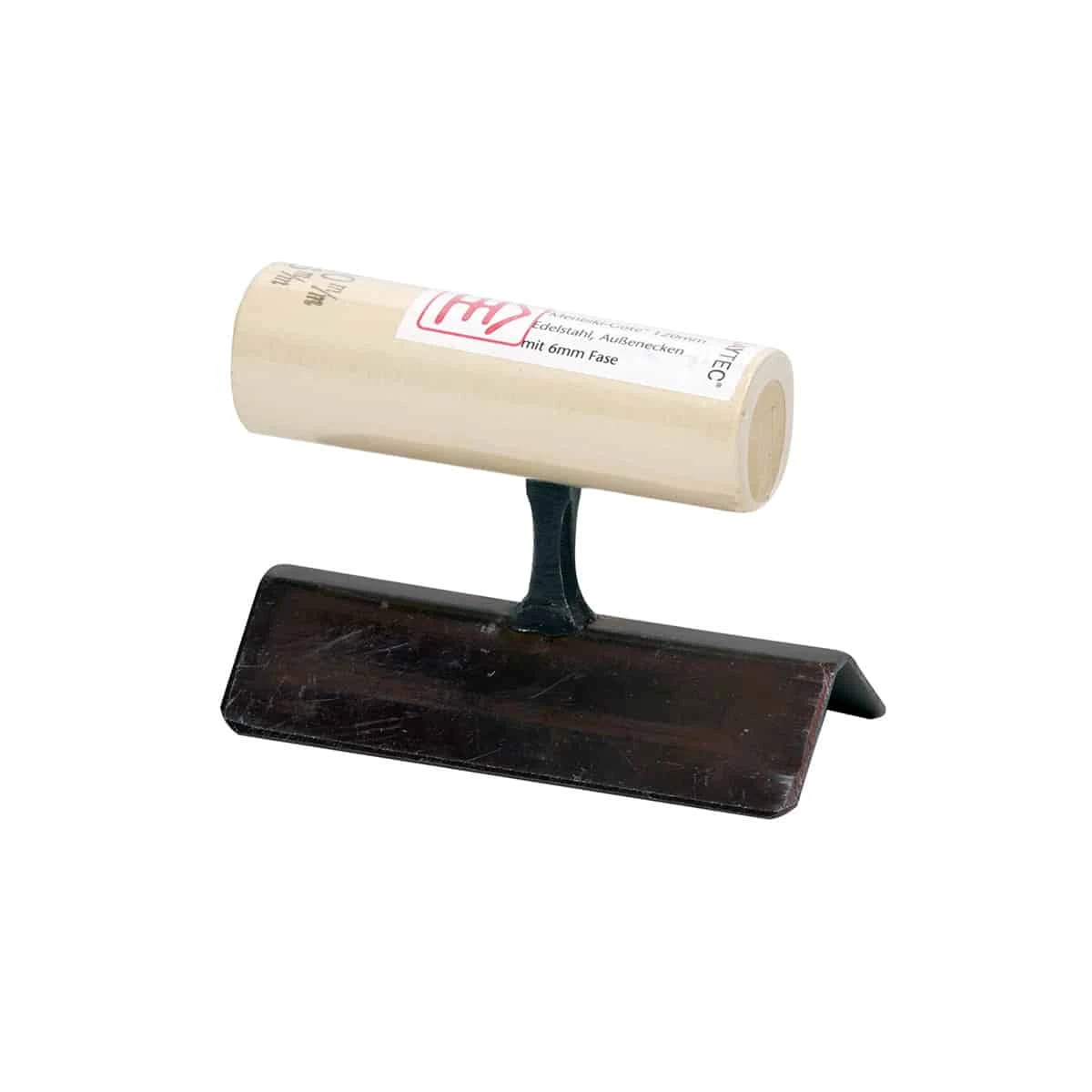
Japanese trowel made of forged steel for the precise execution of chamfered outside arrises…
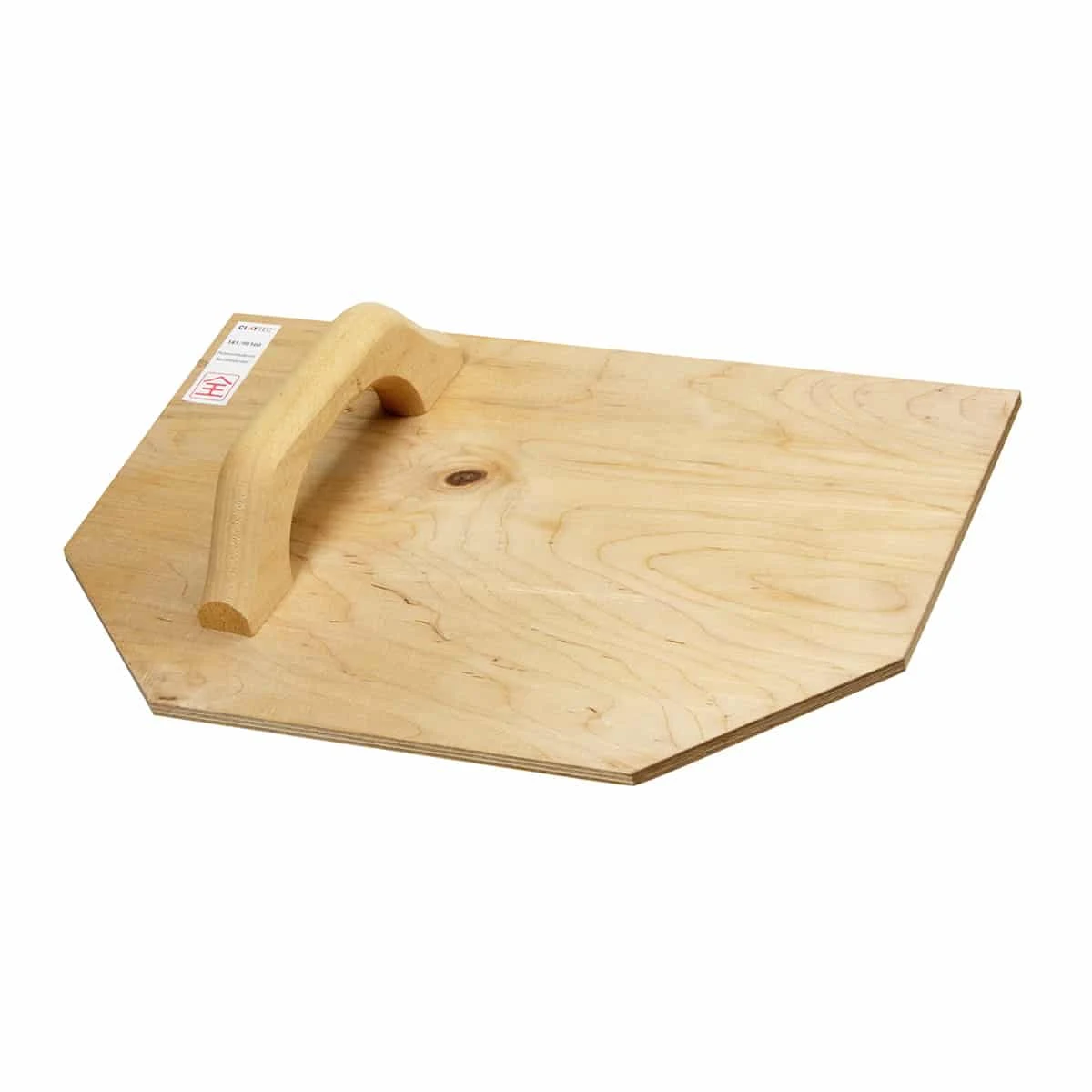
Supplementary tool for Japanese trowels made of oiled birch plywood, for spreading cl…
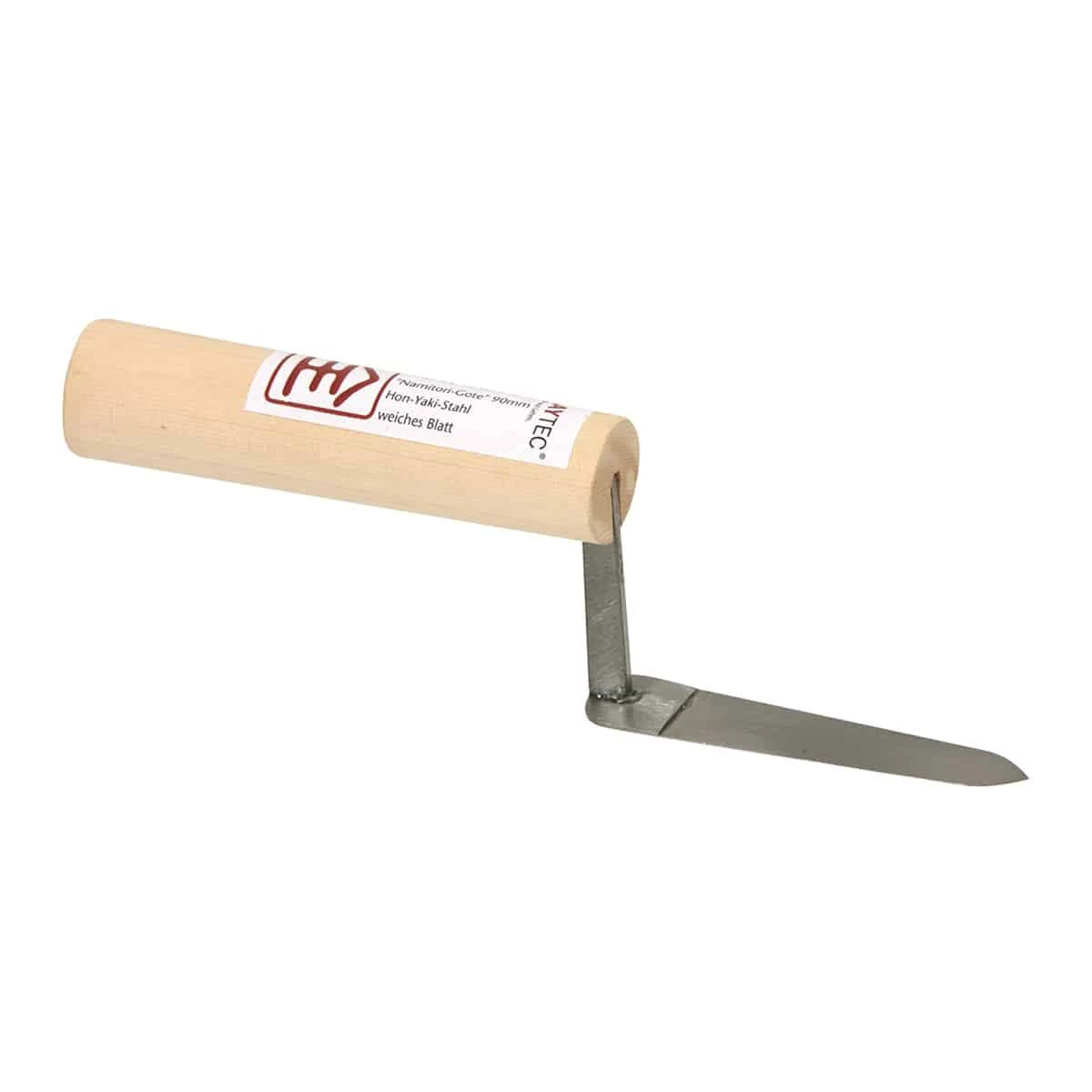
Japanese trowel made of hon-yaki steel with a soft pointed blade, for joints, hard-to-reach corn…
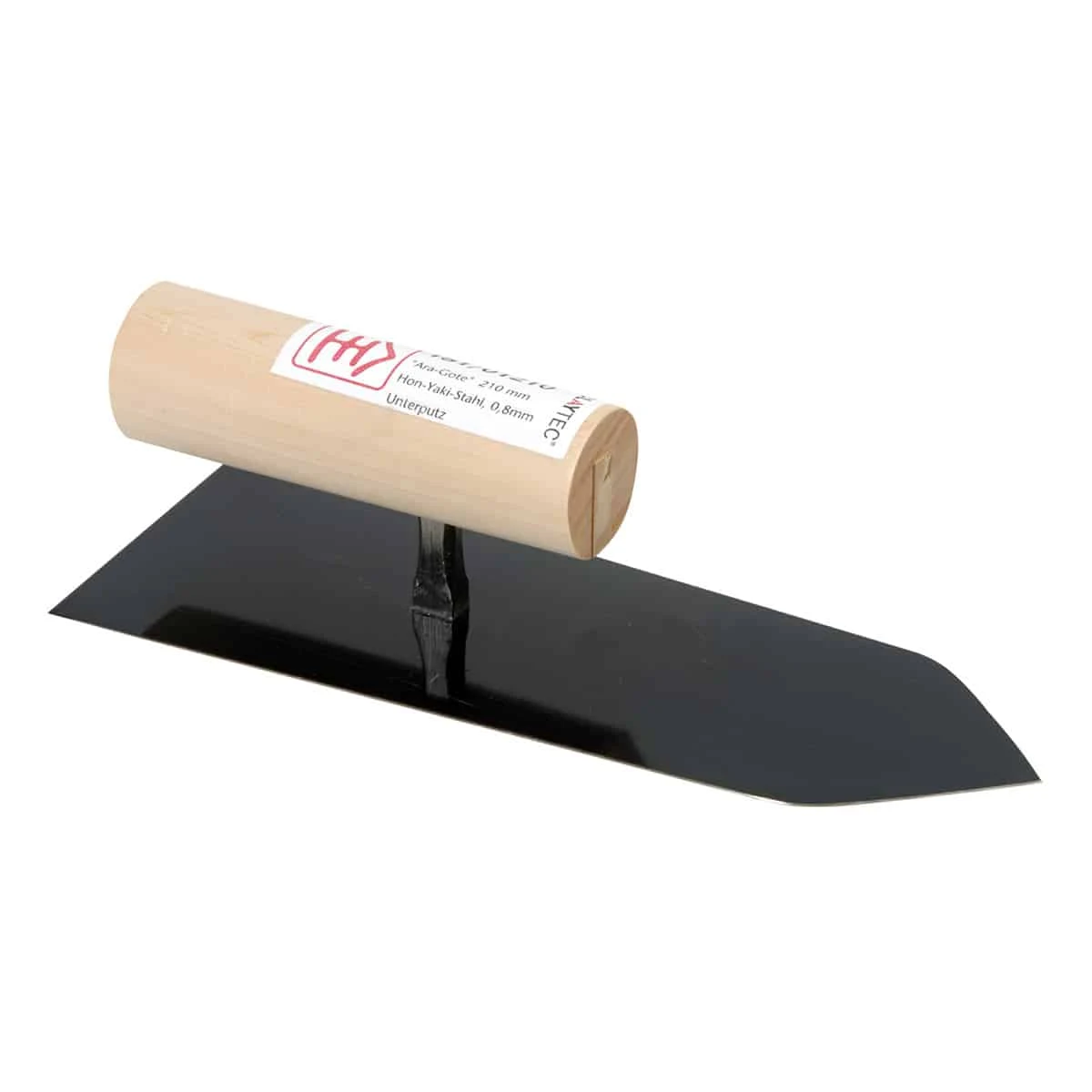
Robust Japanese trowel made of hon-yaki steel for clay base coat plaster, for spreading, distributing a…
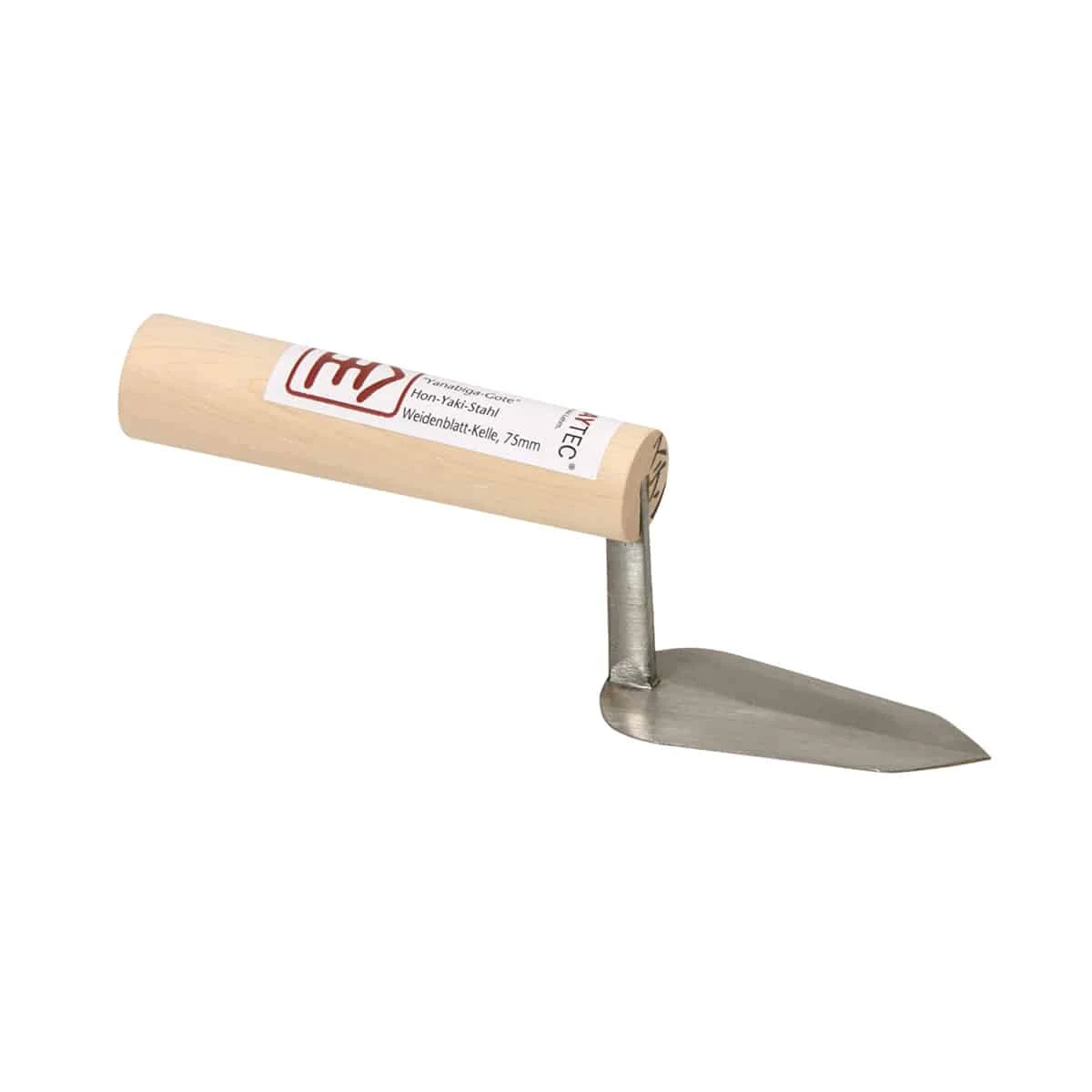
Japanese trowel made of hon-yaki steel in a characteristic willow-leaf shape, for precise plaster de…
For clay base plaster and coarse clay top plaster you use the ARA-GOTE base plaster trowel. Its 0,8 mm thick blade of forged hon-yaki steel is rigid. You use it to pick up the plaster, spread thrown or sprayed mortar and level the surface.
The trowel comes narrow and wide. The narrow version picks up the mortar from the mortar board; the wide one distributes and levels it on the wall.
From the hawk made of oiled birch plywood you take portions of clay and lime plaster directly onto the surface. It complements base plaster and fine plaster trowels and is indispensable when plastering ceilings and sloping roofs. The handle is on the underside; the hawk is carried in the crook of the arm.
Tips
You work fine clay plaster and YOSIMA clay design plaster with trowels of rolled stainless steel. The SHIAGE-GOTE ridge fine plaster trowel with a 0,5 mm blade picks up and spreads the material. Its ridge mounting gives the blade a slight pre-tension, which makes even, thin layers easier.
For smoothing and finishing, the SHIAGE-GOTE fine plaster trowel with flat ridge follows: its 0,3 mm thin blade hugs the plaster surface, and the flat ridge lies flat. For large wall areas there is the KAKU-GOTE fine plaster smoother with a wider blade. It compacts and smooths the plaster layer in one go without overlap lines and also smooths coarse clay plaster.
The fine plaster trowel NAMIKESHI with a slim 0,3 mm blade is intended for YOSIMA, for spreading, smoothing and the final smoothing stage. ClayTec aims it at users experienced in Japanese plastering.
You work corners, reveals and wall connections with the YANAGIBA-GOTE willow leaf trowel, in base plaster as well as fine plaster; it comes in two lengths. The NAMITORI-GOTE pointed trowel has a soft, tapering blade that adapts to the surface. With it you work plaster into joints, cracks and tight angles and repair existing plaster.
You draw chamfered external edges with a defined chamfer width with the chamfer margin trowel MENBIKI-GOTE UCHIMARU KAKUMEN made of forged steel. Its angled blade creates an even chamfer at external corners in clay fine plaster and YOSIMA. You choose the chamfer width with the variant.
Hon-yaki steel and forged steel rust when damp. This applies to the base plaster trowel, willow leaf trowel, pointed trowel and margin trowel. After work, remove the plaster residues, wipe the blade dry and rub it thinly with care oil.
The rolled stainless steel trowels are rustproof and low-maintenance. Protect their thin blades from bending and store them lying flat or hanging.
Tips
Yes, if you keep them carefully rust-free with good care; ClayTec explicitly points this out for trowels of hon-yaki steel and forged steel. Without this care, for YOSIMA you work with the stainless steel trowels: fine plaster trowel with ridge, fine plaster trowel with flat ridge, KAKU-GOTE fine plaster smoother and NAMIKESHI.