
Beneficial insects instead of chemicals
An upturned clay pot with leaves and grass clippings becomes a shelter for earwigs. They deal with aphids on their own.
GARDEN & NATURE
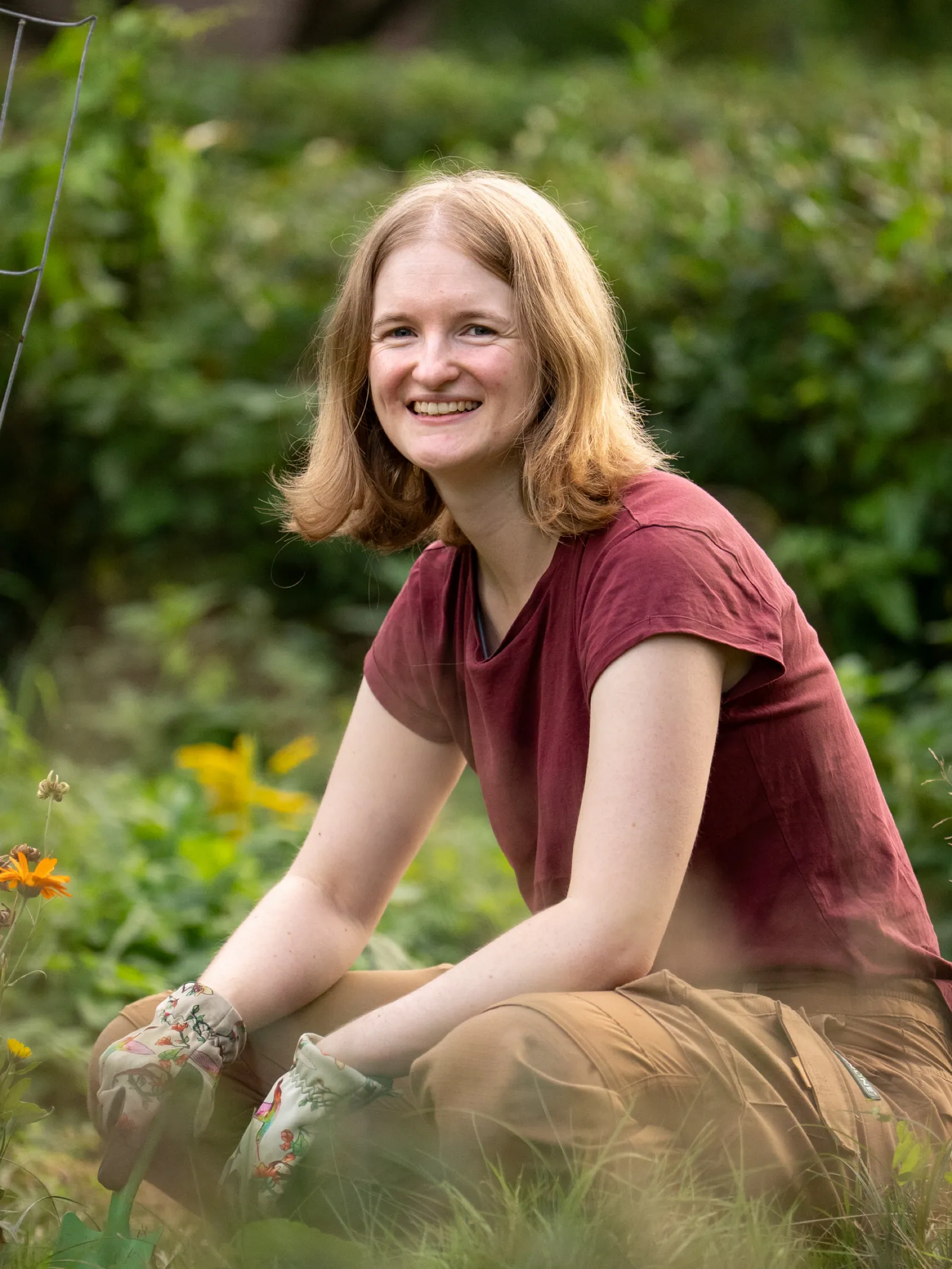
Lissi has made Bremen her home, is a nature photographer and has been renting an allotment for around two and a half years. Her goal: a garden in which insects and birds feel at home and which still provides plenty of organic vegetables and fruit. No chemicals, no plastic, but plenty of curiosity and the willingness to learn from mistakes. I share exactly this attitude at Lehm-Revival: building and gardening with what nature provides anyway.
An upturned clay pot with leaves and grass clippings becomes a shelter for earwigs. They deal with aphids on their own.
Wild corners around the pond are deliberately left wild. Wild bees such as the leafcutter bee are grateful for it.
Ground elder was once a monastery vegetable. Lissi shows what grows in the garden before you pull it out.
Raised beds made of willow rods instead of plastic: durable, beautiful and compostable in the end.
Open-pollinated tomato varieties bring their own seeds. From one ripe fruit, Lissi grows the plants for the next season.
No bird netting, no slug pellets. As long as there is enough for everyone, the animals that depend on food from nature get their share of the harvest.
Clay, lime, wood, willow, loam: what works as a natural building material in the house works just as well in the garden. A clay pot becomes a hotel for beneficial insects, a clay wall a nesting aid for wild bees, lime keeps fruit tree trunks healthy. Lissi brings the perspective from the vegetable bed. Together we create something you can touch, live in and harvest.
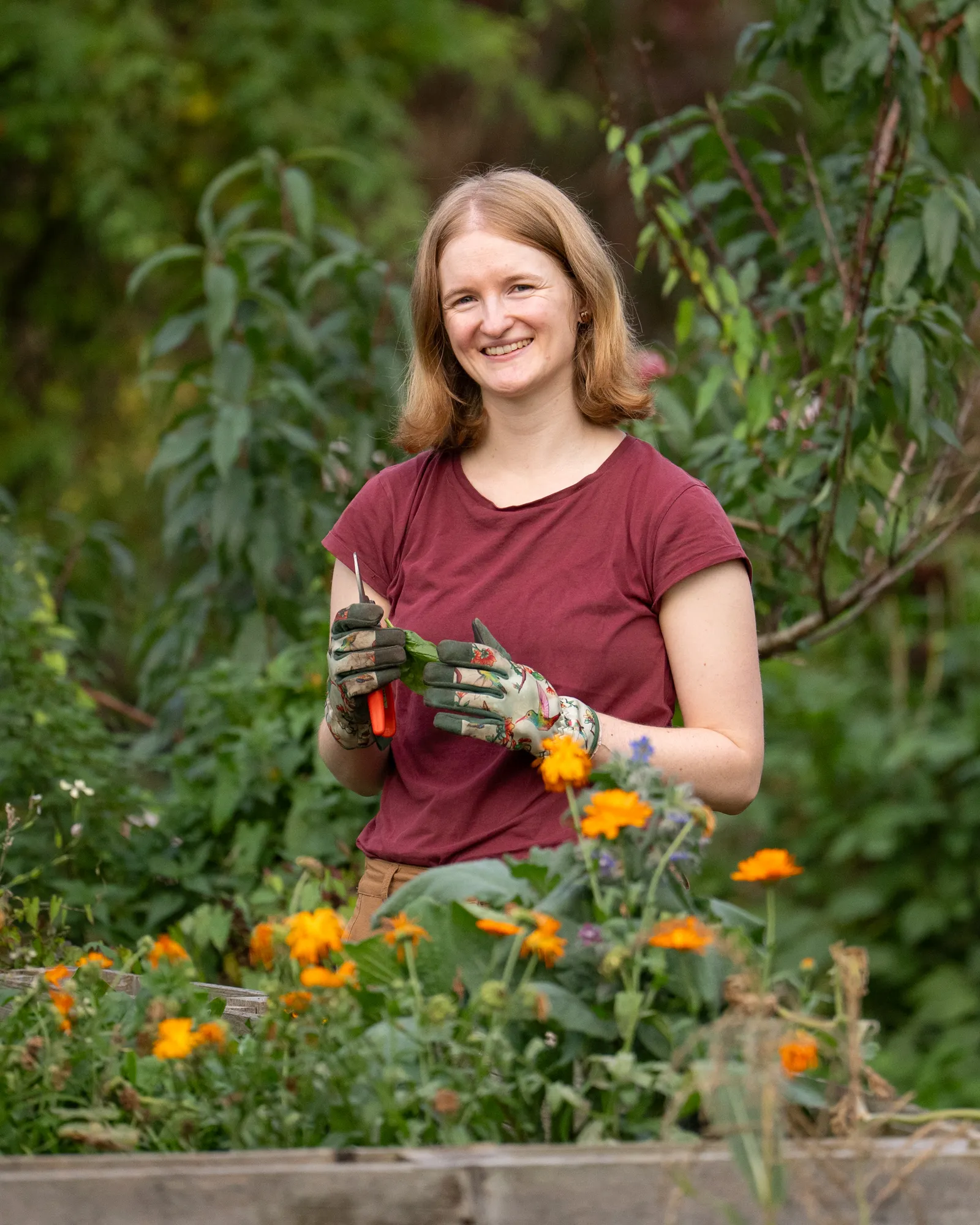
Take everything easy. The garden is also there for resting. If you do less now and then, you often do nature a favour.
Animal photos and posts: Lissi Savin. Portraits and video: @_crofon_.