
Bestseller
fast delivery
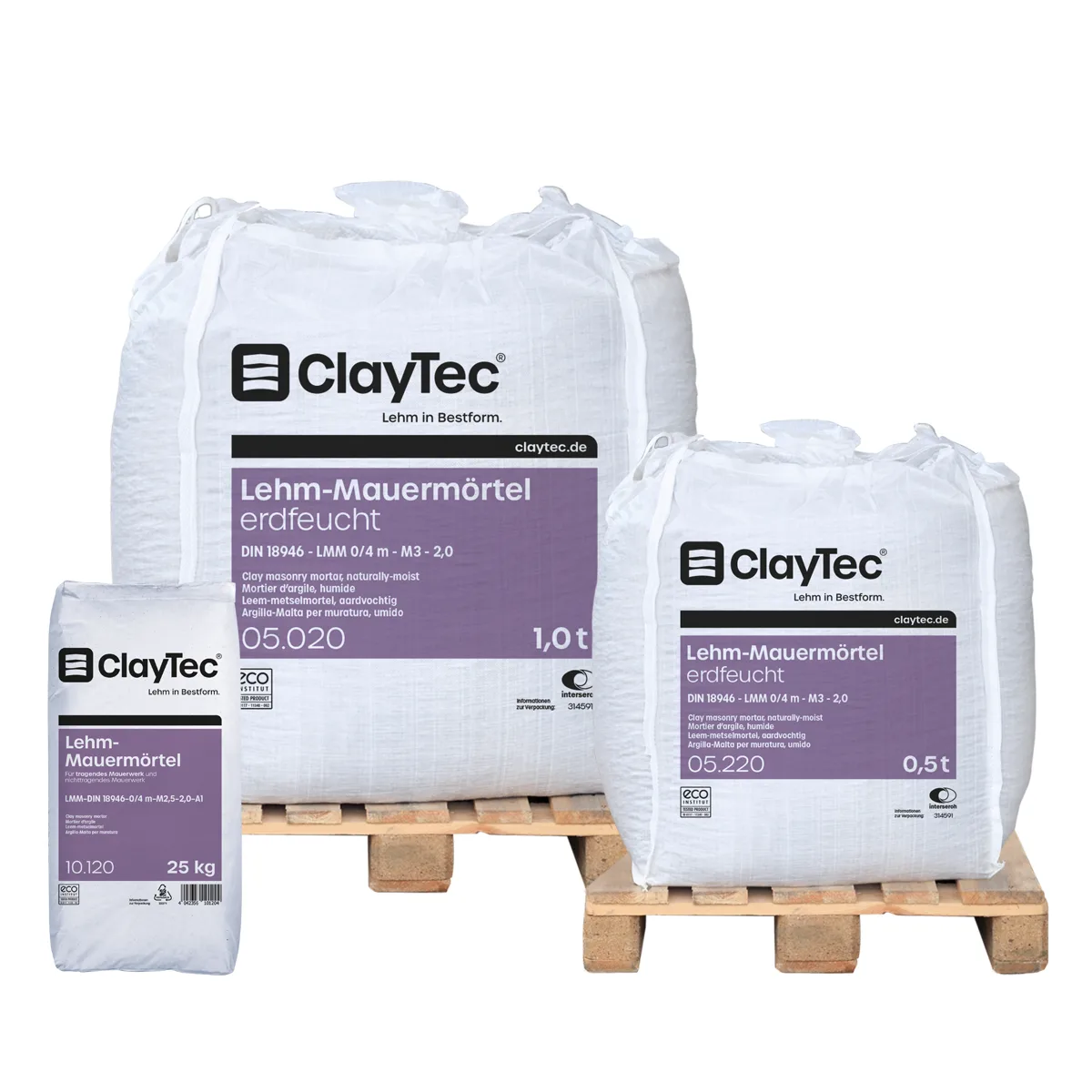
Clay masonry mortar
High-quality clay masonry mortar according to DIN 18946 for laying clay blocks in inter…
from14,99 €
7 products in Mortar & adhesive
High-quality clay masonry mortar according to DIN 18946 for laying clay blocks in inter…
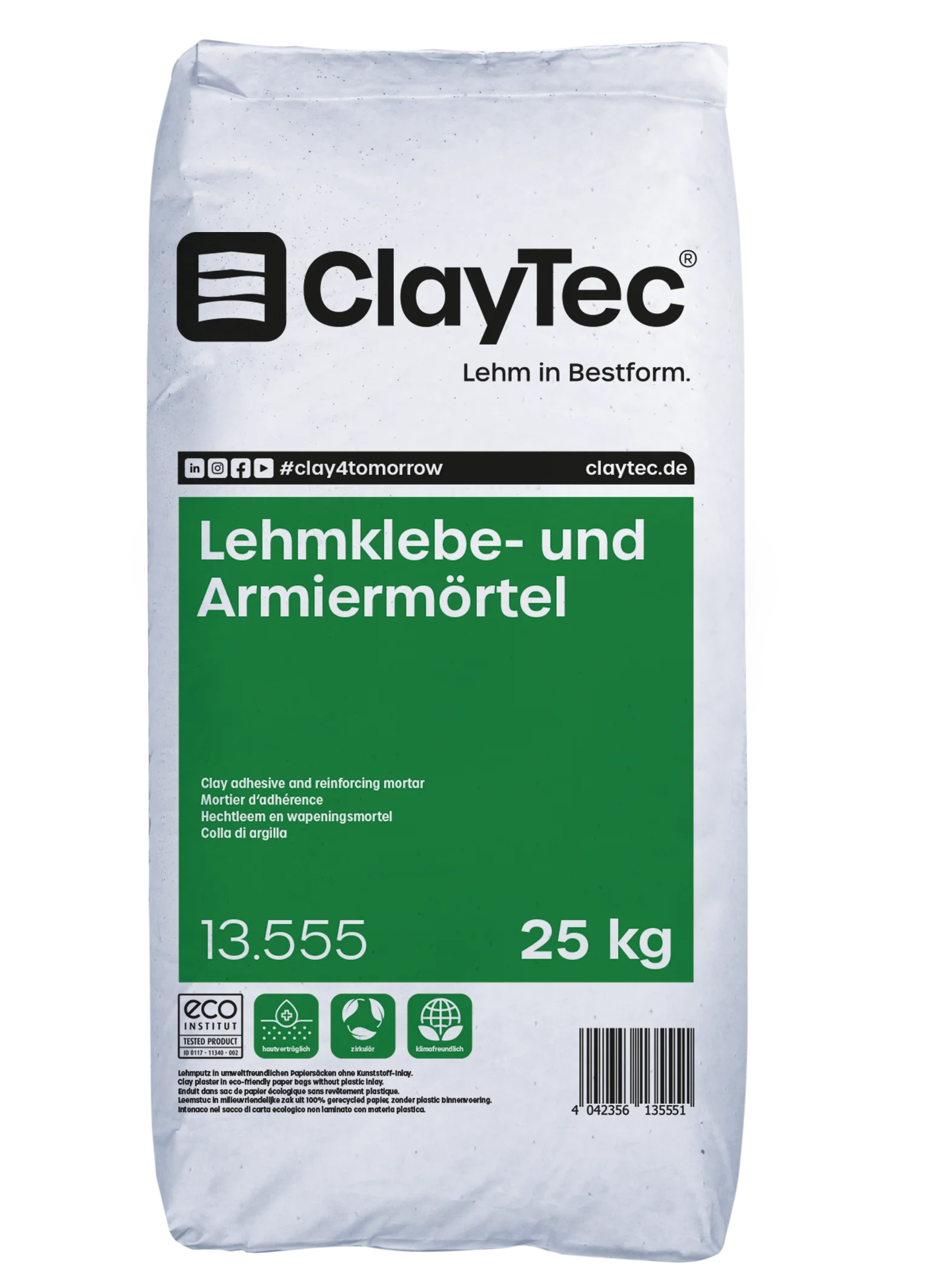
ClayTec clay adhesive and reinforcing mortar is a versatile high-performance mortar for th…
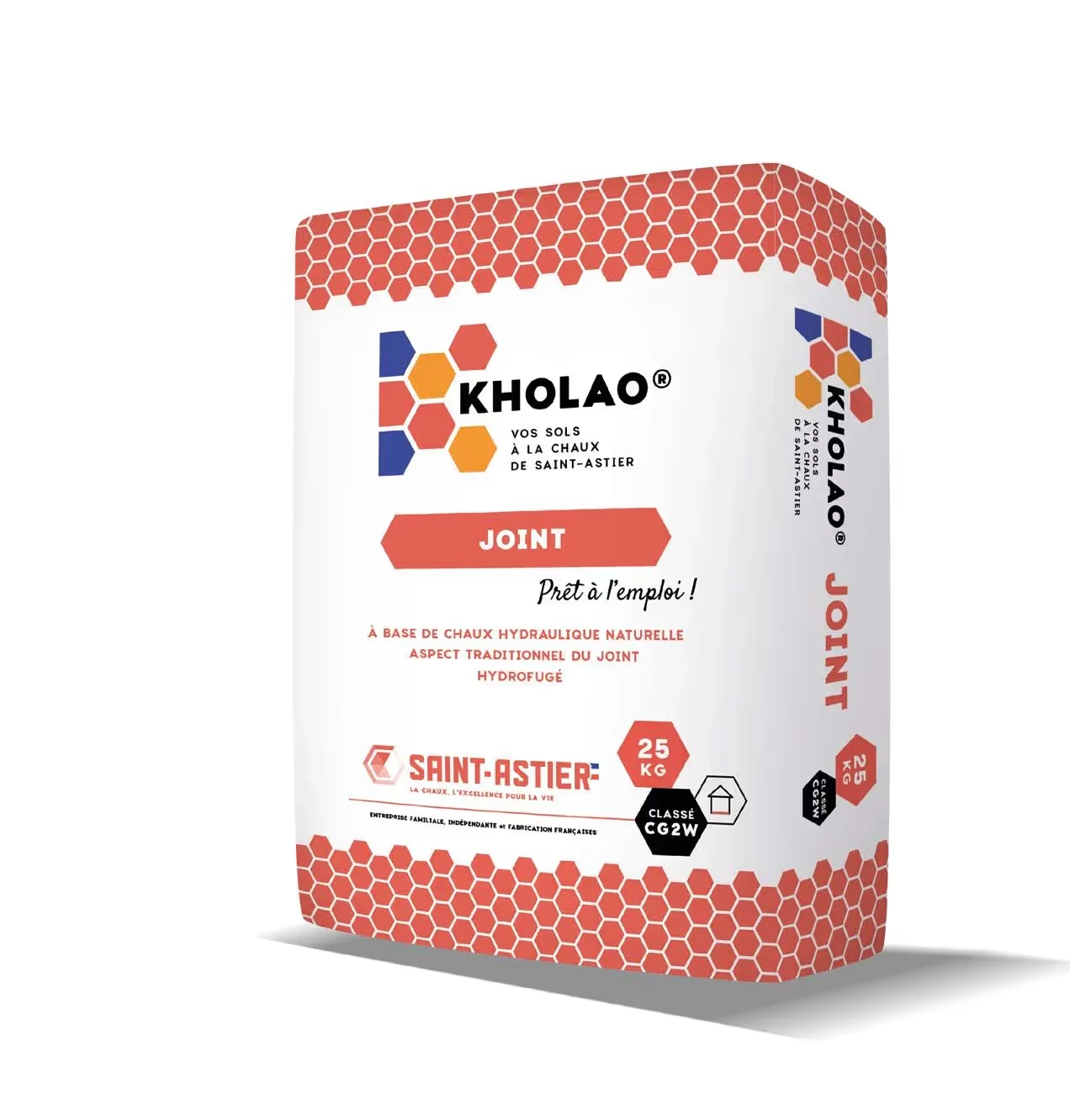
Joint mortar made of natural hydraulic lime from Saint-Astier® for terracotta and nat…
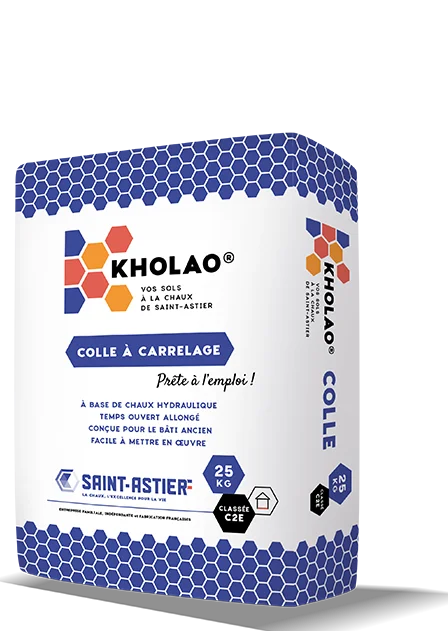
Adhesive mortar based on natural hydraulic lime from Saint-Astier® for lay…
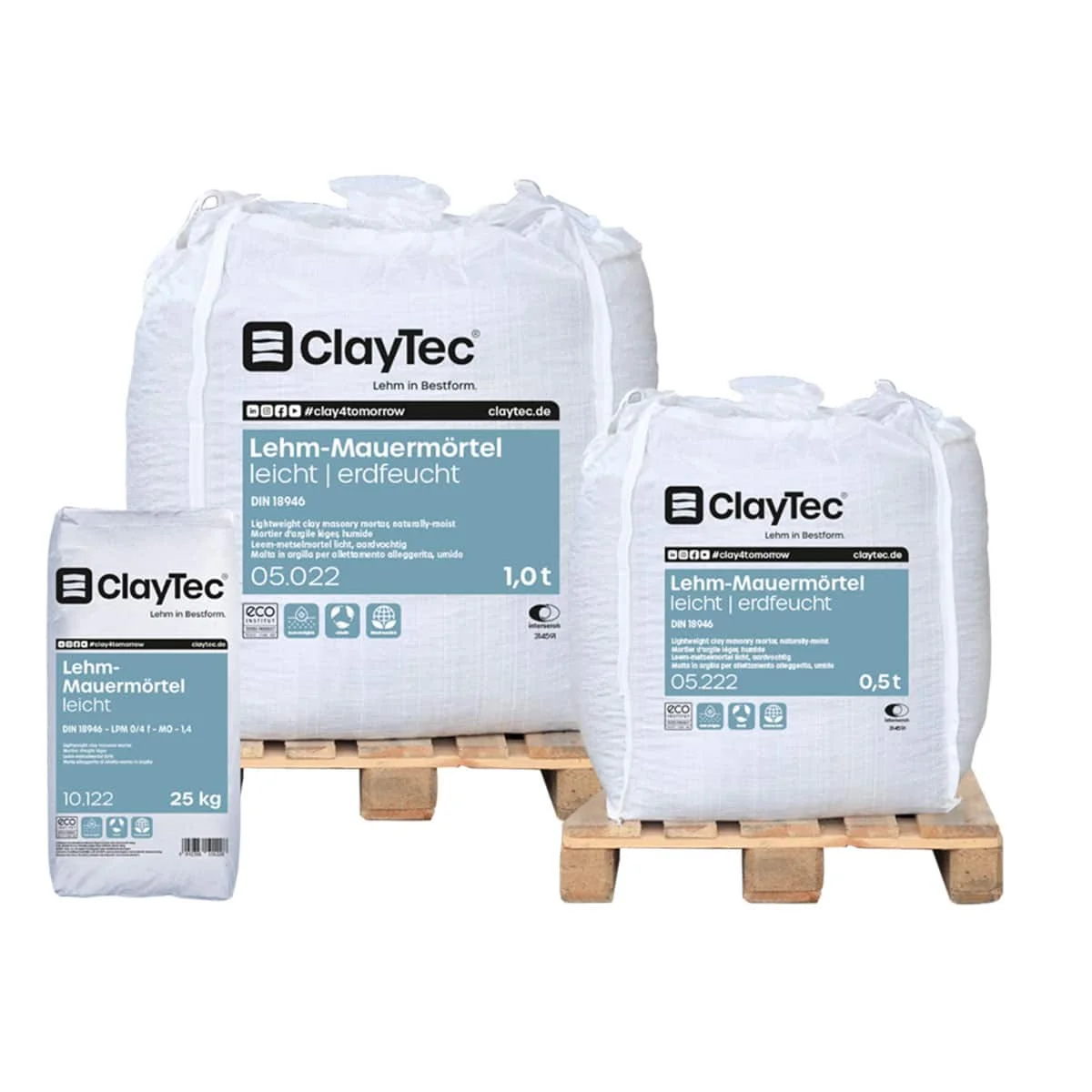
High-quality clay masonry mortar LIGHT according to DIN 18946 for laying light clay blo…
IsoHemp thin-bed adhesive mortar is the mortar you use to lay hemp blocks. It b…
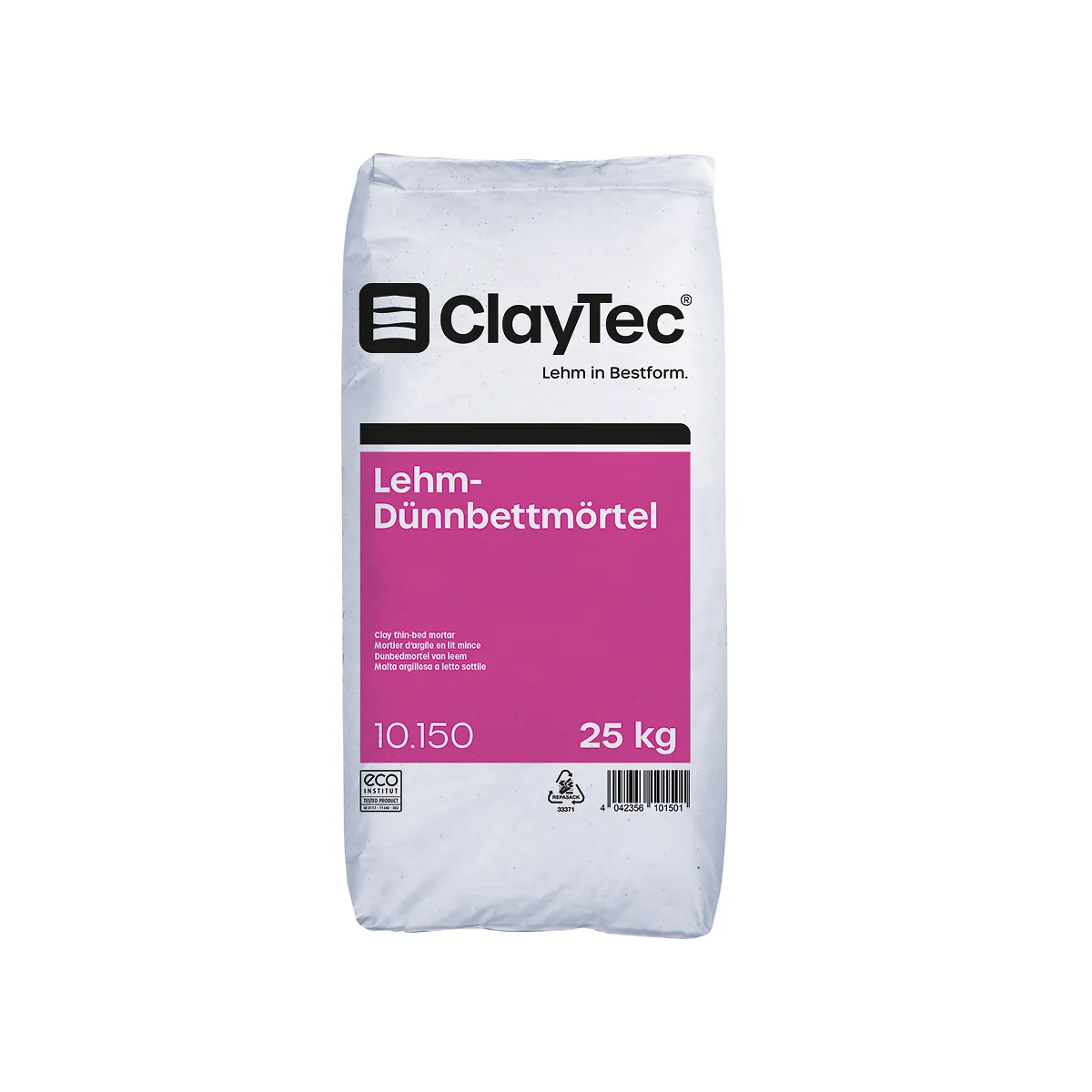
Masonry mortar for load-bearing clay block masonry up to building class 5, brick masonry up to b…
Clay thin-bed mortar bonds level precision blocks in a layer about 2 mm thick. According to Z-17.6-1306 and Z-17.11-1327, it is intended for load-bearing clay block masonry up to building class 5 and brick masonry up to building class 4. It contains no cement or lime and remains water-soluble, so that bricks, sand-lime and lightweight concrete blocks can later be dismantled by type.
Mix it to a paste, let it mature for 30 minutes and work it through again. The blocks must be dry, dust-free, clean, frost-free and sufficiently absorbent. Set the next course immediately into the fresh, plastic mortar. Do not use it below 5 °C, and protect the masonry from frost and wet during drying.
Clay masonry mortar according to DIN 18946 has strength class M2,5, the LIGHT variant with wood granulate and lower bulk density class M0. Mix it in a free-fall, pan or trough compulsory mixer, small quantities with a mixer or by hand. Covered, it remains workable for several days. With the light masonry mortar you do not need to moisten the blocks. Lay with full joints; head and bed joints are no thicker than 10–15 mm. The mortar colour may differ from the block colour.
Stir clay adhesive and reinforcing mortar into clean water, let it rest for 30 minutes and work it through again. For bonding, spread it thinly and continuously onto the back of the board with 8–10 mm notching, place the board immediately and press it firmly. For a reinforcement layer, apply it 3 mm thick and work the mesh into the wet surface over the full area.
Tips
KHOLAO Colle from Saint-Astier is a cement-free adhesive based on natural hydraulic lime for natural stone slabs and terracotta on interior floors, class C2E. Add the powder to the water, mix at under 500 rpm and draw the adhesive off in straight lines with the notched trowel. Soak terracotta in water for at least 24 hours beforehand. Tap the tiles with a rubber mallet until 90–100 % contact area is reached.
KHOLAO Joint is a grout of natural hydraulic lime for joints up to 15 mm wide and 50 mm deep, class CG2W; indoors for terracotta and natural stone, outdoors for porcelain stoneware and natural stone. Grout no earlier than 24 hours after laying, when the adhesive has set; press the mortar firmly into the full joint depth and clean with a slightly damp sponge after it has stiffened. Protect fresh joints from frost for at least 10 days.
Tips
No. You use clay masonry mortar and clay masonry mortar LIGHT neither as plaster mortar nor as base material for your own plaster mixes. For wall surfaces, use the ClayTec clay plasters, which are available as base, top and fine plaster.