
fast delivery
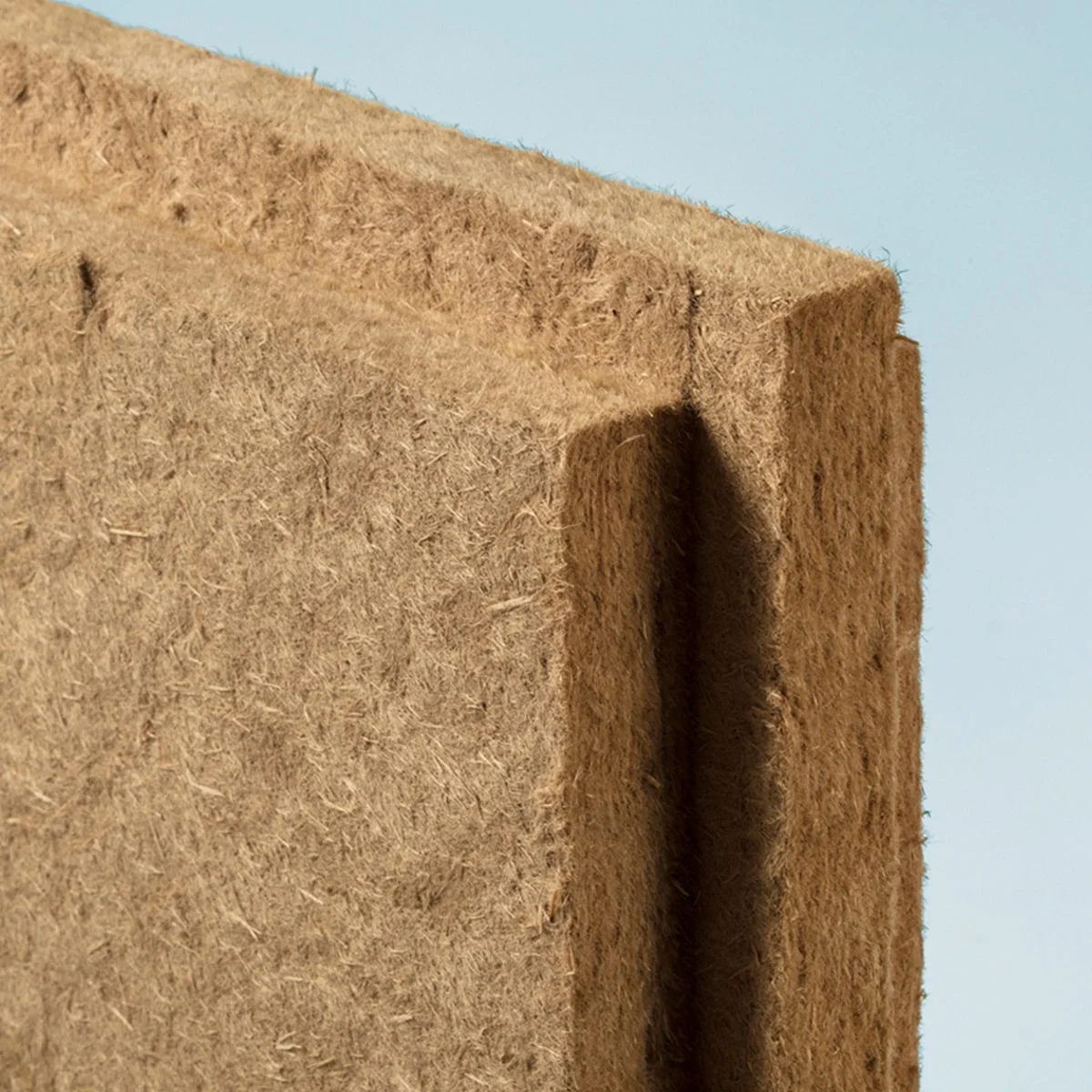
ClayTec HFD interior insulation board
Wood fibre interior insulation board for timber framing and old buildings, soft, decoupling and with excell…
from12,99 €
Wood fibre insulation comprises natural insulation boards for interior fit-out, renovation and ecological wall build-ups. The products combine thermal insulation, vapour permeability and a stable board form for constructions that make sense in terms of building physics.
2 products in Wood fibre insulation
Wood fibre interior insulation board for timber framing and old buildings, soft, decoupling and with excell…
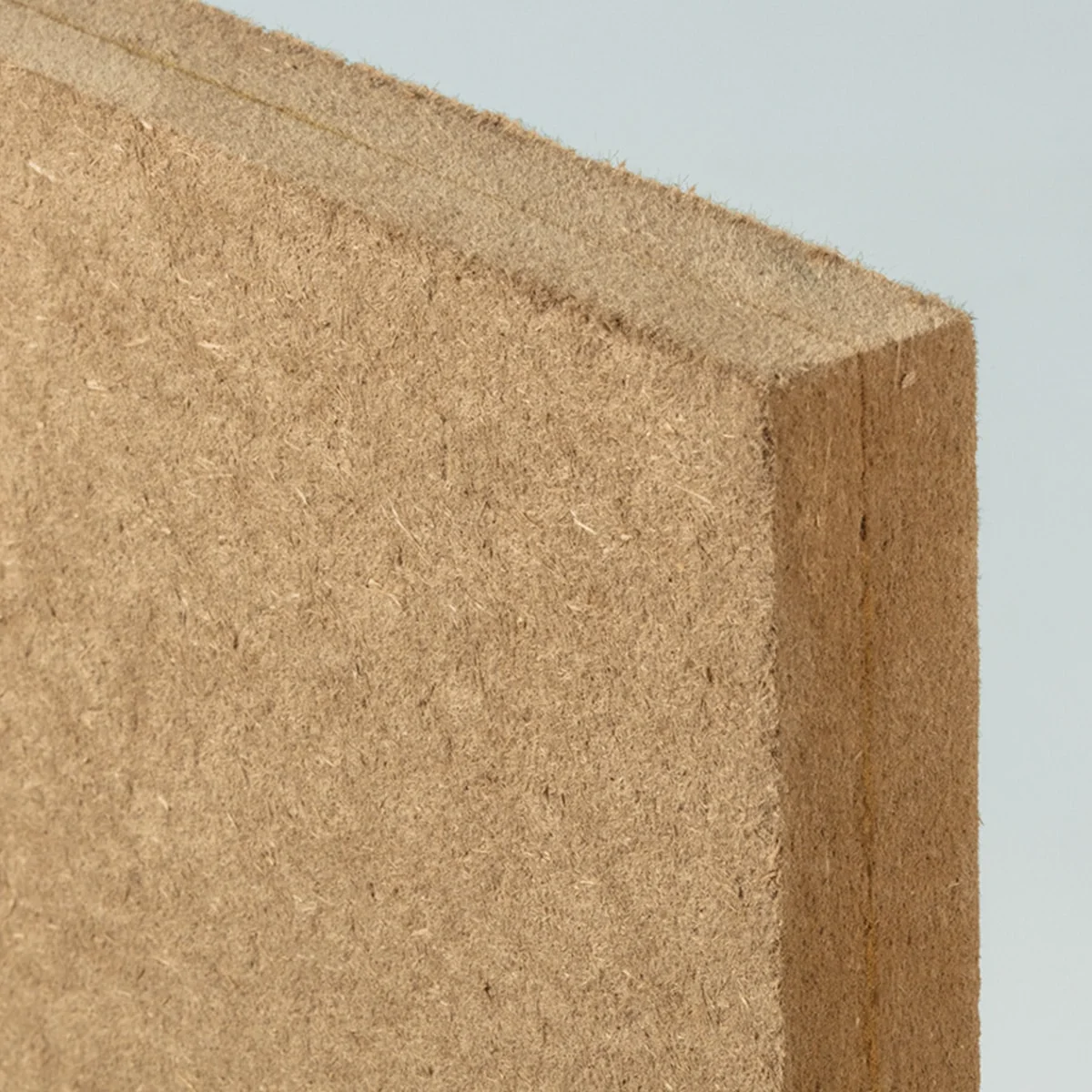
Oversized wood fibre finishing board for professionals, large areas in fewer work steps…
The ClayTec HFD interior insulation board insulates timber frame and solid external walls from the inside. It consists of wood fibres with white glue for bonding the layers and has tongue and groove. You bond it into a clay plaster levelling layer or fix it with clay adhesive and reinforcing mortar. The soft boards decouple deformations of the construction from the interior plaster.
The design value of thermal conductivity for HFD in Germany is 0,040 W/(m·K); the nominal value is 0,038 W/(m·K).
HFA maxi is a large-format wood fibre fit-out board for cladding timber and metal stud frames indoors, for interior walls, facing leaves, ceilings and roof surfaces. It is matched to the 62,5 cm grid of drywall construction and butt-jointed.
Insulation made from plant raw materials must not come into contact with components permanently exposed to moisture. Remove dense old coatings, tiles, varnishes and oil paints from the wall. Lime and clay plasters and lime paints can remain as vapour-permeable layers.
Tips
Uneven walls first get a levelling layer of clay base plaster with straw or clay plaster Mineral 20. Let layers over 10 mm dry out before mounting. Then fix the boards with clay adhesive and reinforcing mortar, on one side with a 10 mm notched trowel or on both sides with a 5–6 mm notched trowel. Alternatively, press them into a plastic mortar bed of up to 10 mm.
The printed, light, sanded side faces the room, the tongue points upwards. You press each board firmly into place, fix it immediately with an insulation washer and offset the joints by at least 300 mm. Screw or screw anchor, anchorage depth and position of the fixing points are given under fixing material.
Before plastering, dust off the boards and fill gaps from 1 mm with fine clay mortar. For the thin layer on HFD, close the screw holes and reinforce with clay adhesive and reinforcing mortar and glass mesh 60, on HFA maxi with glass mesh 112. Suitable top layers afterwards are YOSIMA with a rubbed surface, clay top plaster fine 06 and the clay filling and surface filler.
For a thick layer on HFD and on HFA boards, prime with DIE ROTE and apply clay base plaster with straw, clay plaster Mineral 20 or SanReMo at up to 8 mm per layer, on the wall up to 15 mm in total in at least two layers. Wood fibre boards absorb much less than brick, so plan and monitor the drying of thick plaster layers carefully.
On interior insulation you only use vapour-permeable coatings and limit tiles to what is necessary. In rare cases lignin can bleed through on cut surfaces; you seal these spots with commercially available products.
Install HFA maxi upright or horizontally, offset by 90° to the substructure and with a gap to the floor; cross joints are not permitted. The axis spacing is 625 mm on walls and 417 or 469 mm on ceilings. Instead of screws you can use staples 45 mm at a spacing of at most 65 mm. Cut pieces under 3 cm wide can separate in the glued layers.
You will find the requirements for the timber of the substructure and for the site climate with the clay boards, where the thinner HFA boards for reveals are also listed.
With interior insulation, rising damp, splash water and driving rain are greater dangers than condensation within the component. These moisture sources must be ruled out before installation; check above all the wall area near the floor for dampness.
ClayTec names historic brick buildings and buildings from 1900, including solid and cavity external walls from the 1920s to the 1960s, as well as timber frame houses and listed buildings. Interior insulation is the obvious choice when the facade is to be preserved or only individual rooms are insulated.
ClayTec recommends 40 or 60 mm. Use 80 mm only after careful consideration of additional moisture sources and with an experienced specialist planner. For weathered exposed timber frame facades, 40 mm applies.