

fast delivery
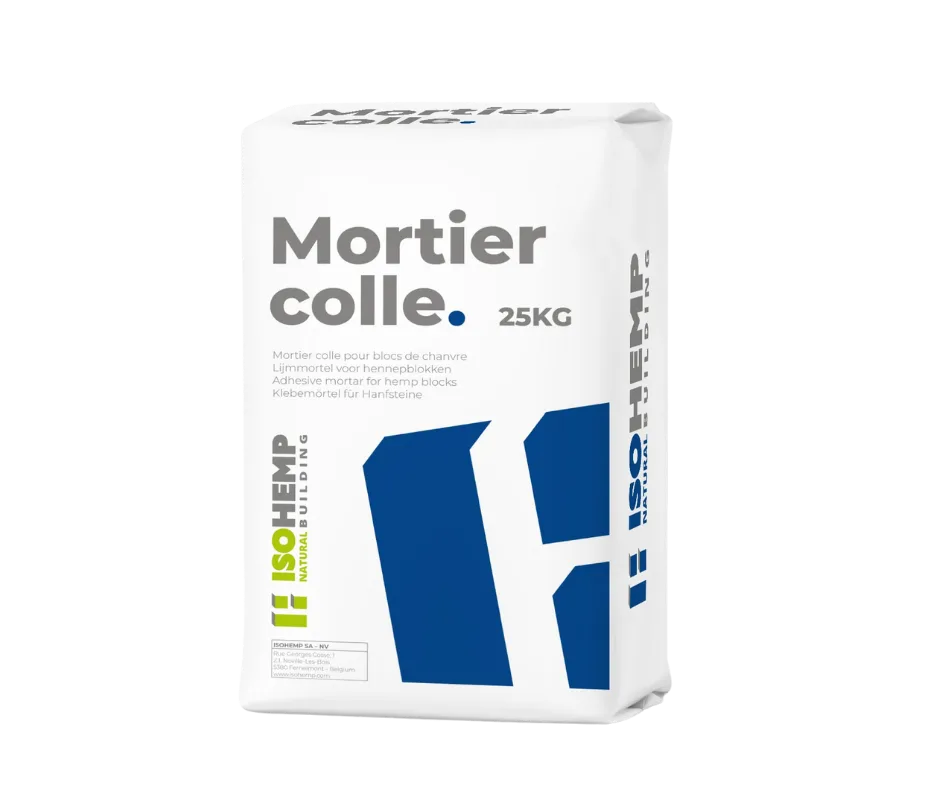
IsoHemp thin-bed adhesive mortar 25 kg
IsoHemp thin-bed adhesive mortar is the mortar you use to lay hemp blocks. It b…
27,90 €
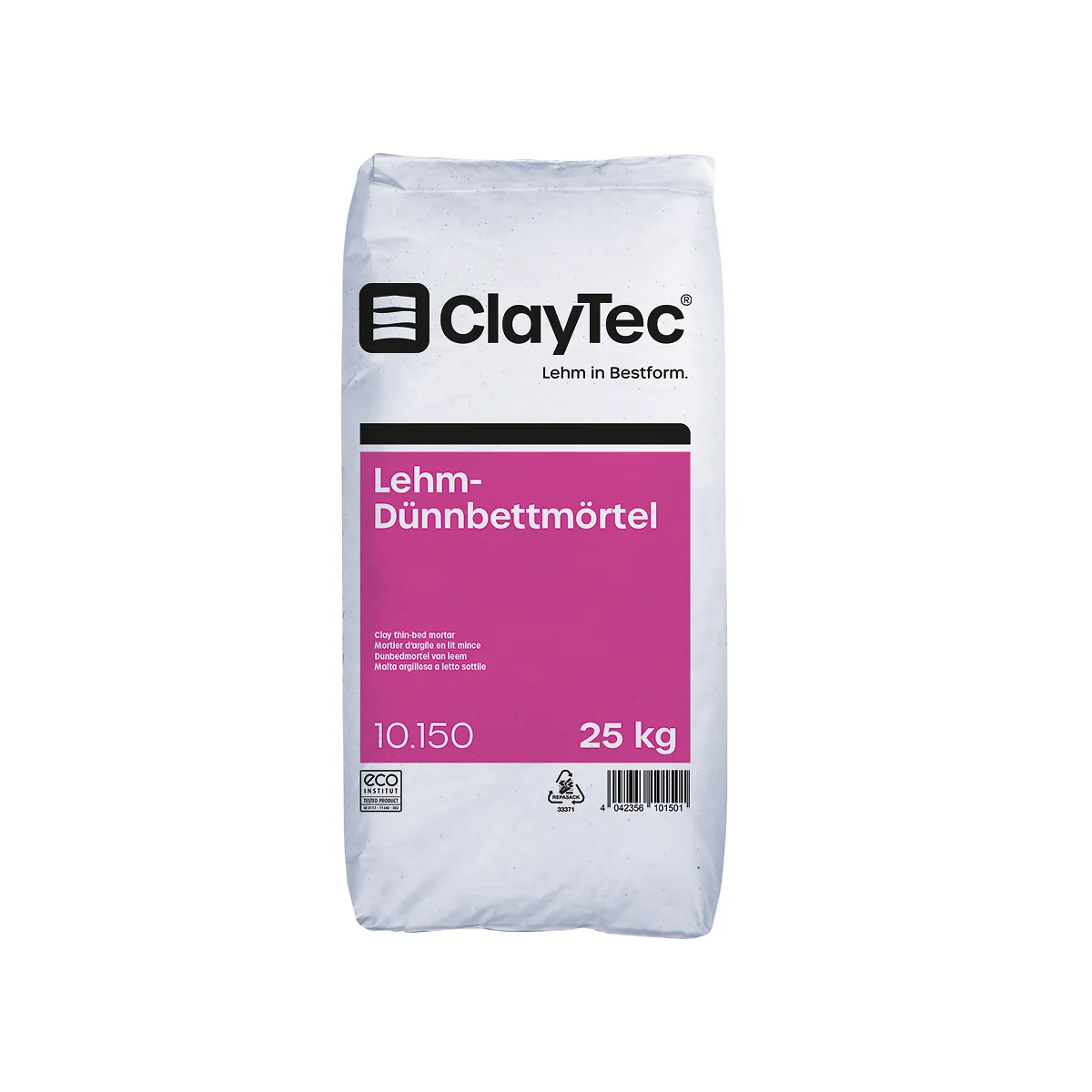
SKU: 10.150| EAN: 4042356101501
Gross price incl. 19 % VAT(1,40 €/kg)
Masonry mortar for load-bearing clay block masonry up to building class 5, brick masonry up to building class 4 and for non-load-bearing masonry of all kinds. Without fired binders such as cement or lime; this reduces the energy needed in production and avoids high alkalinity during application. Reversible thanks to water solubility: bricks, sand-lime and lightweight concrete blocks can be dismantled by type and reused.
Volume discount for full pallets
Deducted automatically in the basket.
25 kg sack
Gradually stir 25 kg of dry mix into 8,5–9,0 l of clean water with a suitable mixer, to a paste-like consistency for a mortar sled, mortar roller or application roller. After a ripening time of 30 min., work it through well again. Blocks must be dry, dust-free, clean, frost-free and sufficiently absorbent. Apply mortar about 2 mm thick without gaps to the bed faces of the precision blocks and set the next course immediately into the fresh, plastic mortar layer. Do not work below 5 °C; at high temperatures the mortar can set unusually quickly. Dry ready mix for bonding sufficiently level masonry units and precision blocks for load-bearing clay block and brick masonry in the thin-bed method according to Z-17.6-1306 and Z-17.11-1327; for non-load-bearing interior masonry without fire protection requirements. For vertically perforated clay blocks, vertically perforated bricks, sand-lime and lightweight concrete blocks.
Hardening time depends on the absorbency of the masonry units and the climatic conditions. The masonry must not be exposed to frost during drying. Protect the masonry from wet during and after drying.
Can be stored indefinitely if kept properly dry.
A 25 kg sack makes approx. 17 l of mortar for approx. 18 m² of bed-joint-bonded masonry of 4 or 8 DF blocks (wall thickness 11,5 cm) or for approx. 12 m² of 12 DF blocks (wall thickness 17,5 cm).
| Grain size | 0 to 1 mm |
| Coverage (litres) | 17 l |
| Compressive strength | 3,8 N/mm² |
| Strength class | M 2,5 |
| Shear bond strength (clay block) | 0,04 N/mm² with vertically perforated clay block (AbZ/ABg Z-17.6-1306); 0,23 N/mm² with mould-pressed clay block (according to tests) |
| Shear bond strength (brick) | 0,04 N/mm² with vertically perforated bricks (ABg Z-17.11-1327); 0,20 N/mm² with vertically perforated bricks (according to tests) |
| Working temperature min. (°C) | 5 °C |
| Approval number | Z-17.6-1306 (AbZ/ABg); Z-17.11-1327 (ABg) |
| Approval / standard | Z-17.6-1306 / Z-17.11-1327 |
| Building material class | A1 |
| Bulk density class | 1.6 |
| Diffusion resistance (μ) | 5/10 |
| Drying shrinkage | 0,4 % |
| Thermal conductivity | 0,73 W/(m·K) |
| Strength class | M 2,5 |
| Water addition | 8,5–9,0 l per 25 kg sack |
| Units per Euro pallet | 48/Euro pallet |
To go with it: my free clay building diary with drying log.
Download free of chargeFurther expert knowledge
Thin-bed mortar for clay boards and its use are explained in the article Clay boards in interior finishing: drywall construction with clay according to DIN 18948.
Clay mortars and their composition are explained in the article Clay mortar in clay building: masonry mortar and plastering mortar.