
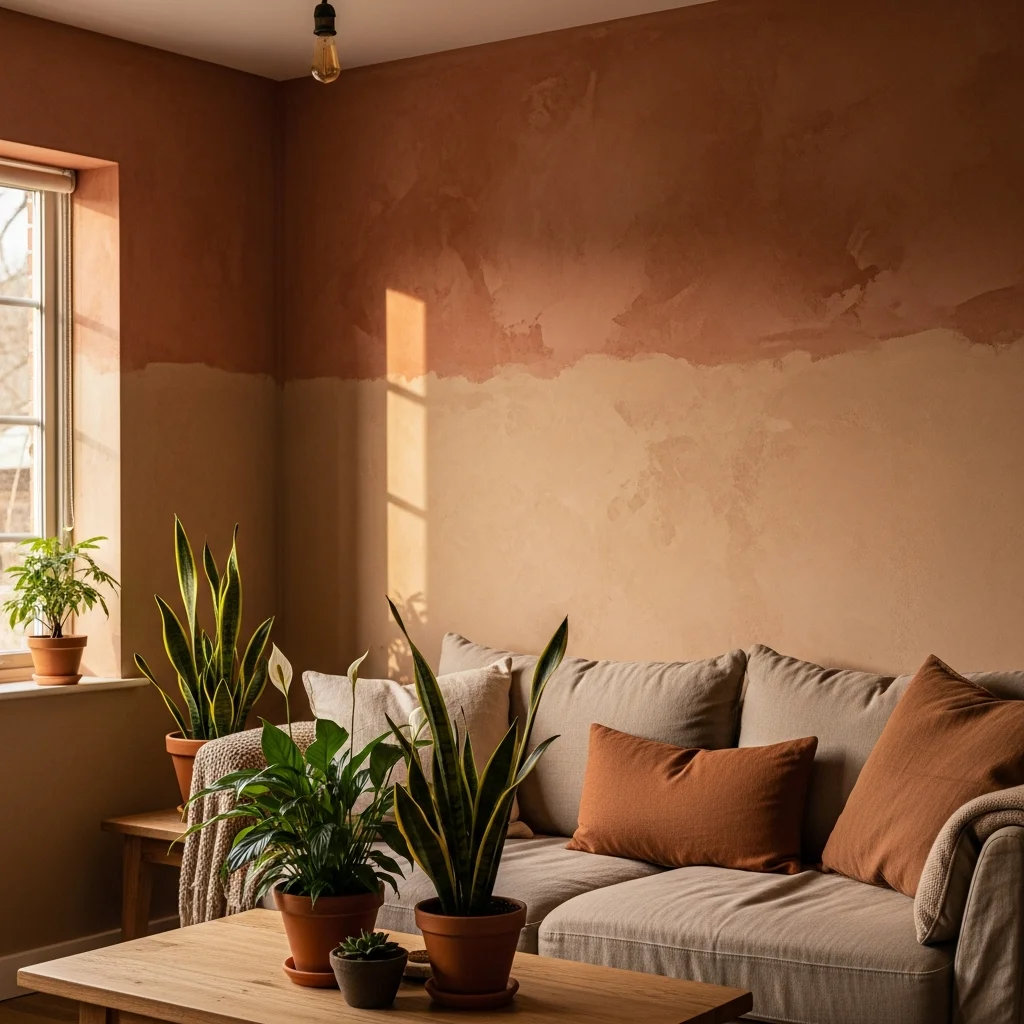
Healthy living and a natural indoor climate: why building materials are decisive

Healthy living does not begin with furniture or air purifiers but with the building materials that make up walls, ceilings and floors. Many modern buildings use materials such as plasterboard, plastic paints or dense emulsion plasters. These materials work technically but hardly contribute actively to stabilising the indoor climate. Natural building materials such as clay, lime, wood and mineral insulation, on the other hand, actively influence the indoor climate. They can buffer moisture, soften temperature peaks and at the same time create low-emission interiors. In living areas, bedrooms or children's rooms in particular, these properties are decisive for well-being and health. Clay building products such as ClayTec clay plasters, clay boards or clay paints, as used in the Lehm-Revival range, are among the most effective materials for a balanced indoor climate. They combine traditional construction methods with modern building physics research and standardised building materials.
What makes a healthy indoor climate
A good indoor climate is determined by several factors: relative humidity, temperature, air movement, pollutant load and material surfaces. The most important measurable factor is relative humidity. Values between 40 and 60 percent relative humidity are considered ideal. In this range the human body works optimally, and at the same time the risk of mould, house dust mites and respiratory irritation falls.
Air that is too dry can lead to dry mucous membranes, irritated eyes, increased dust exposure and greater susceptibility to infection. Air that is too humid, on the other hand, promotes mould growth, mite populations and unpleasant odours. A balanced indoor climate is therefore not just a question of comfort but also of health.
The importance of wall surfaces
Walls form the largest surface in a room. That is why they influence the indoor climate more than many people assume. Building materials can be divided into two groups: passive and active materials. Passive materials such as emulsion paints, synthetic resin plasters or plastic coatings behave neutrally. They hardly absorb any moisture and release none either.
Active materials, on the other hand, have sorption capacity. This means they can absorb water vapour from the air and release it again. These materials include in particular clay, lime, wood and mineral plasters. Among these building materials, clay has the strongest ability to buffer moisture.
Clay: the most effective building material for indoor climate
Clay is a natural building material made of clay minerals, silt and sand. Its microscopic pore structure enables it to absorb moisture from the indoor air and release it again later. Measurements from clay construction studies show that a clay plaster 15 to 20 millimetres thick can absorb about 20 to 70 grams of moisture per square metre when the humidity in the room changes. The exact amount depends on clay content, pore structure, layer thickness and the jump in air humidity.
This property means that clay buffers humidity peaks. When humidity rises sharply during cooking or showering, for example, the wall absorbs part of this moisture. When humidity falls again later, the stored moisture is released. Studies show that fluctuations in humidity in rooms with clay surfaces can be reduced by about 15 to 35 percent, depending on layer thickness and room volume.
How clay works in everyday life
Moisture buffering with clay works completely passively. No technical systems are needed. Typical everyday situations such as cooking, showering, drying laundry or the occupants breathing at night make humidity rise sharply for a short time. Clay surfaces absorb this moisture and thereby prevent extreme peaks. Later, when the indoor air becomes drier again, the walls release the moisture in a controlled way.
This property makes clay one of the most effective building materials for a stable indoor climate. Especially in bedrooms, children's rooms and kitchens, where humidity peaks occur regularly, using clay plaster or clay boards is particularly effective.
Clay compared to other wall materials
The differences between building materials can be compared well by their sorption capacity. Typical values: clay plaster about 20 to 60 g/m², lime plaster about 10 to 30 g/m², gypsum plaster about 5 to 10 g/m², emulsion paints about 0 to 5 g/m². Clay therefore has a much higher moisture buffering capacity than most other building materials.
Lime plaster also has a certain sorption capacity, but considerably less than clay. Gypsum and plastic paints can hardly absorb moisture. Anyone wanting to actively improve the indoor climate through the choice of wall surface will hardly get around clay plaster.
Vapour permeability and capillary activity
Besides sorption, vapour permeability also plays a role. It describes how easily water vapour can pass through a material. The so-called μ value describes this resistance. Typical values: clay about μ 5 to 10, lime plaster about μ 10 to 20, cement plaster about μ 30 to 100. The smaller the value, the more vapour-permeable the material.
Clay is therefore one of the most vapour-permeable building materials in construction. Emulsion paints and synthetic plasters, on the other hand, have considerably higher diffusion resistances and can hinder natural moisture transport in building constructions. This property is of decisive importance especially when renovating historic buildings and timber frame houses.
Temperature balancing through solid walls
Besides moisture, temperature also influences the indoor climate. Building materials with high mass can store heat. This property is called thermal storage capacity. Clay has a high heat storage capacity of about 0,9 to 1,0 kJ per kilogram and kelvin. Its thermal conductivity is about 0,7 to 1,1 W per metre and kelvin at typical bulk densities of 1600 to 2000 kg/m³.
These properties mean that clay buffers temperature peaks. In summer, rooms stay cool for longer because the wall absorbs heat. In winter, temperature fluctuations are reduced. In combination with moisture buffering, this results in a much more stable and pleasant indoor climate than in rooms with purely passive building materials.
Pollutant-free interiors
Another important factor for healthy living is emissions from building materials. Many modern materials contain synthetic components such as synthetic resins, plasticisers, solvents and biocides. These substances can enter the indoor air as so-called VOCs (volatile organic compounds).
Natural building materials such as clay, on the other hand, contain no synthetic binders. ClayTec clay plasters consist of clay, clay minerals, sand and natural fibres. This creates almost emission-free wall surfaces. Especially for children's rooms, bedrooms and living areas of allergy sufferers, this freedom from pollutants is a key advantage of natural building materials.
Natural wall surfaces instead of plastic paints
In many buildings, walls are painted with emulsion paints. These paints contain synthetic resins that form a dense surface. Such coatings can hardly absorb moisture, hinder diffusion and contain synthetic additives. Mineral wall surfaces such as clay plaster, clay paint, lime plaster or lime paint, on the other hand, remain fully vapour-permeable and support natural moisture transport in the building.
Clay paints such as ClayFix clay coating or the Yosima design plasters also offer a high-quality look. They are available in numerous shades and are suitable for both renovations and new builds. Thanks to their natural surface they create a pleasant indoor climate without sacrificing beauty.
Combination of clay and lime
In many buildings a combination of different mineral building materials is used. A typical and proven combination is clay plaster indoors and lime plaster on the external facade. Clay is particularly suitable for interiors because it regulates moisture very effectively. Lime, on the other hand, is more weather-resistant and is therefore used outside.
Particularly high-quality lime products are NHL limes from Saint-Astier, which are used worldwide in monument conservation and historic renovation. The combination of clay inside and lime outside combines an optimal indoor climate, durable facades and vapour-permeable constructions, and corresponds to the proven construction of historic buildings in Central Europe.
Modern clay building products in interior finishing
Today, clay is no longer just a traditional building material for timber frame houses. Modern clay building products also allow easy application in new builds. Typical systems are clay plaster on masonry, clay boards in drywall, clay filler for smooth surfaces and clay paints for wall coatings.
Products from ClayTec, as available at Lehm-Revival, meet the DIN standards for clay building products (DIN 18945 to DIN 18948) and enable standardised application. They are equally suitable for application by craftsmen and experienced DIYers. Lehm-Revival advises and delivers throughout Germany by parcel and haulier.
Healthy indoor climate in everyday life
Besides building materials, the behaviour of the occupants also influences the indoor climate. Important factors are regular ventilation, avoiding plastic surfaces, using natural materials and sufficient air movement. Natural building materials can stabilise the indoor climate significantly, but they do not replace ventilation.
A healthy indoor climate comes from the interplay of construction, materials and use. Clay improves the indoor climate through moisture buffering, high vapour permeability, freedom from pollutants and heat storage. Lime complements these properties with weather resistance, alkaline mould inhibition and durable facades. Anyone wanting to build or renovate sustainably will find in clay construction one of the most effective ways to combine healthy living with a natural indoor climate.
Regional context and use in practice
Lehm-Revival at Danziger Str. 59, 28832 Achim advises builders and craftsmen in the Lower Saxony region on choosing natural building materials for healthy living. I deliver ClayTec clay building products by parcel and haulier throughout Germany and offer personal on-site advice in the greater Bremen area and the Verden district.
A natural indoor climate begins with the right wall plaster. ClayTec clay plasters from the Lehm-Revival shop buffer moisture, create low-emission surfaces and can be delivered nationwide by parcel and freight.
Discover clay plaster in the shopFrequently asked questions
How much moisture can clay plaster absorb?
A clay plaster 15 to 20 mm thick can typically absorb and release 20 to 60 grams of moisture per square metre, up to 70 grams depending on composition. By comparison, lime plaster absorbs about 10 to 30 g/m², gypsum plaster 5 to 10 g/m² and emulsion paints practically nothing. This buffering effect of clay stabilises the indoor climate and lowers the risk of mould.
Does clay plaster replace ventilation?
No. Clay surfaces buffer humidity peaks from cooking, showering or breathing at night and release the moisture later, which significantly stabilises humidity. Regular ventilation is still necessary, because the indoor climate results from construction, materials and use together.
What do emulsion paints do on the wall?
Emulsion paints contain synthetic resins that form a dense and hardly absorbent surface. They absorb practically no moisture and hinder vapour diffusion through the wall. Some emulsion paints also release synthetic compounds (VOCs) into the indoor air. Mineral alternatives such as clay paint, clay plaster or lime paint are low in emissions, vapour-permeable and moisture-regulating.
Sources and standards
Further links
Products in the shop
More items in Sustainable living
- Beekeeping in the natural garden: keeping bees sustainably and harvesting real garden honey
- Kreuz ohne Haken: diversity on the farm, in the village and on the building site
- Clay in the bedroom: a healthy indoor climate, better sleep and a mindful start to the day
- Natural garden in northern Germany, herbs, field plants and natural cycles
- Self-sufficiency on a historic farm in northern Germany
- Wild bees, bumblebees and honey bees in the natural garden: promoting biodiversity and building a stable ecosystem