
Natural garden in northern Germany, herbs, field plants and natural cycles
Northern Germany offers particularly good conditions for native wild herbs and field plants: sandy and loamy soils, regular rainfall and a moderate coastal climate. Anyone creating a natural garden here has a clear site advantage over more southern regions if the choice of species is right. This page shows which herbs and field plants really work in northern German gardens, what they achieve and how to establish them without effort.
Northern German herbs and field plants at a glance
Selection and decision aid for the natural garden in northern Germany, 12 proven species
| Plant | Location | Benefit | Difficulty | Best sowing time |
|---|---|---|---|---|
| Meadow sage | Sunny, poor soil | Nectar for bumblebees, culinary herb | Light | April to May |
| Cornflower | Sunny, nutrient-poor | Bee pasture, long flowering | Light | March to April |
| Yarrow | Sun to partial shade | Widely usable meadow plant, hoverflies | Light | March to April |
| Oregano (wild marjoram) | Sunny, dry | Strong nectar plant, bees and butterflies | Light | April to May |
| Wild thyme | Dry, full sun | Ground cover, insect magnet, roadside | Medium | March to April |
| Corn poppy | Sunny, open ground | Pollen source for bees, self-seeding | Light | March (cold germinator) |
| Wild carrot | Sunny, roadsides | Umbel flowers for wild bees, beetles, hoverflies | Medium | April to May |
| Chicory | Sunny, dry | Long flowering until October, bees and bumblebees | Medium | April to May |
| Common self-heal | Partial shade, damp | Ground cover, bumblebee pasture, mowing-tolerant | Light | April to May |
| Lemon balm | Partial shade | Robust perennial, bee magnet, kitchen use | Light | April to May |
| Bird's-foot trefoil | Sunny, poor soil | Nitrogen fixer, bumblebee forage, May to September | Medium | April to May |
| Horsetail | Damp, sandy | Silicic acid, natural plant protection | Difficult | Seedlings recommended |
Why native herbs and field plants work particularly well in northern Germany
Many native plants are perfectly adapted to the conditions of northern Germany. They grow naturally in meadows, on dykes, dune edges or field margins. Deep or spreading root systems, high resistance to wind and moisture and long flowering periods from spring to autumn make them ideal partners in the natural garden.
Many herbs also contain essential oils that attract insects and at the same time keep some pests away. Their high nectar and pollen content makes them valuable food sources for bees, bumblebees and butterflies. A natural garden with such plants supports several ecological functions at once: it provides food for pollinators, caterpillar food for butterflies and habitat for beetles and hoverflies, while sustainably improving soil structure.
Even small areas can therefore have a big effect on biodiversity. Unlike elaborate ornamental beds, wild herbs and field plants need hardly any care; they regulate themselves if the location is right.
The question of location is important here: poor, sunny sites favour the most species-rich communities. On nutrient-rich soils, a few competitive species such as nettle or ground elder dominate. Anyone wanting to open up a nutrient-rich soil for native wild herbs should first start by removing the top layer or with a seed mix of competitive wayside species.
Important herbs for the natural garden
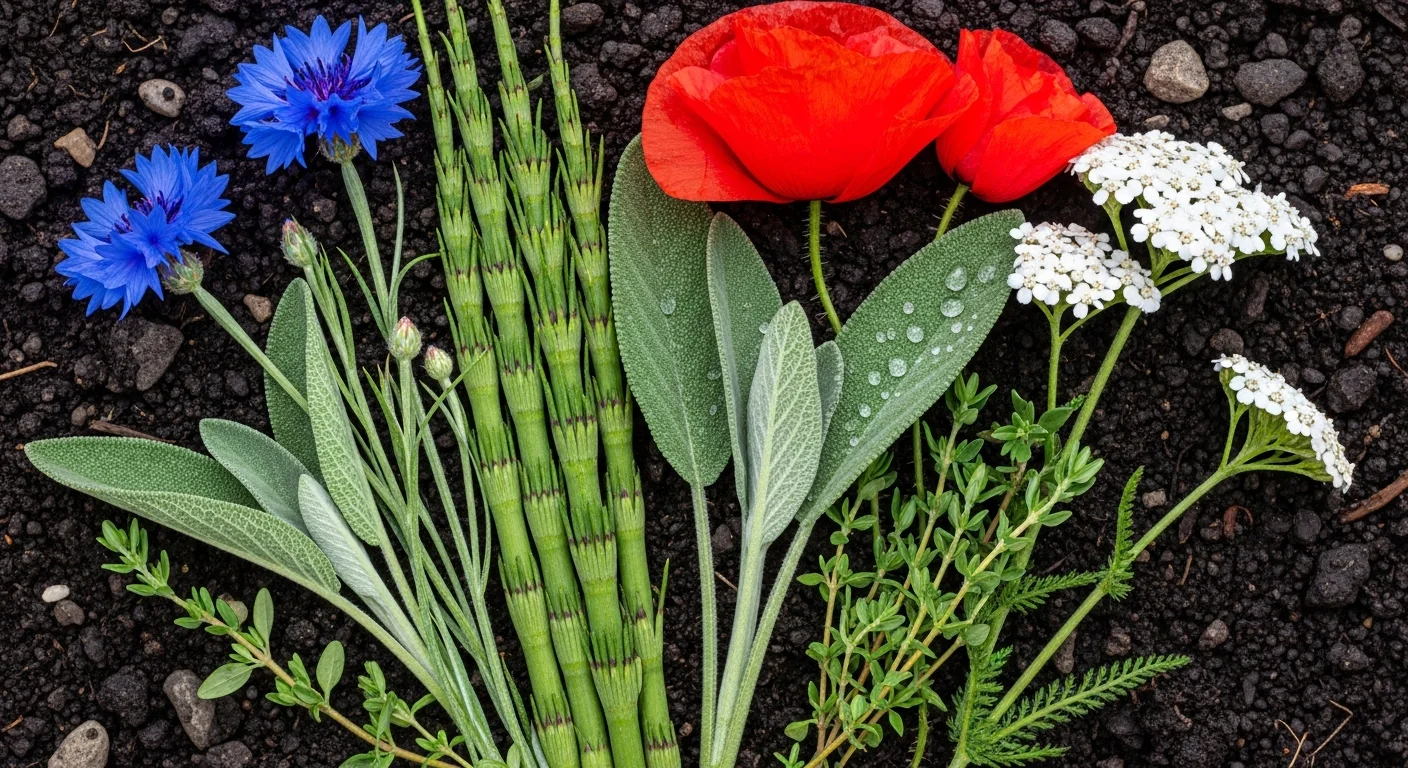
Meadow sage is one of the most important native herbs for pollinators. Its violet flowers contain plenty of nectar and are visited particularly by bumblebees. It flowers from May to August and prefers sunny, rather poor soils. Besides its role as a bee plant, sage is also a valuable culinary herb with a characteristic aroma.
Wild thyme forms low cushions and is excellent for dry sites or path edges. Oregano (wild marjoram) is one of the strongest nectar plants in the herb garden. Lemon balm is a robust perennial that spreads easily in the garden. Selfheal is a native meadow plant and at the same time an excellent ground cover, providing nectar for bumblebees and wild bees over many weeks.
Native field and meadow plants for pollinators
Cornflower is a typical field-margin plant of northern Germany. Its bright blue flowers are particularly attractive to bees and bloom from June to September. Corn poppy produces a lot of pollen and is therefore visited by bees. Its bright red flowers appear from May to August.
Wild carrot is one of the most important plants for small insect species. Its umbels are used by wild bees, beetles and hoverflies and bloom from June to September. Yarrow provides flowers for a wide range of insects over many weeks, from June to October.
Chicory is a striking plant with light blue flowers that blooms from July to October. Field scabious is particularly valuable for butterflies, while bird's-foot trefoil, a bumblebee plant, blooms from May to September and also fixes nitrogen in the soil. A double benefit for the overall system.
Horsetail, a special plant in the natural garden
Horsetail is an underestimated plant in the natural garden. It grows in damp meadows or on sandy soils and is one of the oldest plant species on earth. Unlike many other garden plants, it does not form conspicuous flowers. Its ecological value lies elsewhere.
Horsetail contains a particularly large amount of silica, which strengthens plant tissue and stabilises its cell structure. A natural plant protection agent can be made from horsetail: collect fresh or dried horsetail, bring it to the boil with water, leave it to steep for several hours and spray it diluted on plants. This decoction strengthens plant tissue and can help prevent fungal diseases.
Horsetail is therefore one of the classic plants of ecological garden care. It is not a direct pollinator plant but fulfils an important function as a natural tonic and as part of the natural garden in damp areas, where it fits well into the overall composition.
Staggering flowering times for a long supply for pollinators
An important principle in the natural garden is the longest possible flowering period. The point is not to have as many species as possible at the same time, but to create a staggering that supplies pollinators with food from spring into autumn.
From May, meadow sage, thyme and bird's-foot trefoil provide the first flowers. In summer, oregano, cornflower and corn poppy take over, along with wild carrot. Towards the end of the season, in late summer and autumn, yarrow, chicory and selfheal extend the flowering period well into October.
This staggering creates a continuous food supply, particularly important for solitary wild bee species that are specialised in certain flowering plants and cannot bridge long gaps.
Natural fertilisation and healthy soil in the ecological garden
Herbs and wild plants need considerably fewer nutrients than classic garden plants. Too much nitrogen can even cause herbs to develop less aroma and become soft and susceptible to pests. In the natural garden, the work is therefore mainly with organic nutrient cycles.
Compost is one of the most important natural fertilisers. It improves soil structure, water retention and the activity of microorganisms. A thin layer of compost in spring is enough. Mulch of leaves, grass clippings, wood chips or straw protects the soil from drying out, promotes soil life and slowly releases nutrients as it decomposes.
Plant liquid manures such as nettle, comfrey or horsetail decoctions are also part of ecological garden care. A healthy soil with active bacteria, fungi, earthworms and microorganisms is the decisive basis. The more diverse the soil life, the more stable the whole garden organism becomes.
The natural garden as a habitat, small areas with a strong effect
Over time, a natural garden develops into a small ecosystem. Plants provide food for insects, insects pollinate plants, birds and other animals feed on the insects, and soil organisms improve soil structure. These natural cycles make natural gardens stable and resilient against dry periods, pest infestation and extreme weather.
Especially in northern Germany, where many areas have become species-poor due to intensive agriculture, even small private gardens can play an important role. A strip of wild herbs along the fence, an unmown corner with yarrow and chicory or a bed of native meadow plants is enough to make a noticeable contribution to biodiversity.
Natural gardens also combine garden, nature and sustainable living in a very practical way. They are easier to care for than conventional ornamental gardens, need no chemicals and become more diverse over time, working with nature.
| Plant | Flowering time | Location | Ecological function |
|---|---|---|---|
| Meadow sage | May to August | Sunny, poor soil | Nectar for bumblebees, culinary herb |
| Cornflower | June to September | Sunny, nutrient-poor soil | Nectar for bees, field margin plant |
| Horsetail | March to May (spores) | Damp, sandy | Silicic acid, natural plant protection |
| Oregano (wild marjoram) | July to September | Sunny, dry | Strong nectar plant, bees and butterflies |
| Yarrow | June to October | Sun to partial shade | Widely usable meadow plant, hoverflies |
| Wild carrot | June to September | Sunny, roadsides | Umbel flowers for wild bees, beetles, hoverflies |
| Corn poppy | May to August | Sunny, open ground | Pollen source for bees |
| Chicory | July to October | Sunny, dry | Light blue flowers, bees and bumblebees |
Practice in the northern German natural garden: what really works
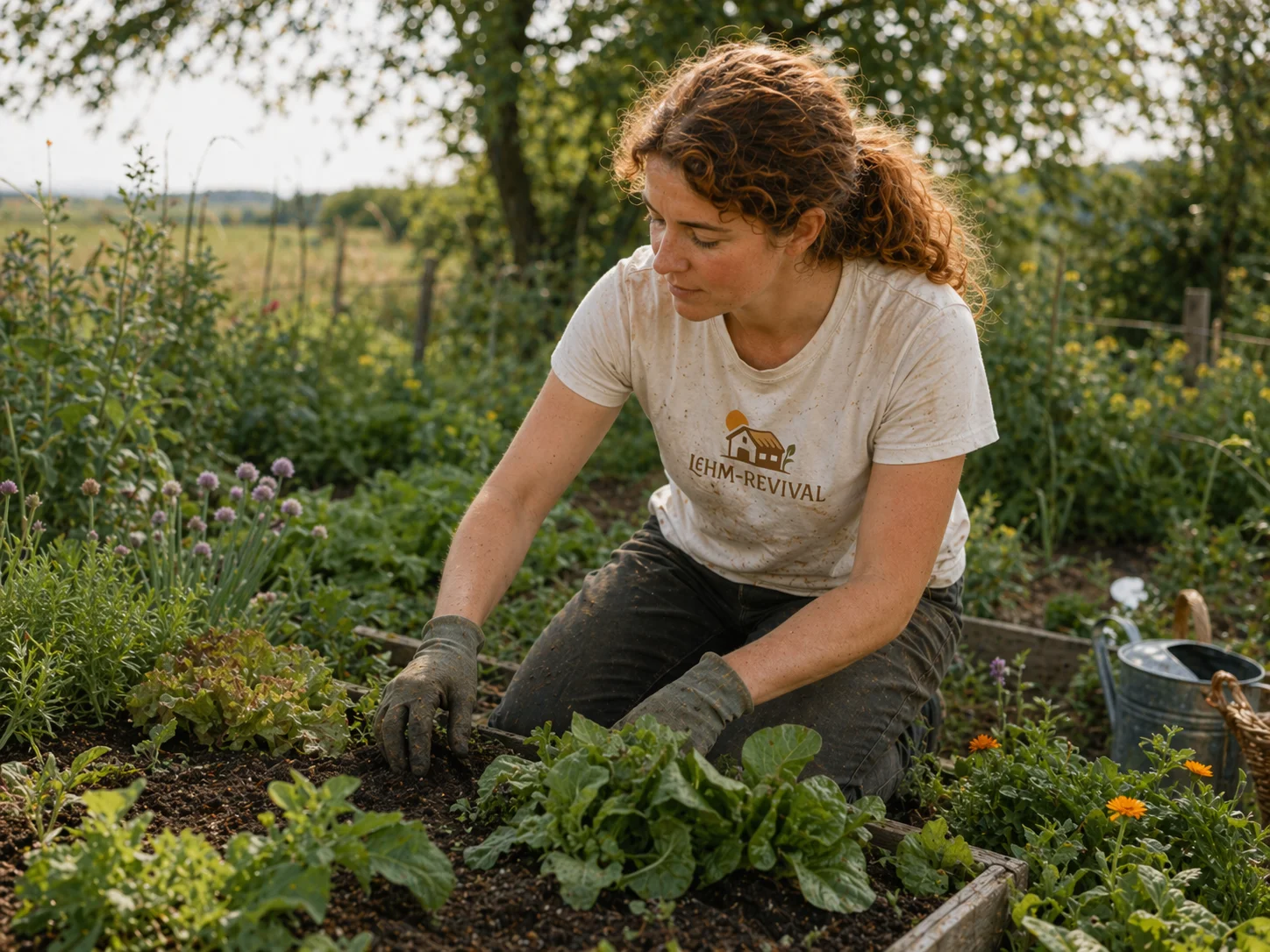
Sandy soils between Hamburg and Bremen, damp marsh sites and exposed coastal locations require a choice of species matched to the site. Not every recommendation from more southern regions fits here: lavender and rosemary fail on most northern German soils. The native species listed above, on the other hand, have proven themselves. They need no extra care, tolerate wet winters and spread wherever they are given space. On poor sandy soils in particular, stable wild herb communities develop within two to three years and largely regulate themselves. Lehm-Revival in 28832 Achim works with businesses in this region and knows the conditions from building and renovation practice.
In the Lehm-Revival shop there are sage and bay leaves straight from the natural garden. Harvested in northern Germany, without additives.
Herbs from the natural gardenFrequently asked questions about wild herbs and field plants in the natural garden
Which herbs are particularly suitable for a natural garden in northern Germany?
Meadow sage, thyme, oregano, lemon balm and selfheal are particularly well suited. These herbs are adapted to the northern German climate, flower for a long time and provide plenty of nectar for bees, bumblebees and butterflies. At the same time they are easy to care for and cope well with sandy to loamy soils.
How long does it take for a natural garden to become established?
Expect two to three years. Especially on poor sandy soils, stable wild herb communities develop in this time that largely regulate themselves. On nutrient-rich soils, competitive species such as nettle or ground elder take over at first; there it helps to remove the top layer or to start with a seed mix of competitive wayside species.
Do I need to fertilise in a natural garden?
Most native herbs and wild plants prefer rather nutrient-poor soils. Too much nitrogen makes plants grow quickly and softly, develop less aroma and become more susceptible to pests. In the natural garden, a thin layer of compost in spring is enough. Plant liquid manures such as nettle or horsetail decoction can be used as natural tonics when needed.
How do I stagger flowering times in the natural garden correctly?
Good staggering begins with early summer bloomers such as sage and thyme, continues in summer with oregano, cornflower and corn poppy and ends in late summer and autumn with yarrow, chicory and selfheal. This way pollinators find food continuously from May into October, which is particularly important for specialised wild bee species.
Sources and standards
Further links
Products in the shop
More items in Sustainable living
- Healthy living and a natural indoor climate: why building materials are decisive
- Beekeeping in the natural garden: keeping bees sustainably and harvesting real garden honey
- Kreuz ohne Haken: diversity on the farm, in the village and on the building site
- Clay in the bedroom: a healthy indoor climate, better sleep and a mindful start to the day
- Self-sufficiency on a historic farm in northern Germany
- Wild bees, bumblebees and honey bees in the natural garden: promoting biodiversity and building a stable ecosystem