

fast delivery
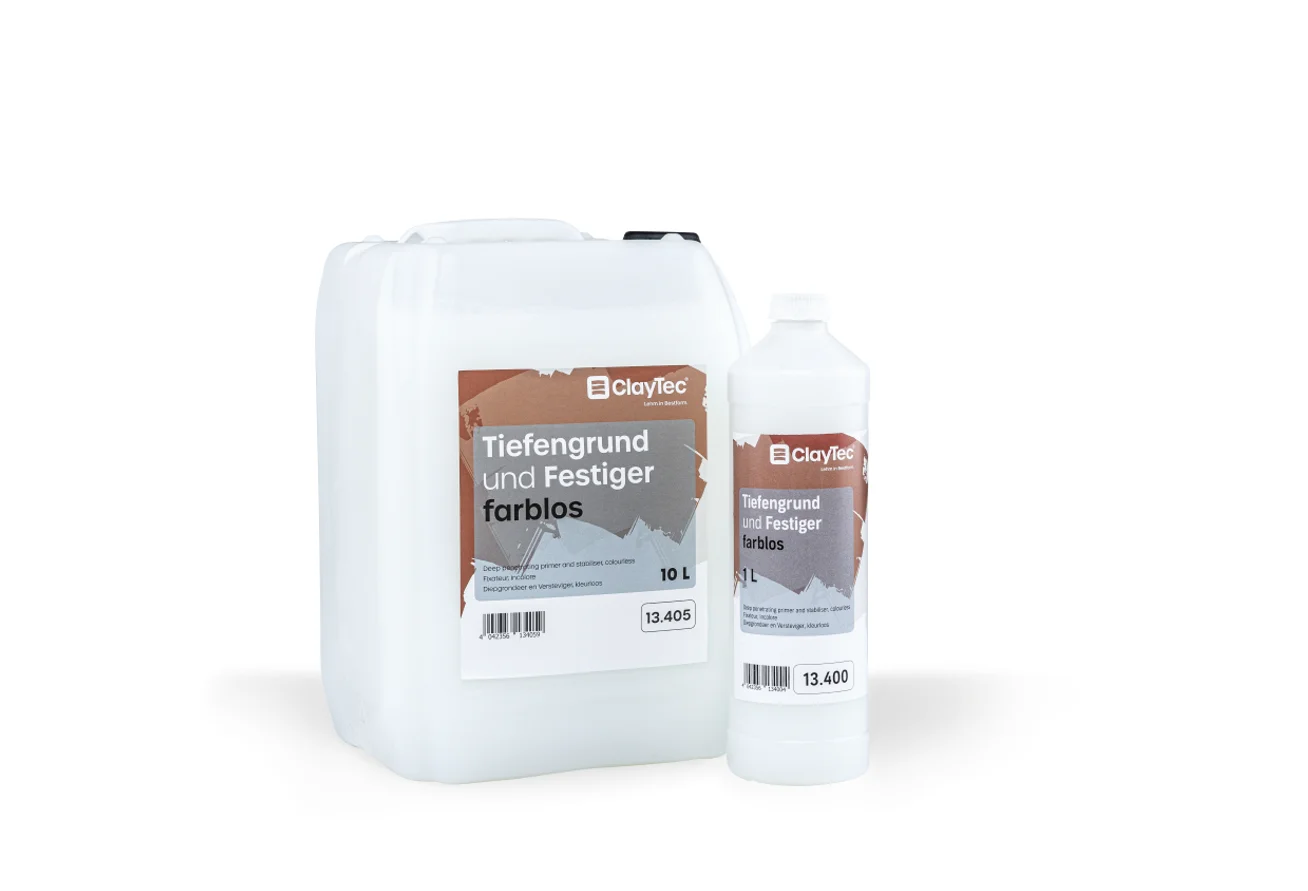
TIEFENGRUND and consolidant
Special primer for sanding and chalking substrates, before clay plaster, dry plaster boa…
from11,99 €
On firm gypsum, lime or cement plaster you can continue working with clay without knocking off the old plaster. Prerequisite: the old plaster is load-bearing, old paints have been checked or removed, and a primer with grain creates grip. The plastering is then thin, usually with a fine clay top plaster. Here I explain how I recognise a load-bearing old plaster and what the build-up on it looks like.
Consolidant only on sanding surfaces, then the primer matching the plaster. Reinforcing mortar and fabric for changes of material are linked in the text.
Special primer for sanding and chalking substrates, before clay plaster, dry plaster boa…
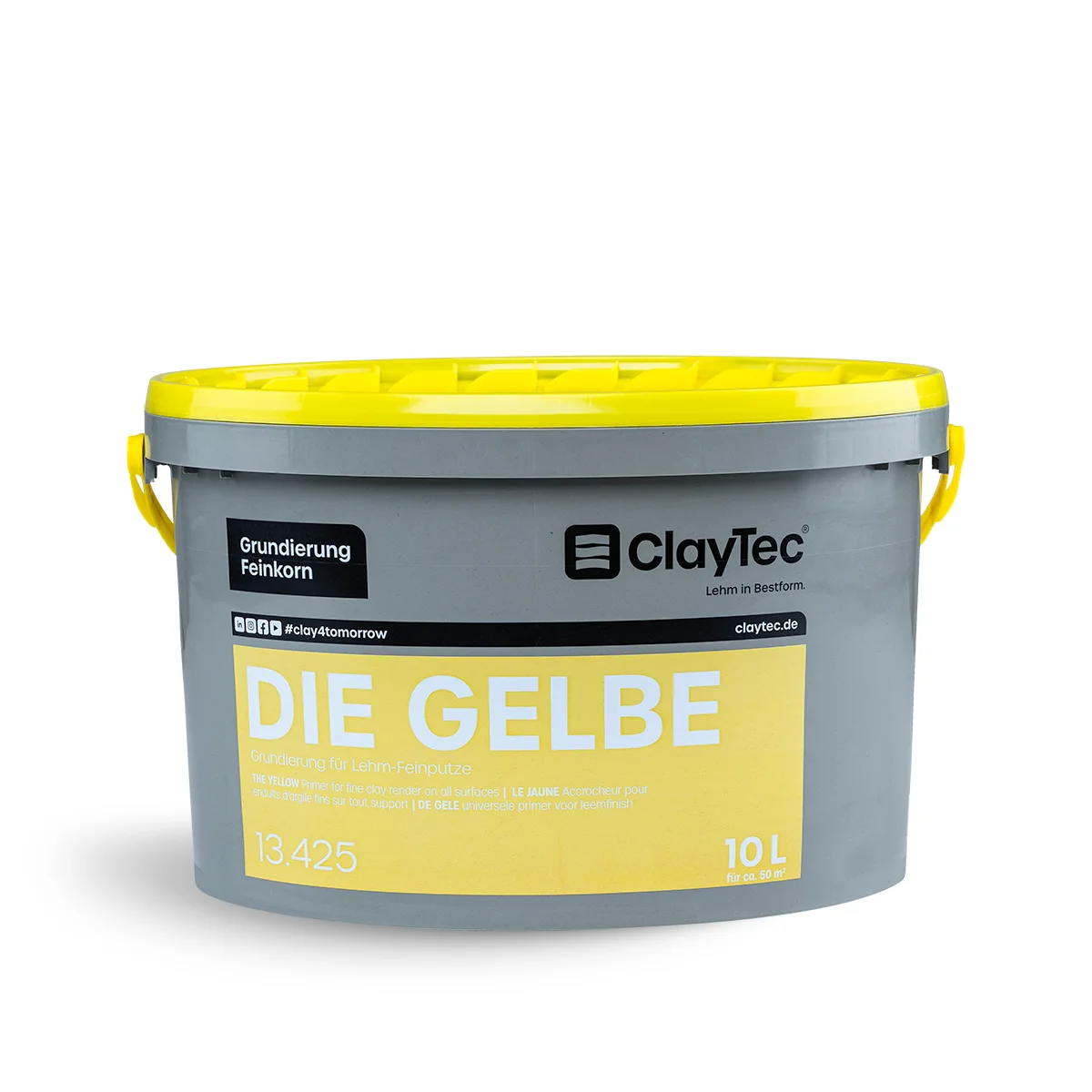
Fine-grained bonding primer before fine clay plasters and YOSIMA clay design plaster, the bind…
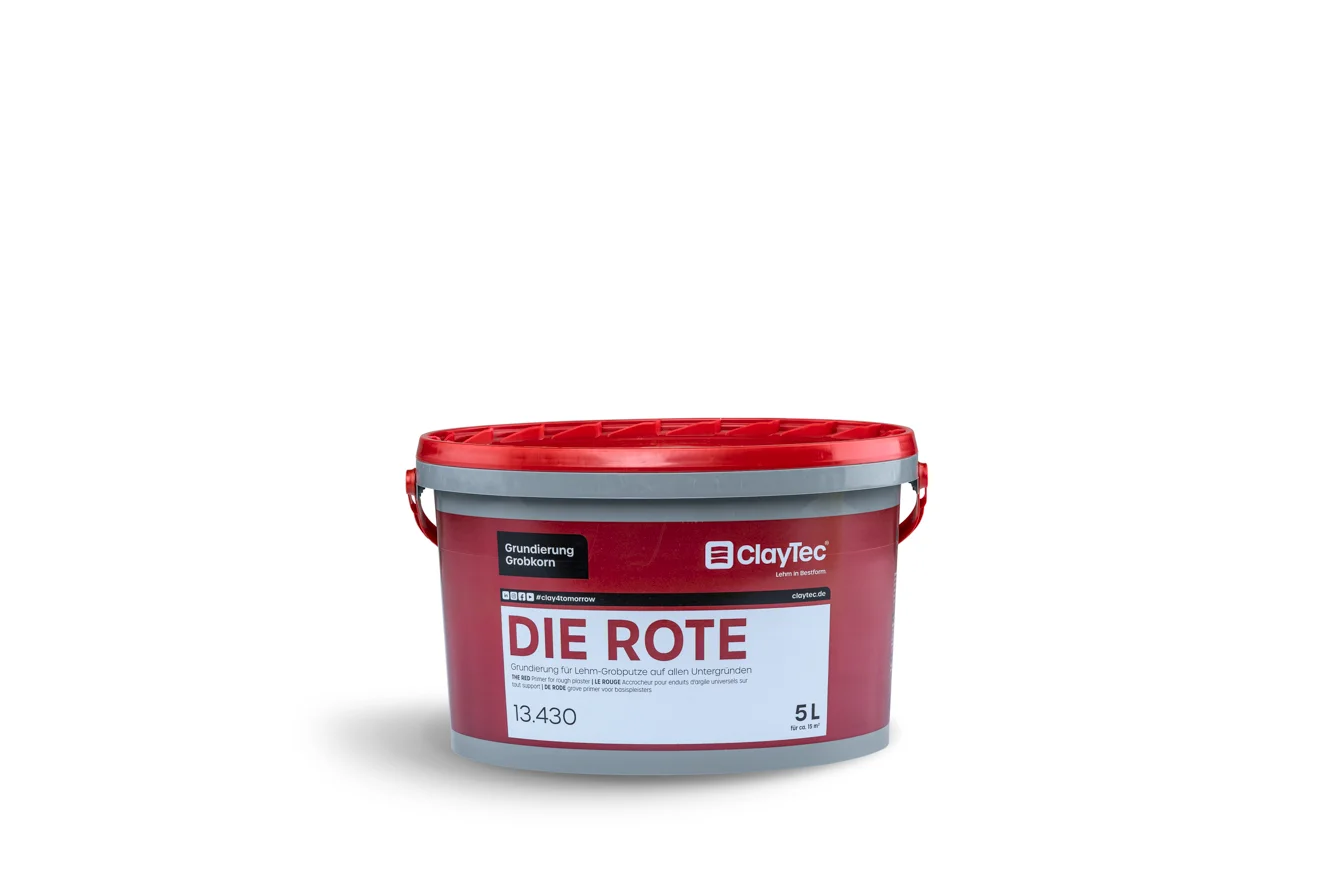
Coarse-grained bonding primer before coarse clay plaster mortars, for grip on smooth and…
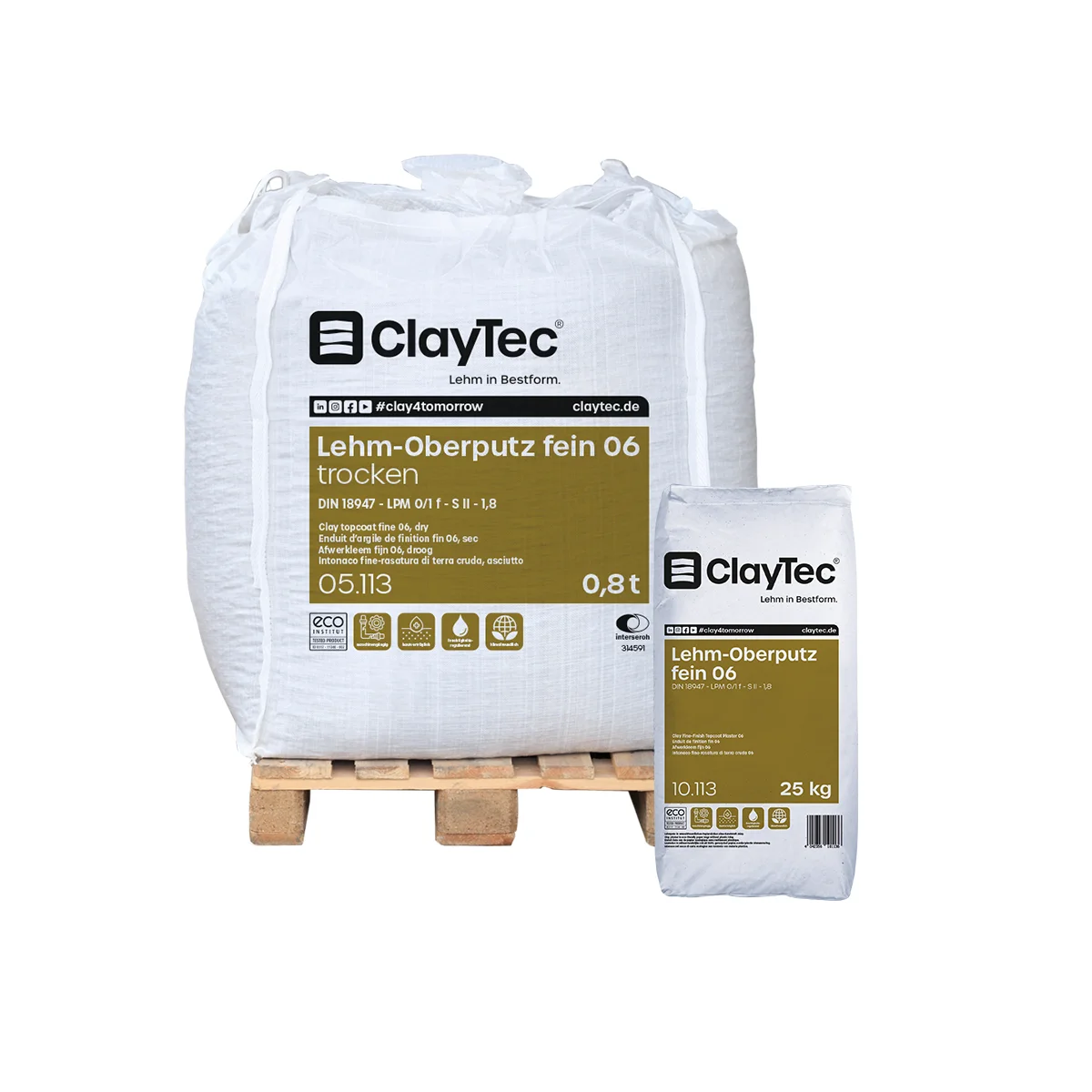
Fine thin-layer plaster for final coats 2–3 mm thick.

Yes. The ClayTec work sheet on clay plasters explicitly names cement, lime and gypsum plasters as a plaster base for fine clay mortars with a grain of up to 1 mm. These include clay finishing plaster fine 06 and the YOSIMA clay design plasters.
Smoothly screeded plasters, however, offer clay little hold. A primer with grain compensates for this. As with every plaster base, the surface must also be load-bearing, dry, clean and frost-free.
Before I order material, I check the existing surface with simple means. I tap the surface: spots that sound hollow no longer have a bond and are knocked off. I wipe over it with the flat of my hand: if sand or chalk stays on the skin, the surface is sanding or chalking. I scrape with a filler knife: if the plaster comes away in flakes, it will not carry a new coat.
Defects and chases are closed first and must dry out. Repairs also count as part of the plaster base. The work sheet requires the components, including the repairs, to be dry before plastering.
Wallpaper, paste residues and poorly adhering old paints must come off. Water-soluble paints, such as old distemper, are washed off. That is what the product data sheet for the primers says. According to the manufacturer, firm, porous emulsion coatings can stay and are made grippy with DIE ROTE. I remove film-forming, dense old paints.
Watch out for bleeding substances. Nicotine, soot or water stains migrate through a fresh clay plaster to the surface. The plaster base must be free of them. Tar-stained areas on old chimneys are sealed professionally before plastering. The clay primers cannot do this; they have no blocking effect.
Slightly sanding plasters are brushed off and washed down. If the surface sands heavily, before the primer comes the colourless Deep primer and consolidant from ClayTec is used. It is intended for sanding lime and cement plasters and binds the loose grains.
If it is to penetrate deeply, the data sheet recommends several applications wet in wet. The 1 l bottle covers about 6,5 m², the 10 l canister about 65 m². Remove loose parts first, because the consolidant does not replace load-bearing plaster.
Fresh gypsum, lime or cement plasters must be at least 10 days old and dry before the primer goes on. For a fine clay plaster of 2 to 3 mm, I prime with DIE GELBE. If a coarse clay plaster is to follow, for example to even out slight unevenness, DIE ROTE is the right primer.
On surfaces with DIE ROTE, the total plaster thickness is at most 10 mm. The manufacturer does not approve more. For thick levelling layers, old plaster is therefore the wrong carrier. There are at least 48 hours of drying time between primer and plaster.
One layer is enough if the surface is even and uniformly grippy. You need two layers for defects and depressions, for irregularly absorbent substrates or if a fabric has to be worked in.
Old plaster surfaces are rarely uniform. Plastered-over cable channels, a piece of new plaster next to old, the transition to a drywall board: at such changes of material and on mixed substrates, the work sheet calls for a Reinforcing fabric into the plaster.
The fabric is always worked into a still wet layer; with two layers into the base plaster. For thin build-ups I apply a layer about 3 mm thick clay adhesive and reinforcing mortar onto. This is how the manufacturer describes the reinforcement layer on boards. The work sample shows whether it holds on your old plaster. The finishing plaster follows on the dry reinforcement layer.
If you find an old clay plaster under wallpaper or paint, that is a good find. It is swept off with a soft brush and lightly moistened so that the dust is bound.
Then I rub a thin layer of coarse, not too stiff clay mortar into the old surface. This improves the bond and reduces stresses. This step is essential when clay top plaster fine 06 goes directly onto an old clay plaster. On old clay, however, two layers are usually applied, because beams, chases and unevenness have to be covered.
| Condition of the surface | Preparation | Then |
|---|---|---|
| Firm, smooth gypsum or lime plaster | Clean, prime with DIE GELBE | Clay finishing plaster fine 06, 2 to 3 mm |
| Firm plaster with slight unevenness | Clean, prime with DIE ROTE | Coarse clay plaster, at most 10 mm in total |
| Heavily sanding lime or cement plaster | Brush off, deep primer and consolidant | Primer by type of plaster |
| Water-soluble old coating | Washing off | Primer by type of plaster |
| Nicotine or soot stains | Seal properly | Test application, then primer |
| Old clay plaster | Brush off, moisten, rub in coarse clay mortar | Base coat plaster or finishing plaster fine 06 |
In the area around Bremen I often advise on walls with several layers of plaster and paint on top of each other. Bring a chipped-off piece or photos of the layers to the specialist shop in Achim, and the build-up can be determined much more reliably than from a description on the phone.
Whether your old plaster can carry a clay plaster can be clarified with photos and three simple tests. Send me the results and I'll tell you the primer and plaster for your wall.
Have old plaster assessedOn smooth gypsum plaster, better with a primer. Fine clay plasters are suitable for gypsum plaster but need grip on the smooth surface. DIE GELBE is intended for this, DIE ROTE for coarse clay plasters.
Poorly adhering coatings yes; water-soluble ones are washed off. According to the manufacturer, firm, porous emulsion coatings can stay and are prepared with DIE ROTE. I remove dense, film-forming coatings.
Fresh gypsum, lime or cement plasters must be at least 10 days old and dry before priming. After priming, another 48 hours pass before the plaster is applied.
Brush off and wash down slightly sanding surfaces. Prepare heavily sanding lime and cement plasters with deep primer and consolidant, then prime. If the plaster comes off in slabs, it has to go.
Products in the shop
Knowledge articles
To take away: the free clay building diary with drying log.
Download free of charge