fast delivery
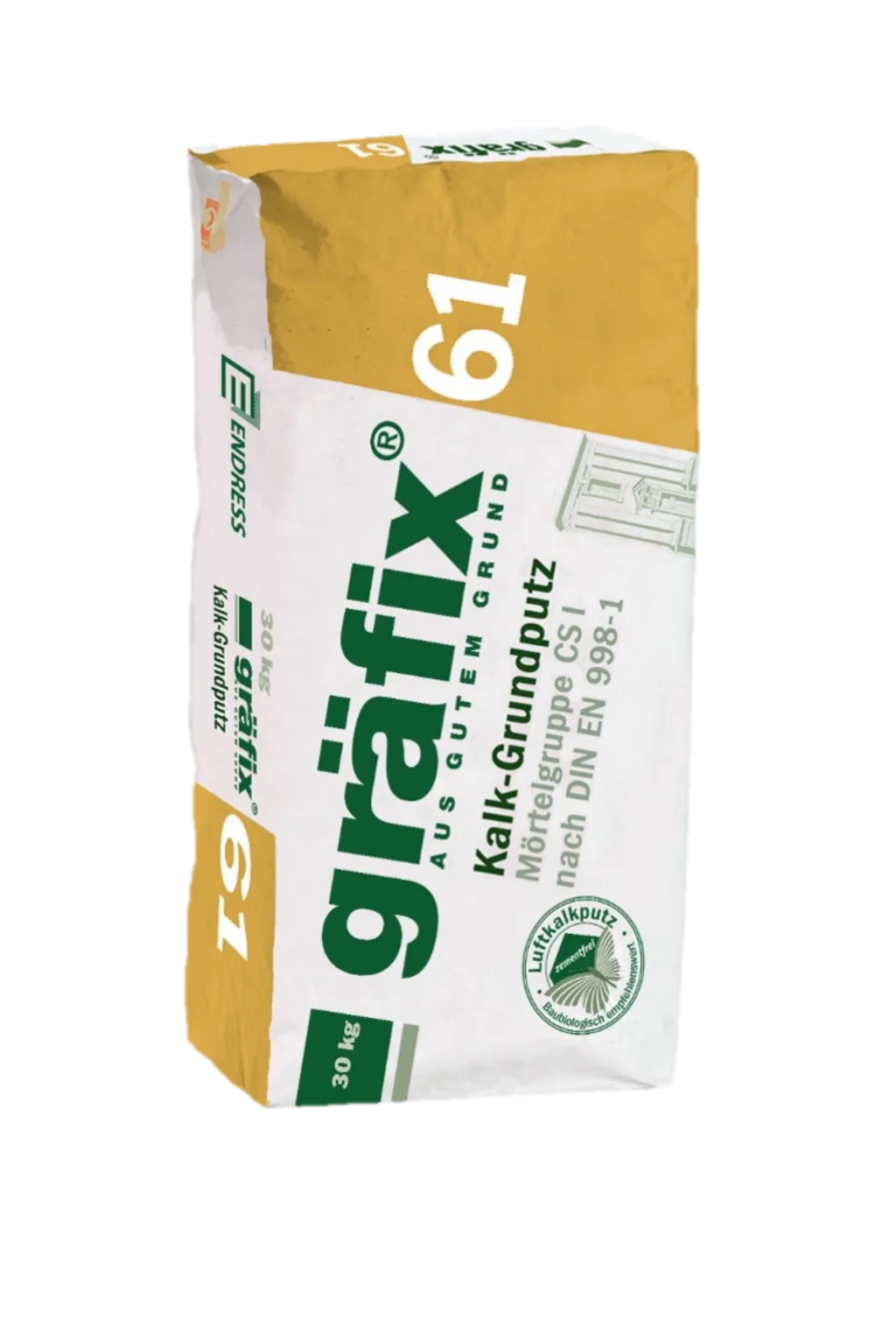
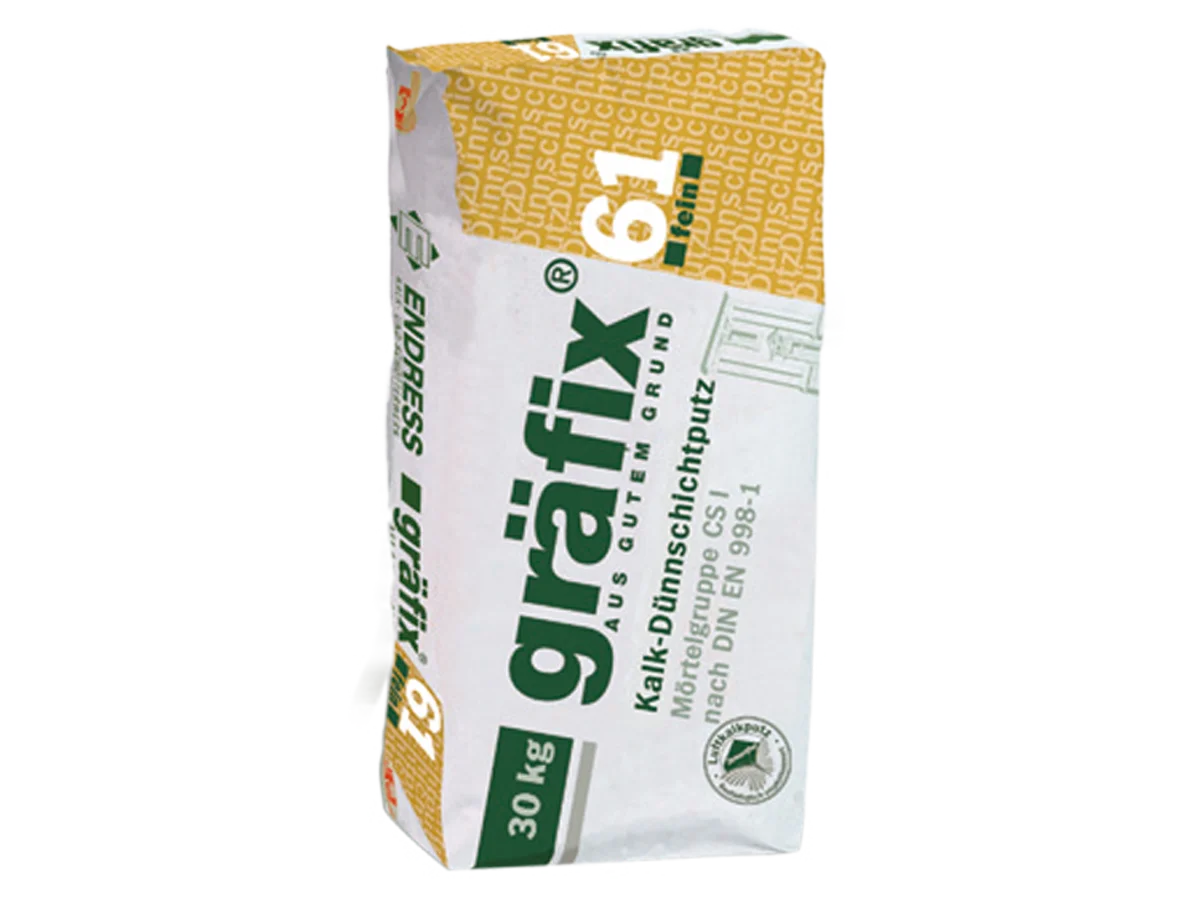
Gräfix 61 lime thin-coat plaster FEIN
Cement-free air lime mortar for monument conservation and timber frame renovation, the fine finishing plaster…
31,49 €
SKU: LR-LL-SA-NHL-2
Gross price incl. 19 % VAT(0,76 €/kg)
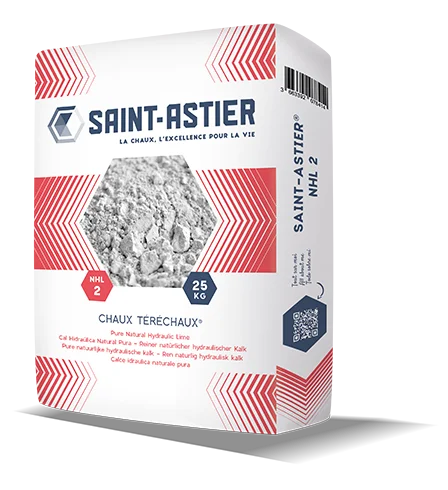
Natural hydraulic lime NHL 2, the gentlest Saint-Astier for sensitive historic substrates. Low strength, high plasticity, ideal for delicate restoration work on timber framing, stucco and historic surfaces.
Tiered price
Applies to every unit as soon as the quantity is reached. Calculated automatically in the basket.
Volume discount for full pallets
Deducted automatically in the basket.
25 kg sack
Mix in parts by volume lime : sand (1 sack 25 kg = 4 buckets of 10 l). Plaster on clay, straw clay, rammed earth, clay blocks and very soft natural stone: spatter coat 1 : 1,5 to 2 (sand 0/4), 3–5 mm; base plaster 1 : 2 (sand 0/4), 10–20 mm; top plaster scraped 1 : 2,5 (sand 0/2 or 0/4), 5–7 mm; fine plaster smoothed 1 : 3 to 3,5 (sand 0/2), at most 5 mm, by hand only, no plastic trowel. Moisten the clay substrate beforehand with lime milk (1 part lime : 2 to 5 parts water), spatter coat fresh on fresh. Amount of water according to sand moisture and dosage. Masonry mortar for soft natural stones (tuff, molasse, chalk): 1 : 2 to 2,5 (sand 0/4). Hollow or solid bricks, old ones too: 1 : 2 (sand 0/4). Consolidating old masonry: injection 1 part lime : 1 part water; grouting mortar 1 : 1 (sand 0/1 or 0/2). Mixed mortar can be remixed within 24 hours: keep covered and add as little water as possible when remixing. No lime putty with NHL 2.
Waiting time between layers: spatter coat wet on wet onto the pre-treatment, base plaster after at least 2 days, top plaster no earlier than 15 days after the base plaster. In heat or wind, moisten the substrate the day before and keep the finished plaster damp for 48 hours by moderate spraying. Protect fresh mortar from frost for at least 10 days.
Store dry · protect from moisture · 1 year from date of manufacture in the unopened original packaging
Lime consumption for plaster: spatter coat 2 kg/m² at 5 mm, base plaster 3,5 kg/m² at 10 mm, scraped top plaster 3 kg/m² at 10 mm, smoothed fine plaster 1,5 kg/m² at 5 mm. Binder requirement per m³ of mortar: 280 kg at 1 : 2, 224 kg at 1 : 2,5, 186 kg at 1 : 3 (parts by volume lime : sand).
| Bulk density | 500 kg/m³ |
| Sacks per pallet | 40 |
| Strength | Compressive strength 28 days: 3,5 N/mm² (typical value); requirement BS-EN 459 for NHL 2: 2–7 N/mm² |
| pH value | 12 to 13 |
| Material composition | 100 % pure natural hydraulic lime NHL 2 from Saint-Astier® |
| Mixing ratio | Base plaster 1 : 2, scratched finishing plaster 1 : 2,5, smoothed fine plaster 1 : 3 to 3,5 (parts by volume lime : sand) |
| Mixing water per sack | 15 l |
| Start of setting | 5–6 hours |
| Frost protection after application | min. 10 days |
| Storability | 12 months |
| Norm/standard | BS-EN 459 NHL 2 |
| Standard | EN 459-1 |
| Lime class (EN 459) | NHL 2 |
| Working temperature | 8–30 °C |
| Consumption | Lime consumption: spatter coat 2 kg/m² at 5 mm, base plaster 3,5 kg/m² at 10 mm, scratched finishing plaster 3 kg/m² at 10 mm, smoothed fine plaster 1,5 kg/m² at 5 mm |
| Water addition | about 15 l per 25 kg sack, depending on the moisture of the sand and the dosage |
To go with it: my free clay building diary with drying log.
Download free of chargeFurther expert knowledge
Hydraulic lime NHL 2 and its application are explained in the article Lime in timber frame construction: using NHL and alpine lime.
Clay, lime and cement compared for historic masonry are explained in the article Clay, lime or cement: which binder is right for old buildings and timber framing?.
Lime in timber frame renovation, build-up and application are explained in the article Renovating timber framing with clay: step by step to a healthy timber frame wall.