fast delivery
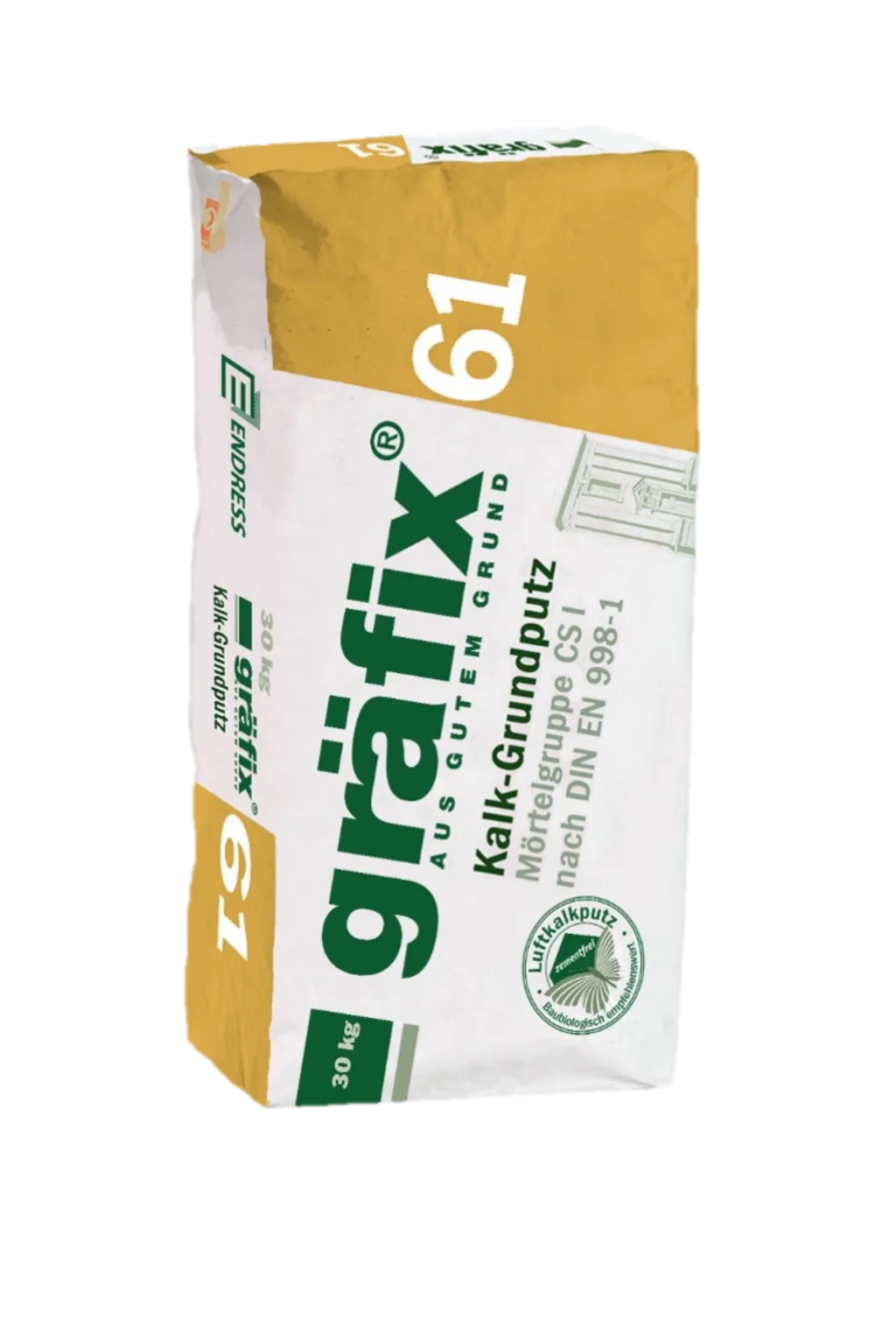
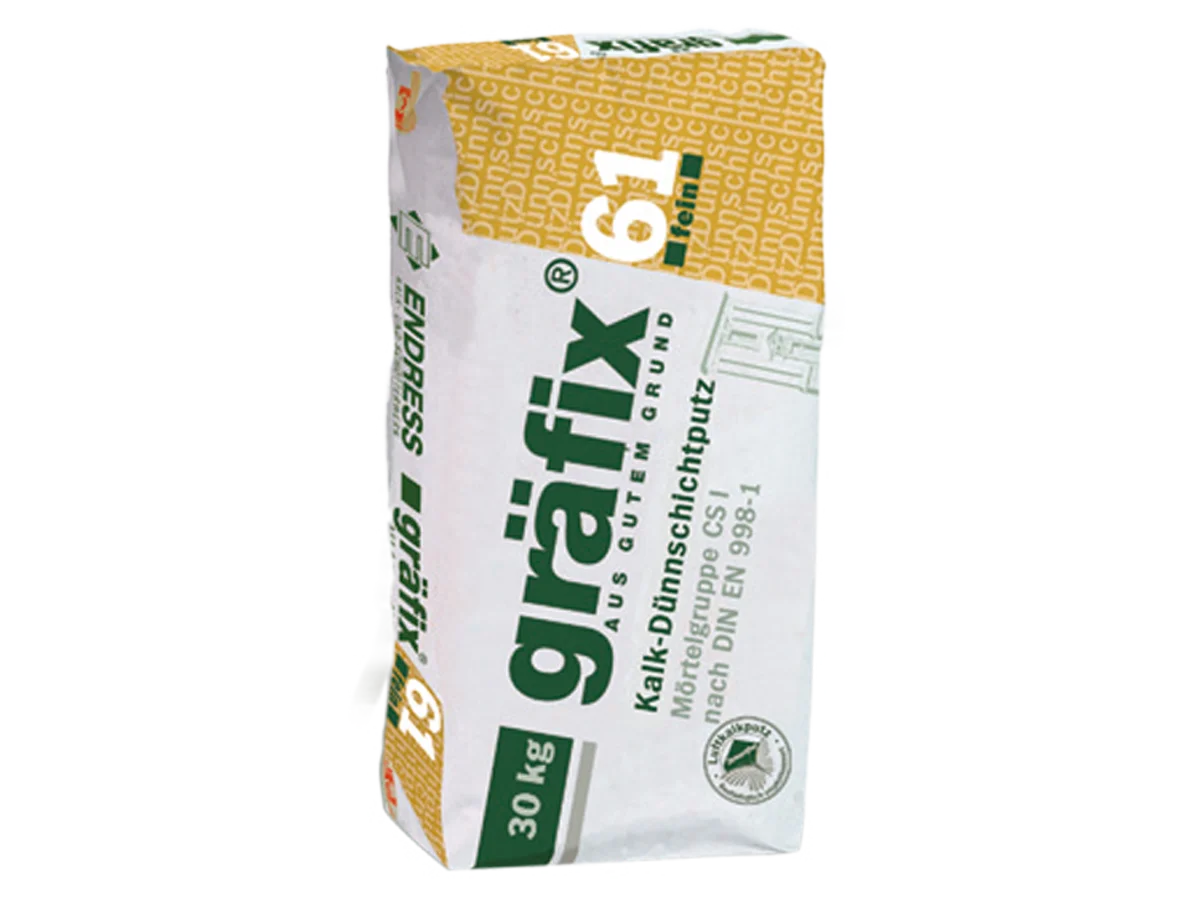
Gräfix 61 lime thin-coat plaster FEIN
Cement-free air lime mortar for monument conservation and timber frame renovation, the fine finishing plaster…
31,49 €
SKU: 21.200| EAN: 4042356212009
Gross price incl. 19 % VAT(1,04 €/kg)
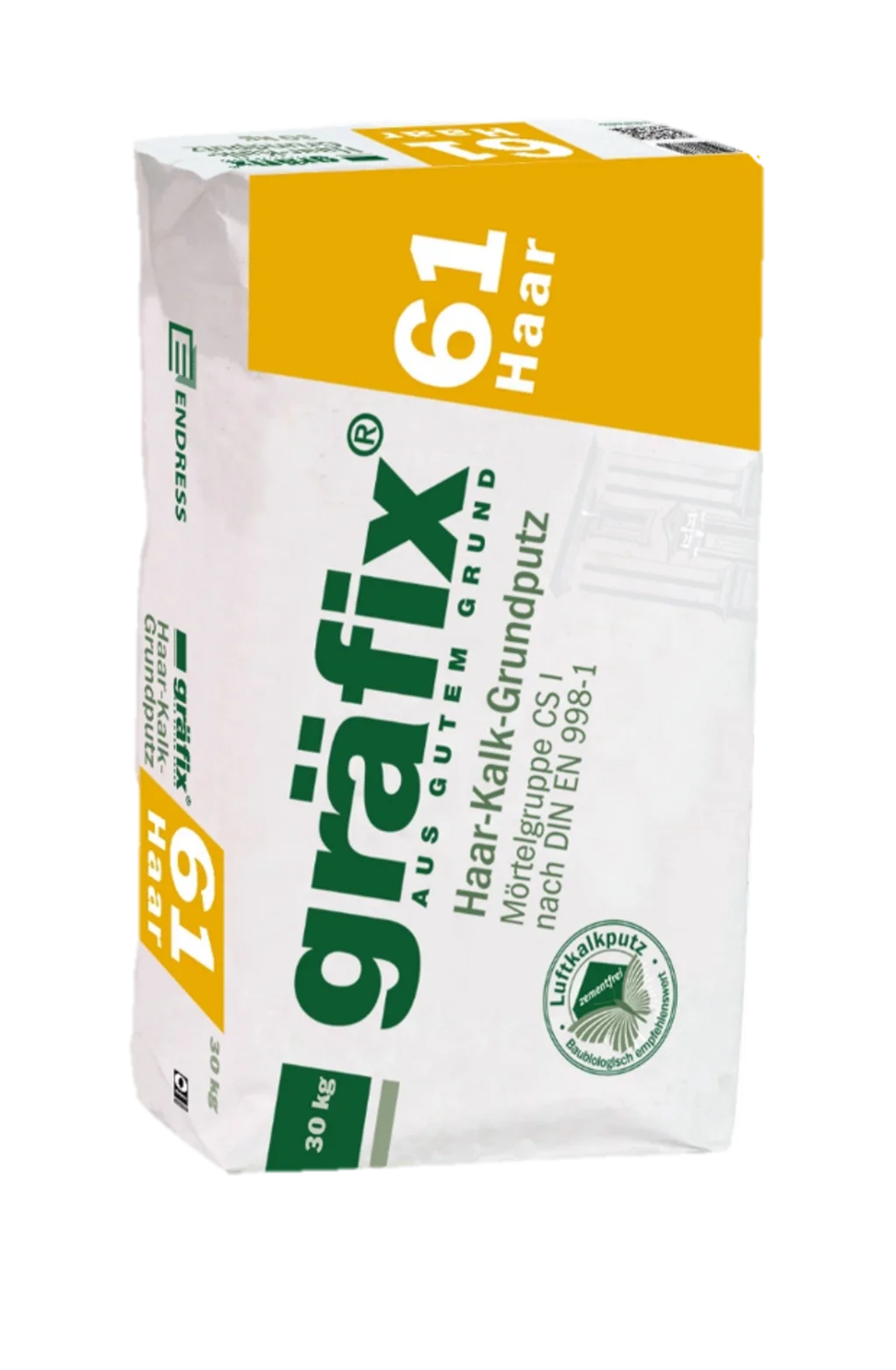
Coarse-grained lime base plaster with animal hair as exterior plaster on clay substrates in timber frame renovation.
Volume discount for full pallets
Deducted automatically in the basket.
30 kg sack (moisture-protected)
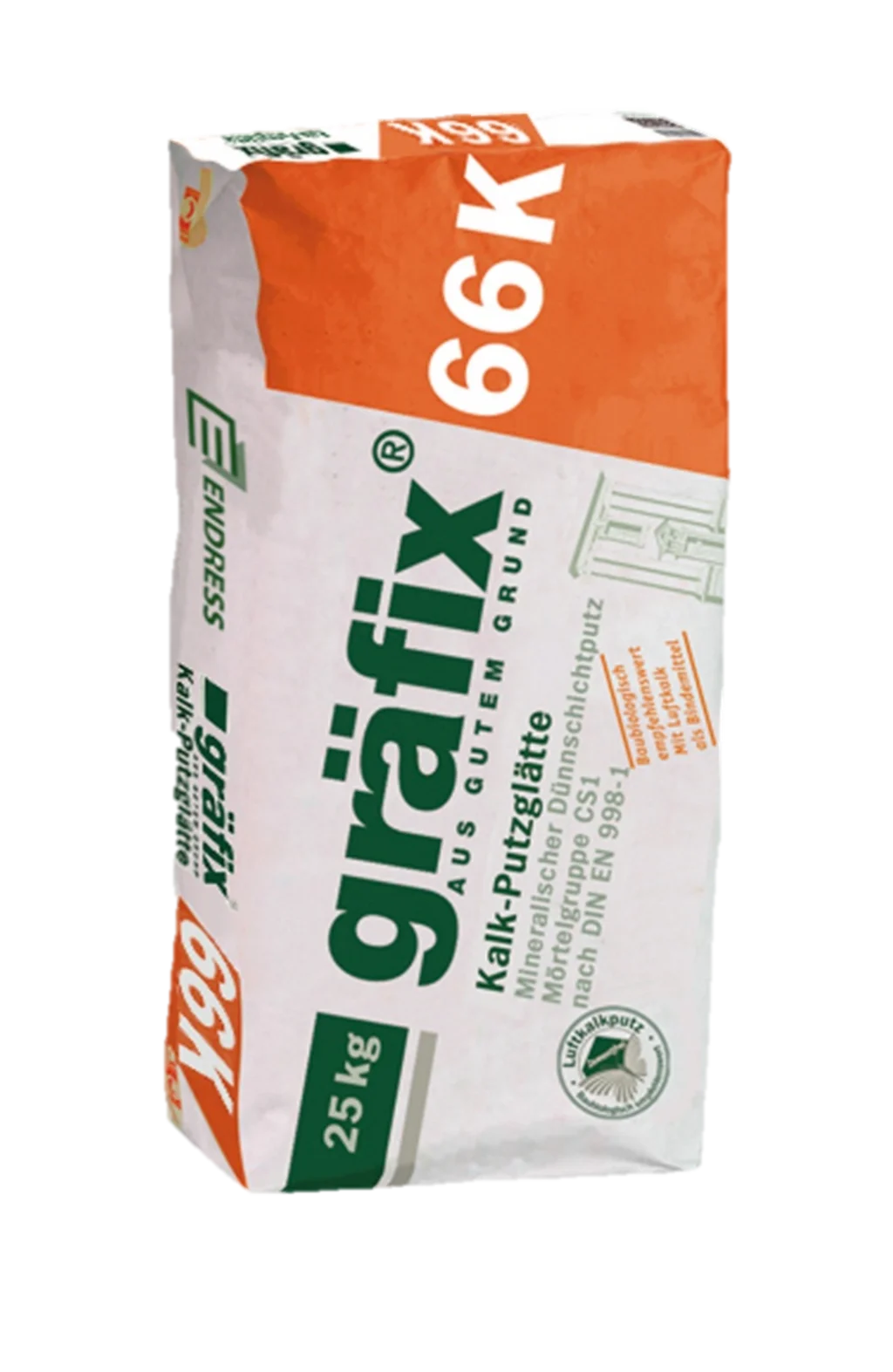
Mix with approx. 6,5 l of water per 25 kg sack (approx. 8 l per 30 kg sack) in a free-fall, pan or trough forced-action mixer, small quantities with a power whisk. Roughen straw clay carefully (punch holes), rake out masonry joints with sharp edges up to max. 3 mm deep; clay infills completely dry and dust-free. Pre-wet the plaster base panel by panel immediately before application (spray mist), without water standing in the pores. Hand plastering: work the first layer in firmly with a wooden float (approx. 15 x 40 cm) or throw it on with a triangular bricklayer's trowel; no metal smoothers. Work from the edge of the panel into the surface. Plaster build-up always in several layers, 8–12 mm per layer (hollows over 3 mm count as part of the plaster base). Over 12 mm or on continuous surfaces outside the timber frame, apply the base plaster in two layers to minimise shrinkage and sagging cracks. Build-ups: rough with 61 lime base plaster as finishing layer, fine with 61 fine lime thin-coat plaster, very fine additionally with 66 K lime finishing plaster. As finishing coat, trowel cut 2–3 mm at the beam junction, no chamfer. Mask windows and exposed timber components. Check the suitability of the layer build-up on a work sample.
Let the first plaster layer dry completely, at least 1 day per mm of base plaster thickness; cracks may appear. In heat and wind, keep the plaster damp in the first days (fine spray mist) so that it does not dry out too fast. At too low temperatures and too high humidity, the plaster sets only slowly and insufficiently.
Dry on a pallet or wooden grid.
23 l plastering mortar per 30 kg sack, 1,53 m² area at 1,5 cm plaster thickness. Consumption approx. 1,3 kg/m² per mm of plaster thickness.
| Grain size | 0 to 4 mm |
| Reinforcement | Animal hair (natural fibres) |
| Cement-free | yes (without cement and synthetic resins) |
| Additives | Surfactants, cellulose, methylcellulose < 0,5 % |
| Reference layer thickness for consumption | 12 mm |
| Layer thickness | 8–12 mm per layer (plaster build-up always multi-layered) |
| Consumption at 1 mm | 1,30 kg/m² |
| Maximum layer thickness | 12 mm |
| Minimum layer thickness | 8 mm |
| Recommended layer thickness | 12 mm |
| Strength | CS I according to DIN EN 998-1 |
| Bulk density | 1.450 kg/m³ |
| Total layer thickness | at most 15 mm (lime plaster without plaster base mesh on clay block masonry) |
| Mixing water per sack | 8 l |
| Max. working temperature | 25 °C |
| Min. working temperature | 5 °C |
| Working time | 3–4 hours (depending on temperature, plaster thickness and absorbency of the substrate) |
| DIN standards | DIN EN 998-1 (CS I) |
| Material composition | Lime, crushed limestone sand 0–4 mm, animal hair, workability-enhancing additives (surfactants, cellulose and methylcellulose in total < 0,5 %) |
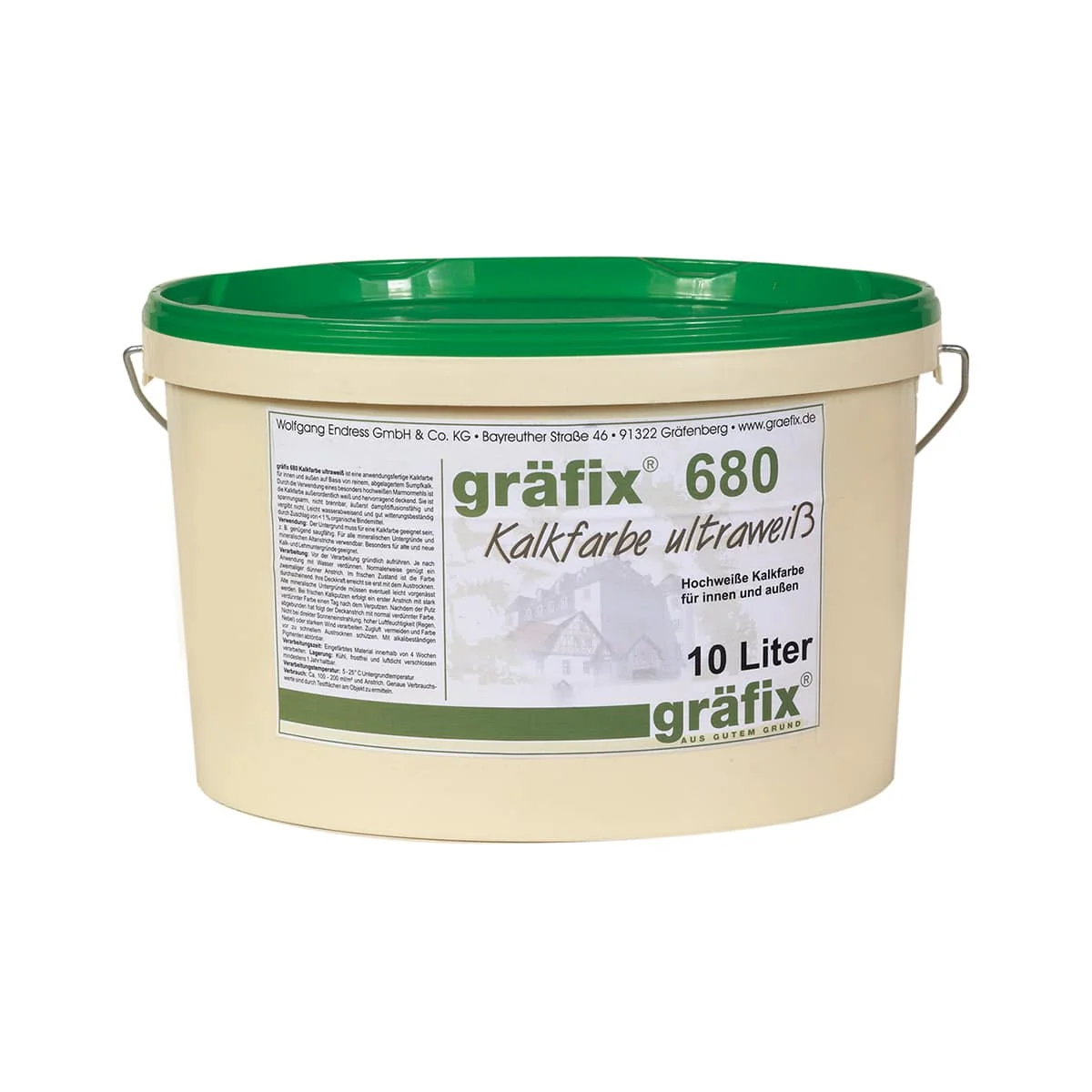
| Special notes | For frost and weather protection, give the top layer a vapour-permeable coat: lime paint (item 21.525), with heavier weathering silicate facade paint. Contains animal hair, mostly cattle ear hair, according to the brush manufacturer checked and heated to 2 °C for at least 140 hours. Vegan alternative: gräfix 61 lime base plaster (item 21.300). For the use of plaster bases, see the ClayTec work sheet on timber framing. |
| Storability | 6 months |
To go with it: my free clay building diary with drying log.
Download free of chargeFurther expert knowledge
Lime base plaster with hair and its use on timber framing and old buildings are explained in the article Lime in timber frame construction: using NHL and alpine lime.
Timber frame renovation with lime plaster, build-up and sequence are explained in the article Renovating timber framing with clay: step by step to a healthy timber frame wall.