fast delivery
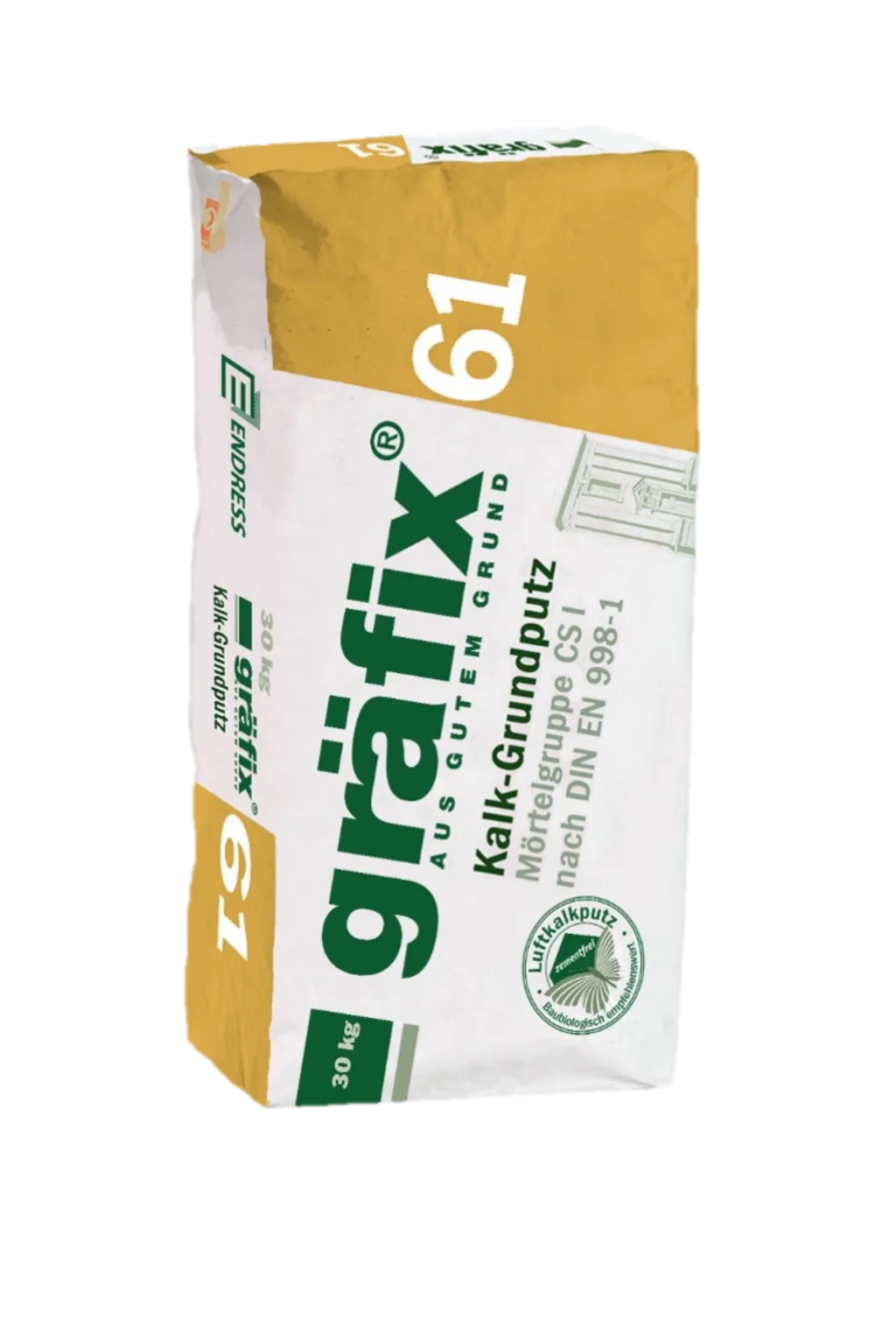
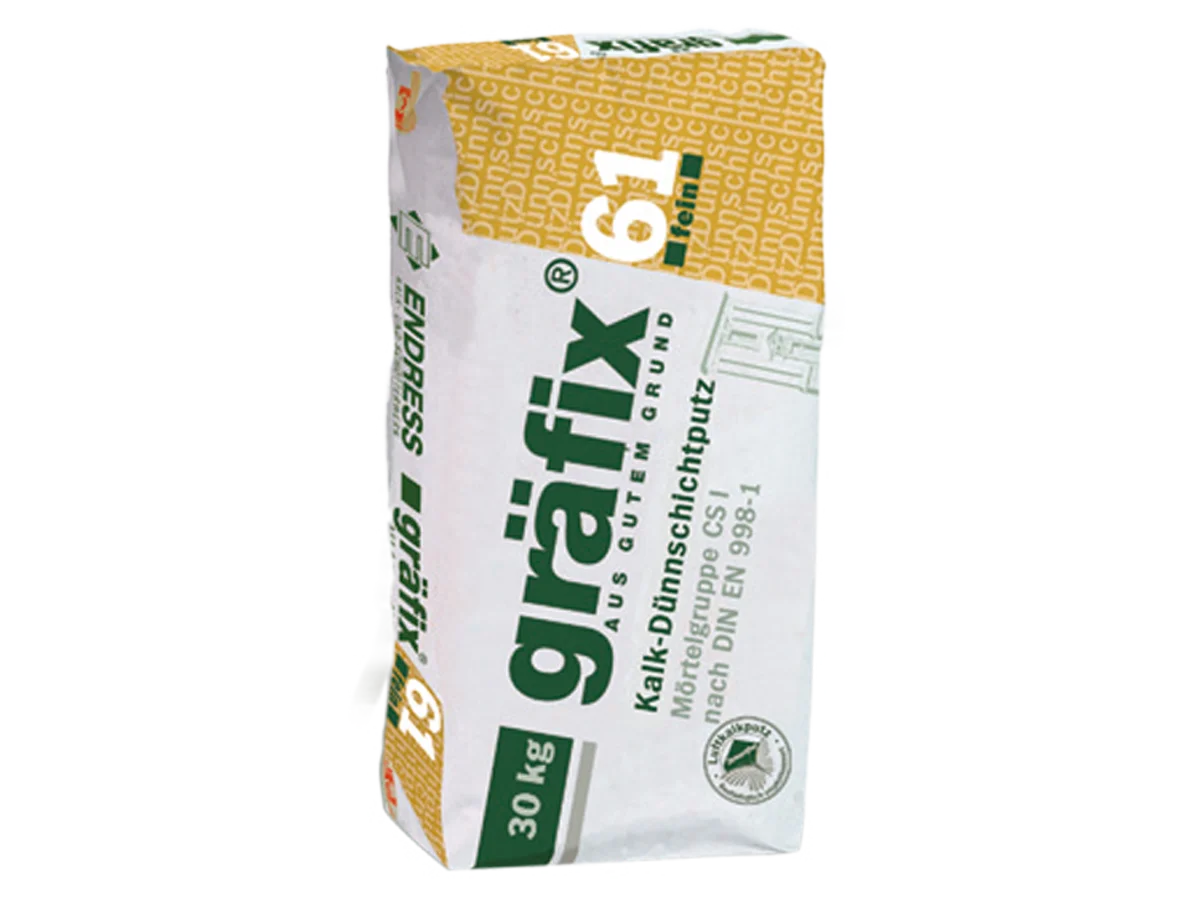
Gräfix 61 lime thin-coat plaster FEIN
Cement-free air lime mortar for monument conservation and timber frame renovation, the fine finishing plaster…
31,49 €
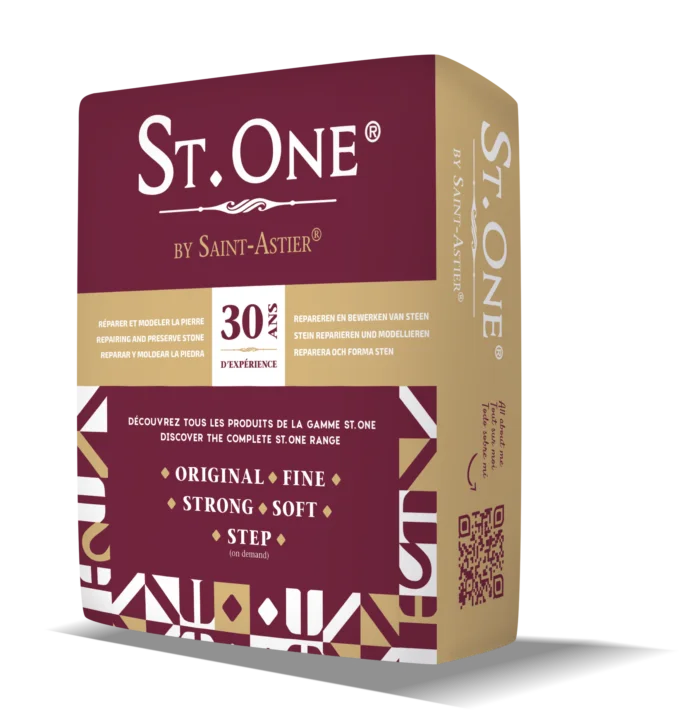
SKU: LR-LL-SA-STONE-ORIGINAL
Gross price incl. 19 % VAT(2,35 €/kg)
Repair mortar based on Saint-Astier lime for stones and bricks. Usable up to 10 cm thickness and workable for up to 48 hours, for reconstruction, repair and stone imitation on facades as well as for brick and limestone.
Tiered price
Applies to every unit as soon as the quantity is reached. Calculated automatically in the basket.
Volume discount for full pallets
Deducted automatically in the basket.
25 kg sack
Substrate sound, clean and dust-free, free of formwork oil, moss and loose parts; remove damaged stone to a depth of at least 5 mm. Bound the repair area rectangularly with dovetailed edges. From a repair thickness of 3 cm, fix a reinforcement of metal wire (brass, copper, stainless steel) mechanically. Pre-wet the substrate thoroughly and let the surface dry off. Mix with 5 l of water per 25 kg sack for at least 3 minutes into a firm, mouldable mass. Apply in layers of 1 to 3 cm fresh on fresh, leaving intermediate layers rough; cover the reinforcement by 1 to 4 cm. Minimum finished thickness 10 mm; below that, use ST.ONE® Facing. Suitable for all natural stones (NF EN 1467) and all substrates according to NF DTU 26.1 with base plaster, for cornices and bands in imitation stone. Not suitable: gypsum, paints, synthetic resin plaster, wood, steel, glass, clay and hempcrete. Mouldable with suitable tools for up to 48 hours depending on the weather; once sufficiently stiffened, it can be worked with stonemason's tools (e.g. claw chisel, chisel, rasp, stone saw). Patina and matching with etching water, patina or lime wash. Care as for natural stone.
Apply between 8 °C and 30 °C. In strong heat, moisten the substrates and keep them moist for 48 hours by moderate spraying. Produce the finished thickness under constant moistening.
1 year from production date · store dry and unopened
Compound mortar based on hydraulic lime from Saint-Astier®, pigments, selected aggregates and specific additives
| Dry bulk density | 1.350 to 1.450 kg/m³ |
| Fresh bulk density | 1.600 to 1.700 kg/m³ |
| Layer thickness per pass | 1–3 cm per work step fresh on fresh, up to 10 cm in total; from 3 cm repair thickness, metal wire reinforcement |
| Consumption at 1 mm | 1,7 to 1,8 kg/m² |
| Max. total layer thickness | 100 mm |
| Minimum layer thickness | 10 mm |
| Flexural strength | 1,5 to 2,5 N/mm² |
| Compressive strength | 5 to 7 N/mm² |
| Maximum grain size | 1 mm |
| Water vapour diffusion resistance μ | 13 |
| Total layer thickness | min. 10 mm, max. 100 mm |
| Machine mixing | min. 3 minutes |
| Max. working temperature | 30 °C |
| Min. working temperature | 8 °C |
| Working time | workable for up to 48 hours (can be worked with suitable tools depending on the weather) |
| Storability | 12 months |
| DIN standards | EN 998-1, type CR |
| Capillary activity | 0,08–0,09 kg/(m²·min½) |
| Drying shrinkage | < 0,9 mm/m |
| Working temperature | 8–30 °C |
| Consumption | 1,7–1,8 kg/m²/mm thickness |
| Water addition | 5 litres per 25 kg sack |
To go with it: my free clay building diary with drying log.
Download free of chargeFurther expert knowledge
Limestone mortar and its use in timber frame construction are explained in the article Lime in timber frame construction: using NHL and alpine lime.