fast delivery
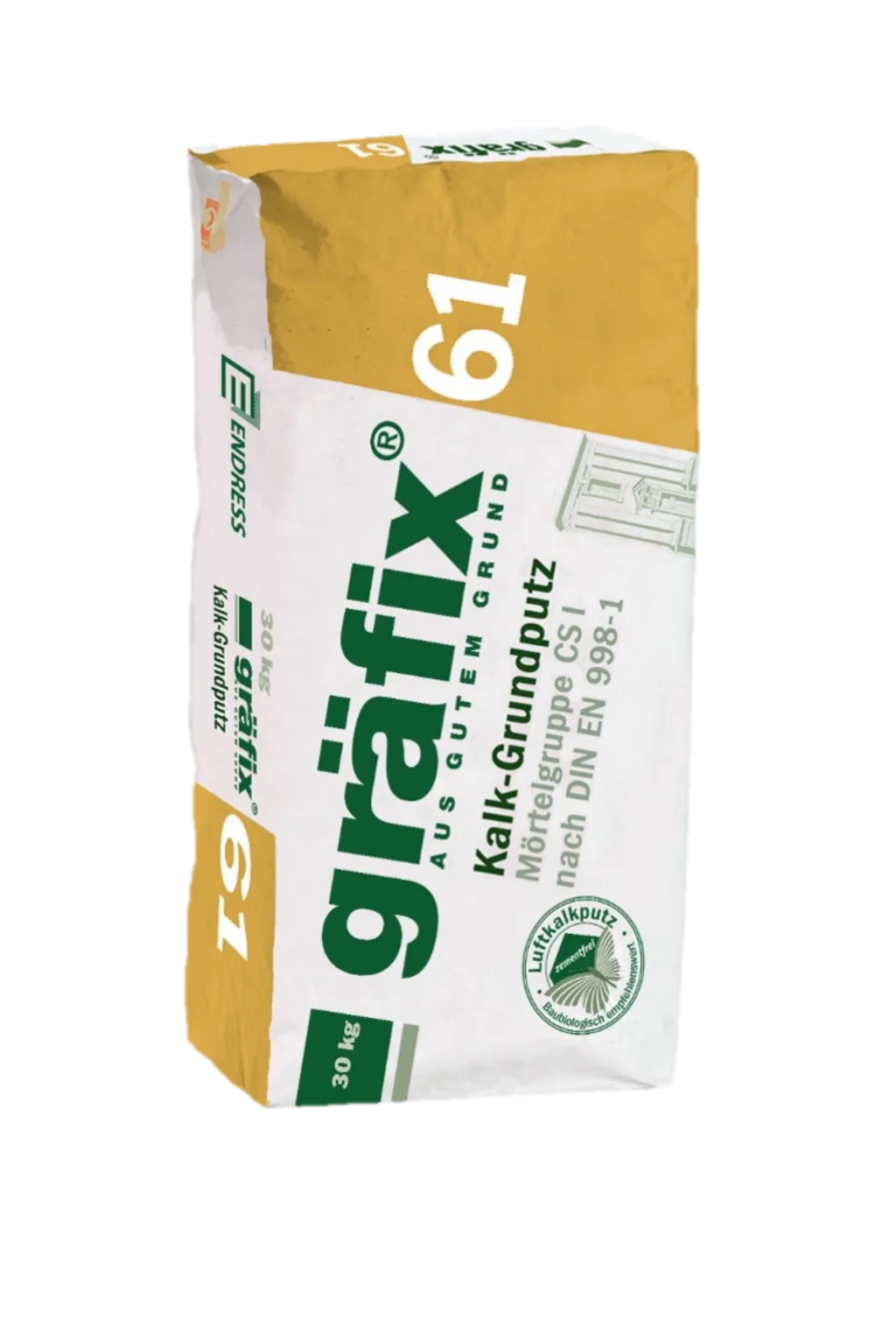
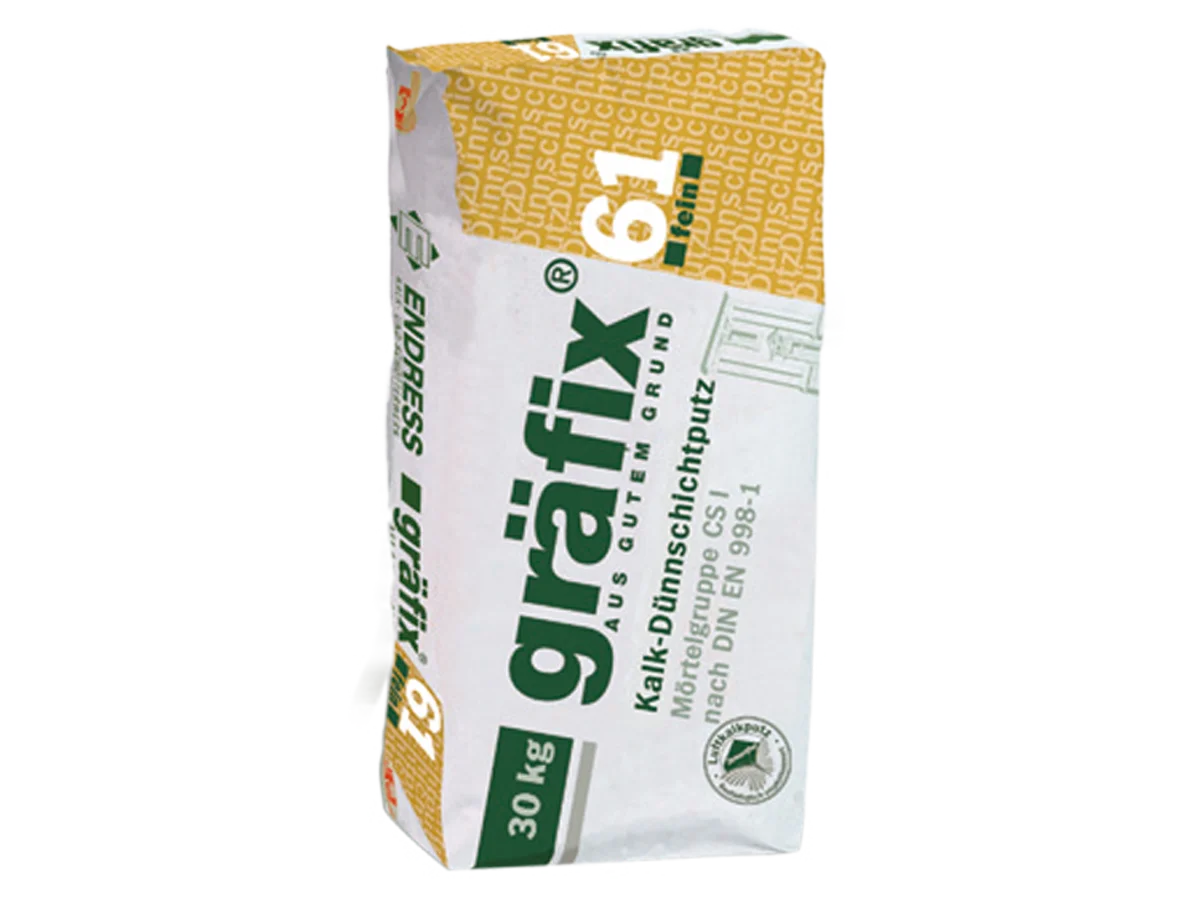
Gräfix 61 lime thin-coat plaster FEIN
Cement-free air lime mortar for monument conservation and timber frame renovation, the fine finishing plaster…
31,49 €
SKU: LR-LL-SA-NHL-5
Gross price incl. 19 % VAT(0,66 €/kg)
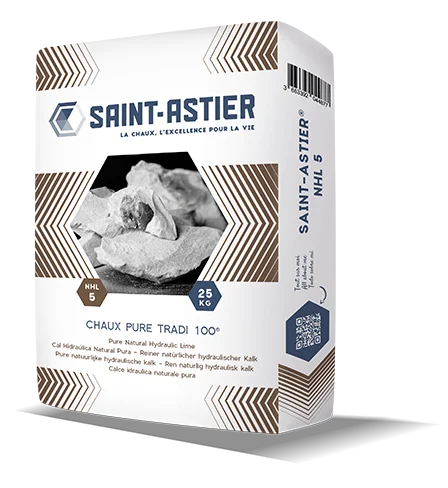
Natural hydraulic lime NHL 5, the strongest in the Saint-Astier NHL range. High compressive strength and weather resistance for stressed exterior areas, plinths and components in contact with the ground.
Tiered price
Applies to every unit as soon as the quantity is reached. Calculated automatically in the basket.
Volume discount for full pallets
Deducted automatically in the basket.
25 kg sack
Mix in parts by volume lime : sand (1 sack 25 kg = 3 to 3,5 buckets of 10 l). Hand application: spatter coat 1 : 2 (sand 0/3) on new masonry, 1 : 2,5 (sand 0/3) on old or soft masonry, 3–5 mm; base plaster 1 : 2,5 (sand 0/3), 10–20 mm. Top plaster preferably with NHL 3,5: scraped 1 : 3 (sand 0/2), 7–12 mm; smoothed 1 : 3 (sand 0/1), 5–7 mm, by hand only. By machine after consultation with Saint-Astier: base plaster on old masonry 1 : 2 (sand 0/3), 10–15 mm. Water about 14 l per 25 kg sack. Mortar can be remixed within 8 hours. Laying tiles, terracotta and natural stone slabs: 1 : 2 (sand 0/4). Laying and pointing traditional bricks and medium-hard to hard natural stones: 1 : 2,5 (sand 0/3). Roof tiles, ridge, roof edges and roof junctions: 1 : 2 (sand 0/3). Lime concrete and lime screed: 1 : 2 (gravel sand 0/16). Chimney blocks: 1 : 2 (sand 0/4). Consolidating old masonry: injection 1 : 1 water; grouting 1 : 1 (sand 0/2 or 0/1).
Waiting time for manual application: base plaster 2 days after the spatter coat, top plaster 7 days after the base plaster; by machine at least 7 days per 10 mm of application. Do not apply below 8 °C or above 30 °C. Moisten the substrate the day before and before application, and let surface water soak in. Avoid rapid drying due to heat or strong wind: cover and treat with a fine water mist if necessary. Protect fresh mortar from frost for at least 10 days.
Store dry · protect from moisture · 1 year from date of manufacture in the unopened original packaging · close opened sacks again as soon as possible
Lime consumption, manual application: spatter coat 2,5 kg/m² at 3–5 mm, base plaster 3,5–5 kg/m² at 10 mm, top plaster 1,5–2 kg/m² at 5 mm. Machine: base plaster 3,5 kg/m² at 10 mm. Binder requirement per m³ of mortar: 350 kg at 1 : 2, 280 kg at 1 : 2,5, 240 kg at 1 : 3 (parts by volume lime : sand).
| Bulk density | 700 kg/m³ |
| Sacks per pallet | 40 |
| Strength | Compressive strength 28 days: 9 N/mm² (typical value) |
| pH value | 12 to 13 |
| Material composition | 100 % pure natural hydraulic lime NHL 5 from Saint-Astier® |
| Mixing ratio | Spatter coat 1 : 2 to 2,5, base plaster 1 : 2,5 (parts by volume lime : sand 0/3) |
| Mixing water per sack | 14 l |
| Start of setting | 2–3 hours |
| Frost protection after application | min. 10 days |
| Storability | 12 months |
| Norm/standard | BS-EN 459 NHL 5 |
| Standard | EN 459-1 |
| Lime class (EN 459) | NHL 5 |
| Special notes | Lime concrete for interior floors on soil: 350–400 kg of lime per m³ of aggregate, corresponding to 1 sack of 25 kg + 6 to 6,5 buckets of 10 l of aggregate; about 13 l of water per sack. Thickness at least about 15 cm; greater thicknesses in several layers of at most 10 cm with 48 hours to 7 days' waiting time. No steel reinforcement or mesh. Joints at two thirds of the thickness, 3–5 mm wide, bays at most 25 m². Keep damp once or twice a day for 3 weeks. Tiles no earlier than after 3 weeks. Strength 7 MPa after 28 days, 14 MPa after 3 months. |
| Working temperature | 8–30 °C |
| Water addition | about 14 l per 25 kg sack, depending on the moisture of the sand and the dosage |
To go with it: my free clay building diary with drying log.
Download free of chargeFurther expert knowledge
Hydraulic lime NHL 5 and its application are explained in the article Lime in timber frame construction: using NHL and alpine lime.
Lime in timber frame renovation, build-up and application are explained in the article Renovating timber framing with clay: step by step to a healthy timber frame wall.