fast delivery
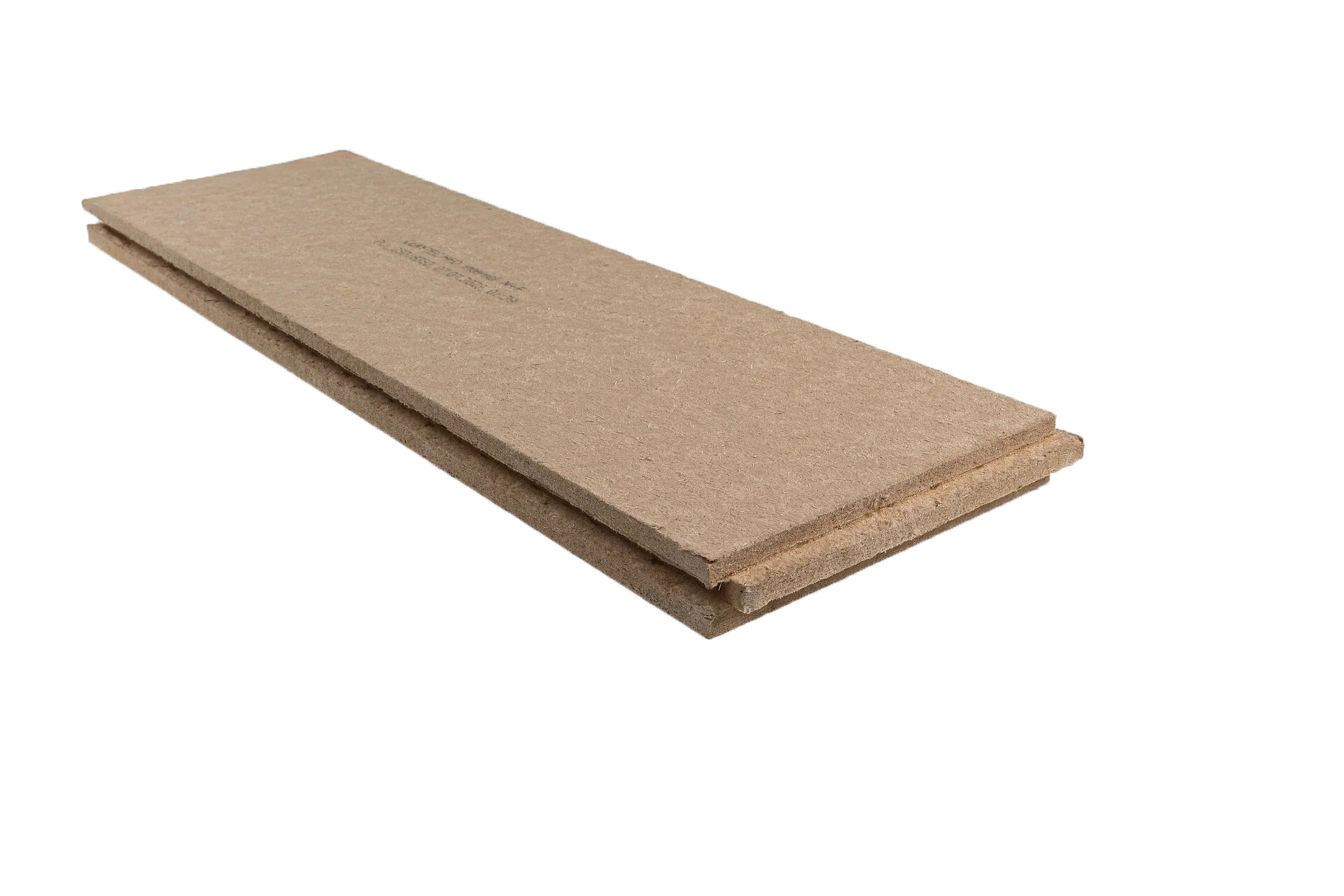
ClayTec HFA dünn D=8mm
Thin wood fibre finishing board as a plaster base on wood, the easiest way to a secur…
from5,99 €
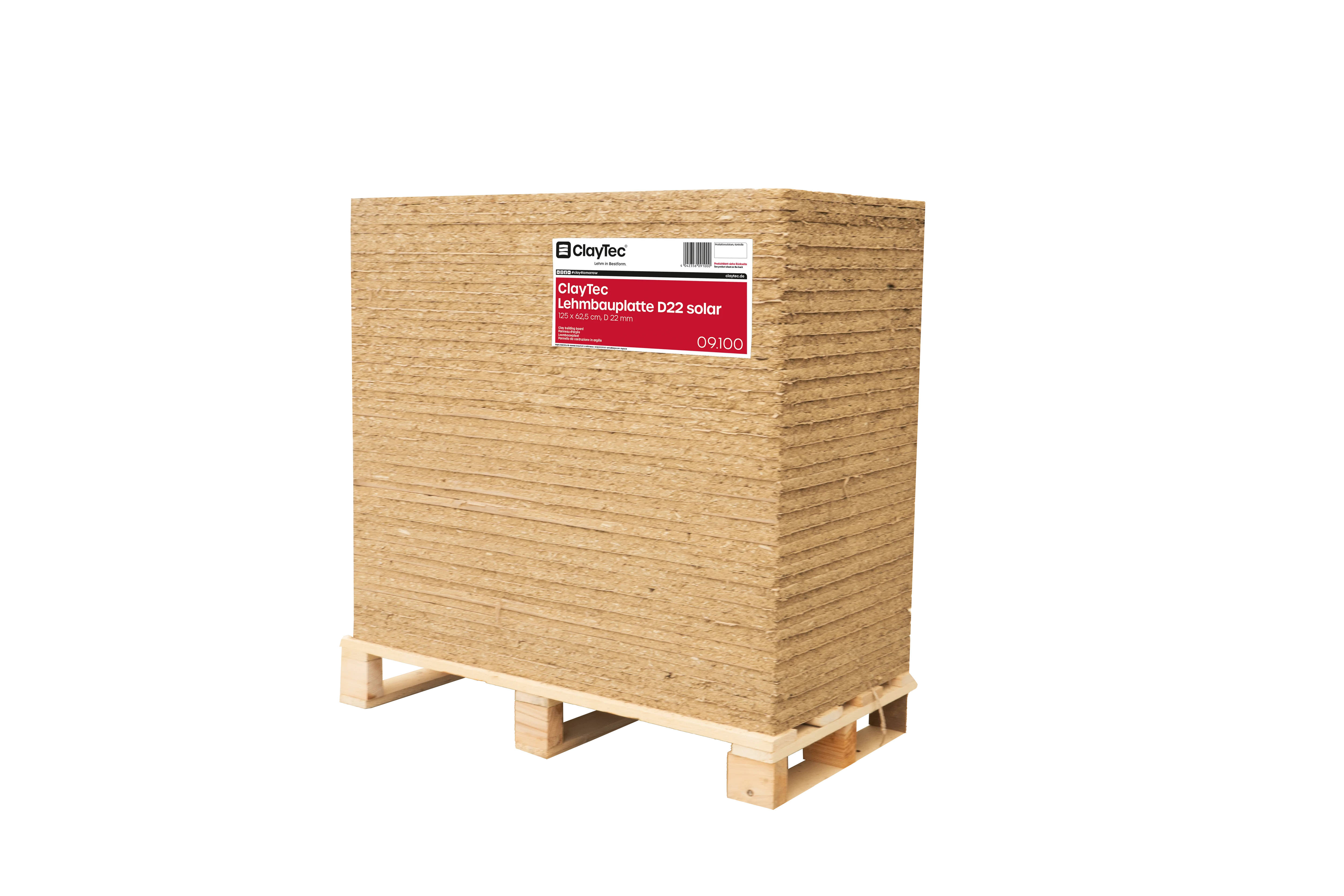
SKU: 09100-EINZEL| EAN: 4042356809100
Gross price incl. 19 % VAT(approx. 31,99 €/m²)
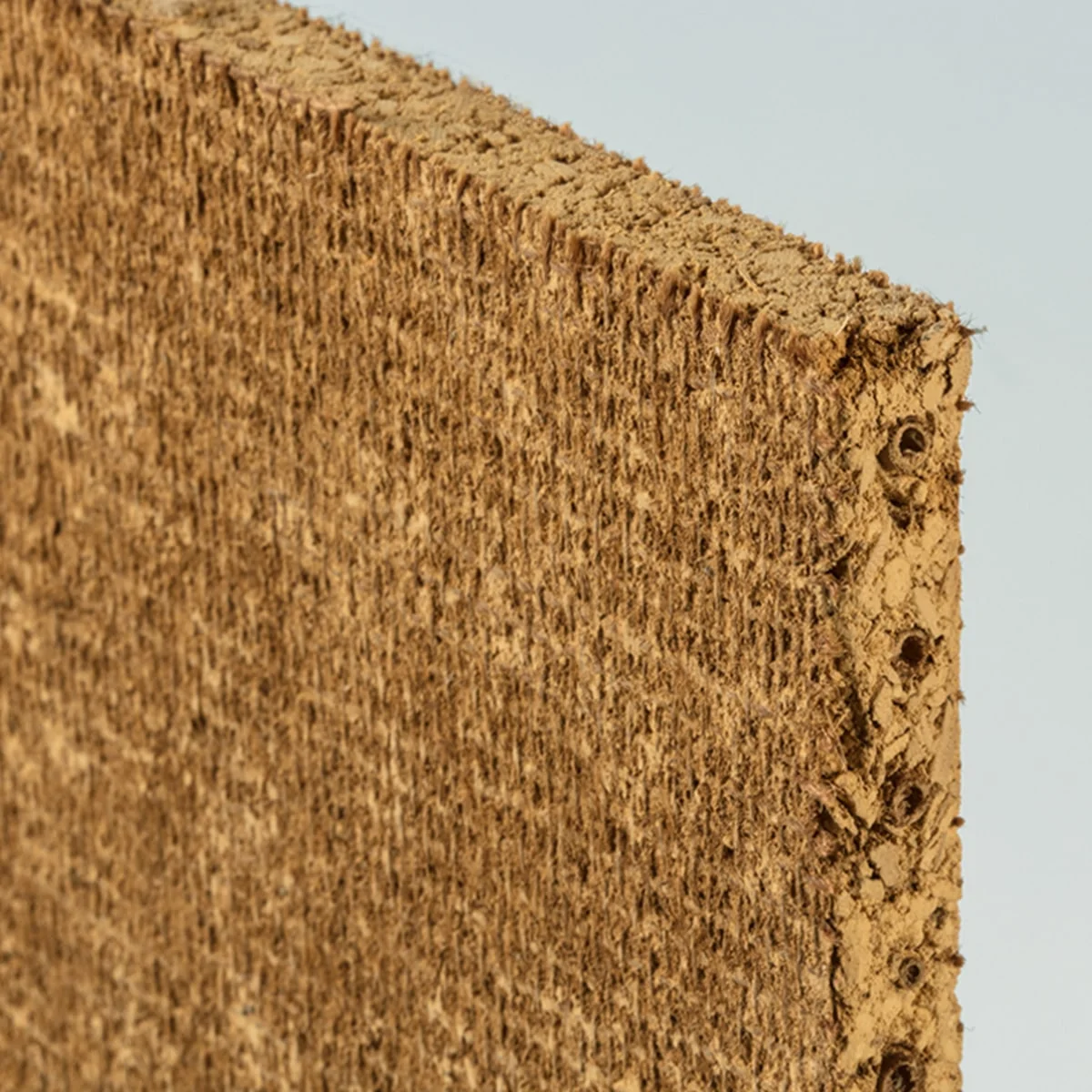
Solar-dried clay board made of building clay and miscanthus fibres with negative GWP (cradle to gate).
Volume discount for full pallets
Deducted automatically in the basket.
plus 1 × 25,00 € refundable EUR pallet deposit
22 mm thick
Cut with a jigsaw or circular saw. Plaster the clay side, not the paper side. Boards offset by 90° to the substructure, bottom row with a small gap to the floor, butted as tightly as possible without gaps. Offset joints by one stud spacing; cross joints and continuing the edges of wall openings with joints are not permitted. Junctions with solid walls and ceilings with joints. As full-surface cladding on timber: staples at a spacing of approx. 150 mm, edge distance 25 mm. Close the perimeter board joint with ClayTec clay joint filler. Do not carry out joint and coating work below about +10 °C room temperature. Remove dust; fill gaps from 1 mm in full depth with clay adhesive and reinforcing mortar, close holes, even out changes in thickness broadly, pre-wet lightly if necessary. Thin coat: 3 mm clay adhesive and reinforcing mortar with glass mesh 112, then YOSIMA felted, clay filler and surface filler (Q3) or clay top plaster fine 06, coating with ClayTec clay paint or ClayFix. Wall heating: spatter coat up to max. 8 mm.
Do not dry wet-applied clay coatings quickly, e.g. with construction dryers or sudden heating, otherwise deformation and cracks can occur. All fillings and levelling must dry before the reinforcement layer. 40–70 % relative humidity is favourable for storage and installation, and max. 70 % after installation too.
Store lying flat on pallets in the warehouse, dry. Storage is possible indefinitely. Protect from wet during transport and storage on site. For larger quantities, the ClayTec carrying aid 182/400 is recommended. On site, store lying flat and level on dry pallets or timbers. Relative humidity during storage and after installation max. 70 %.
Approx. 22 kg/m². Allow a reserve of approx. 10 % for waste and approx. 15 % for fixings.
Values for the selected variant: Single board
| Board length | 1250 mm |
| Board width | 625 mm |
| Manufacture | Preparation and moulding with green electricity, drying exclusively by solar energy |
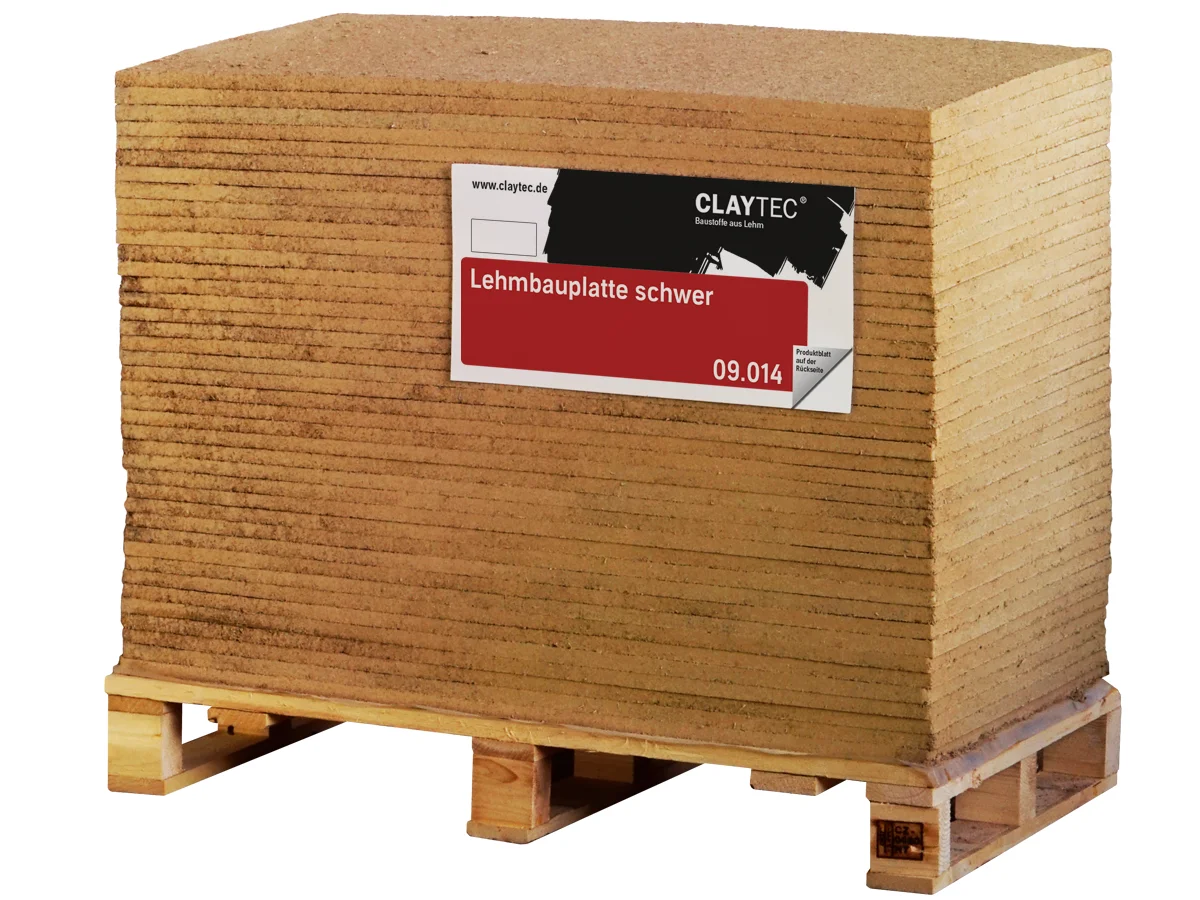
| m² per pallet | 39,0 m² |
| Boards per pallet | 50 |
| Offcut recommendation | 10 % |
| Area per board | 0,78 m² |
| Packaging notes | shrink-wrapped |
| Heat storage capacity Cp | 1,1 kJ/kgK |
| Bulk density | 1.000 kg/m³ |
| Thermal conductivity | 0,35 W/mK |
| Heat storage | 24,2 kJ/m²K |
| Water vapour diffusion resistance μ | 5/10 |
| Fastening | Timber: ClayTec clay board screws 5 x 50 mm or FN quick-build screws with coarse thread, spacing ≤ 200 mm, 4 fixing points per crossing (wall 12, ceiling 20 screws/board), flush with the board; penetration depth at least 25 mm. Staples 45 mm, spacing ≤ 80 mm, penetration depth 30 mm. Metal: C-profile FN quick-build screws, UA-profile TB quick-build screw with countersunk washer. |
| Substructure grid | Walls axis spacing 625 mm (= 1.250 mm/2); ceilings and roof slopes max. 312,5 mm. With parallel installation, spacing of the substructure max. 312,5 mm. |
| Material requirement | 1,28 boards/m² |
| Material composition | Building clay, miscanthus fibres, starch (approx. 0,2 %), paper on the back, jute fabric insert near the surface, top layer with fine straw fibres |
| Special notes | Timber substructure: solid wood (softwood) according to DIN EN 14081-1 or glulam according to DIN EN 14080, at least C24, grading class S10, wood moisture max. 18 %. Metal: sheet steel profiles according to DIN 18182-1 / DIN EN 14195. Back perimeter substructure members with ClayTec drywall tape. No fixing directly to load-bearing components such as rafters or ceiling joists. According to the manufacturer, verification and declaration according to DIN 18948 will follow shortly. |
To go with it: my free clay building diary with drying log.
Download free of chargeFurther expert knowledge
Installation, variants and areas of use of clay boards are explained in the article Clay boards in interior finishing: drywall construction with clay according to DIN 18948.
How clay boards simplify interior finishing is described in the article Clay in interior finishing: a healthy indoor climate with natural building materials.
The building physics properties of vapour-permeable building materials are explained in the article Building physics for natural building materials: vapour diffusion, heat storage and dew point.